Every manicure starts with the same decision, and it isn’t the colour. Before polish comes the silhouette — the outline of your free edge — and that single choice decides how slim your fingers look, how long your manicure survives, and whether your set chips on day two or still turns heads on day fourteen. This nail shape chart walks you through all 12 shapes one by one, then helps you match a shape to your hands, your length, and your real life. By the end, you’ll know exactly what to ask for at the salon — in words your nail tech will actually understand.
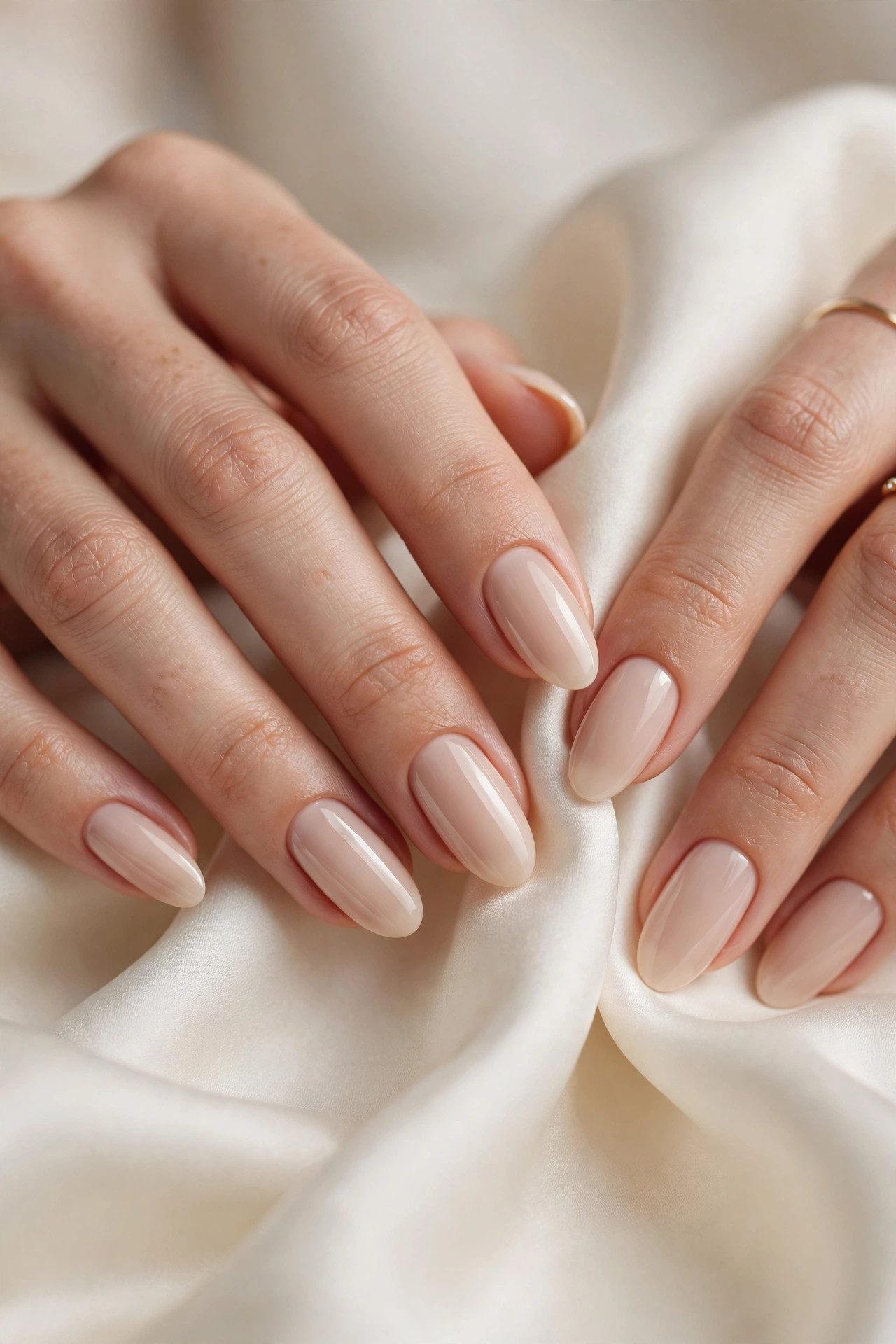
Consider this your fitting room. Not every shape flatters every hand, and the internet’s obsession with coffin nails is the reason half of you are walking around with tips that fight your nail beds. Let’s fix that, one shape at a time. And if you’re here hunting for what to paint on afterwards, our ever-growing stack of nail ideas is the natural next stop.
The Nail Shape Chart at a Glance
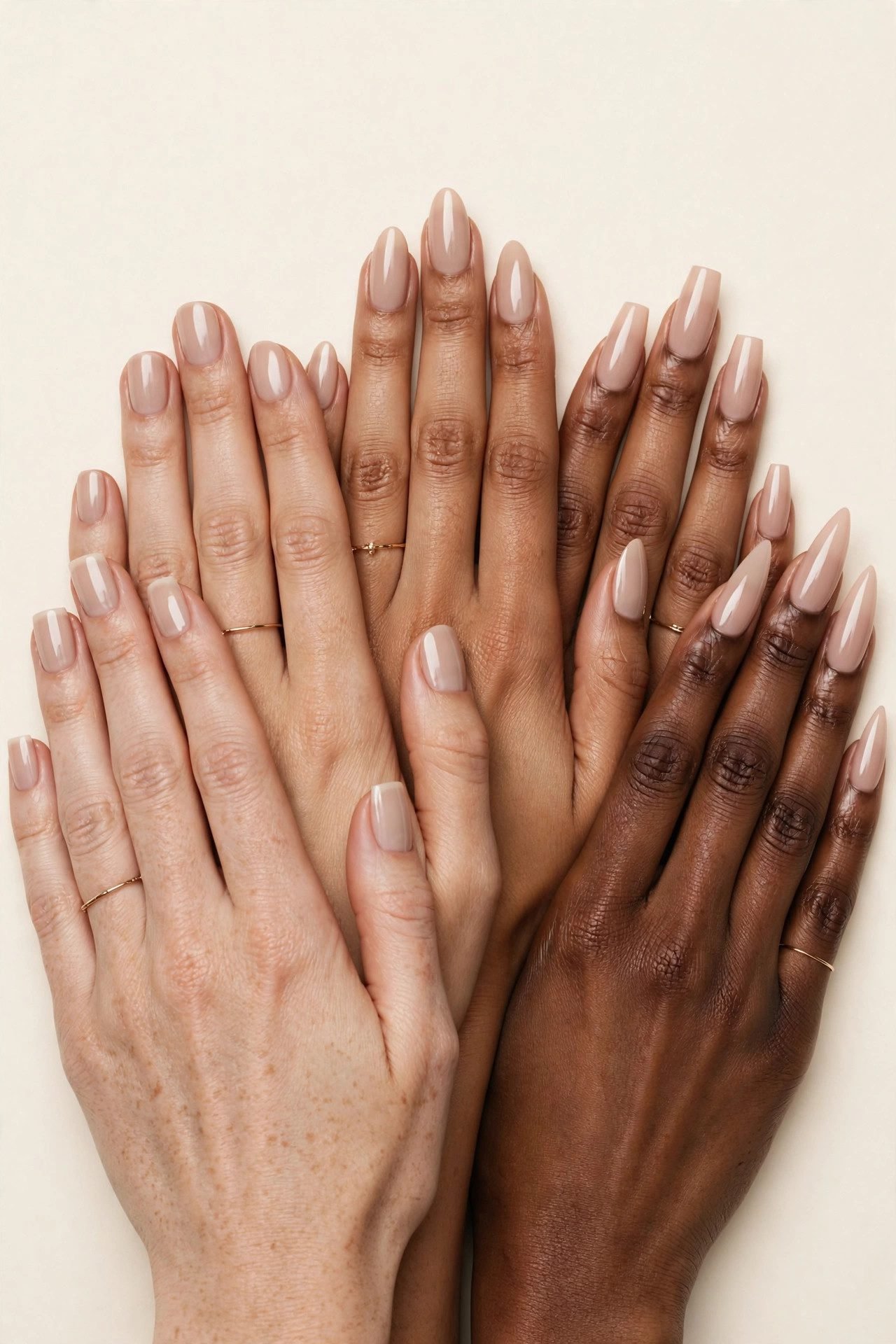
This is the master nail shape chart — twelve silhouettes, ranked by how forgiving they are. Screenshot it, save it, take it to your appointment. The full explanations follow below.
| Shape | Silhouette | Flatters | Length range | Durability | Upkeep |
|---|---|---|---|---|---|
| Square | Flat tip, sharp corners | Narrow beds, slim fingers | Short–medium | 9/10 | Low |
| Round | Curve that follows the fingertip | Wide beds, short nails | Short | 10/10 | Lowest |
| Squoval | Square structure, oval corners | Literally everyone | Short–medium | 9/10 | Low |
| Oval | Fully rounded egg | Wide beds, short fingers | Medium | 7/10 | Medium |
| Almond | Tapered sides, soft point | Long fingers, slim beds | Medium–long | 6/10 | Medium–high |
| Coffin | Tapered sides, flat tip | Long, narrow hands | Medium–long | 5/10 | High |
| Stiletto | Fine, aggressive point | Small, delicate beds | Long only | 3/10 | High |
| Lipstick | Slanted, asymmetric tip | Accent fingers | Medium–long | 4/10 | Medium |
| Edge | Pyramid spike with a ridge | Editorial art lovers | Long only | 3/10 | High |
| Flare (duck) | Tip flares into a fan | Statement sets | Medium–long | 5/10 | Medium |
| Tapered square | Square, sides eased inward | Wide beds wanting length | Short–medium | 8/10 | Low |
| Russian almond | Extreme taper, curved profile | Luxury 3D art | Long only | 5/10 | High |
The Shape File — Every Nail Shape Explained
Here’s where the nail shape chart stops being a grid and becomes a decision. Each shape below gets its own file: the silhouette, who it flatters, the length it needs, how it wears, and one honest verdict. If a card reads like it was written about your hands — trust that instinct.
1. Square Nails
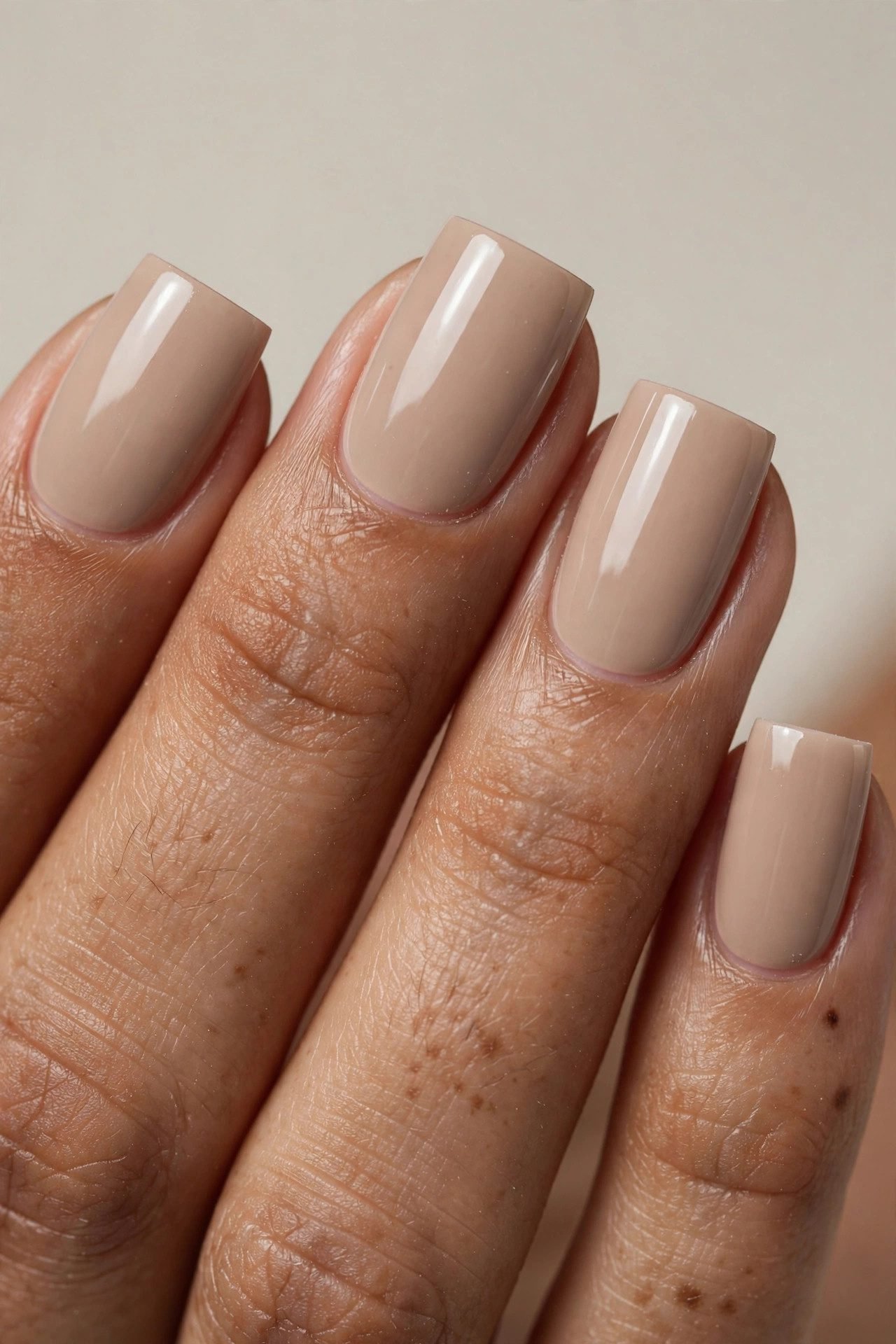
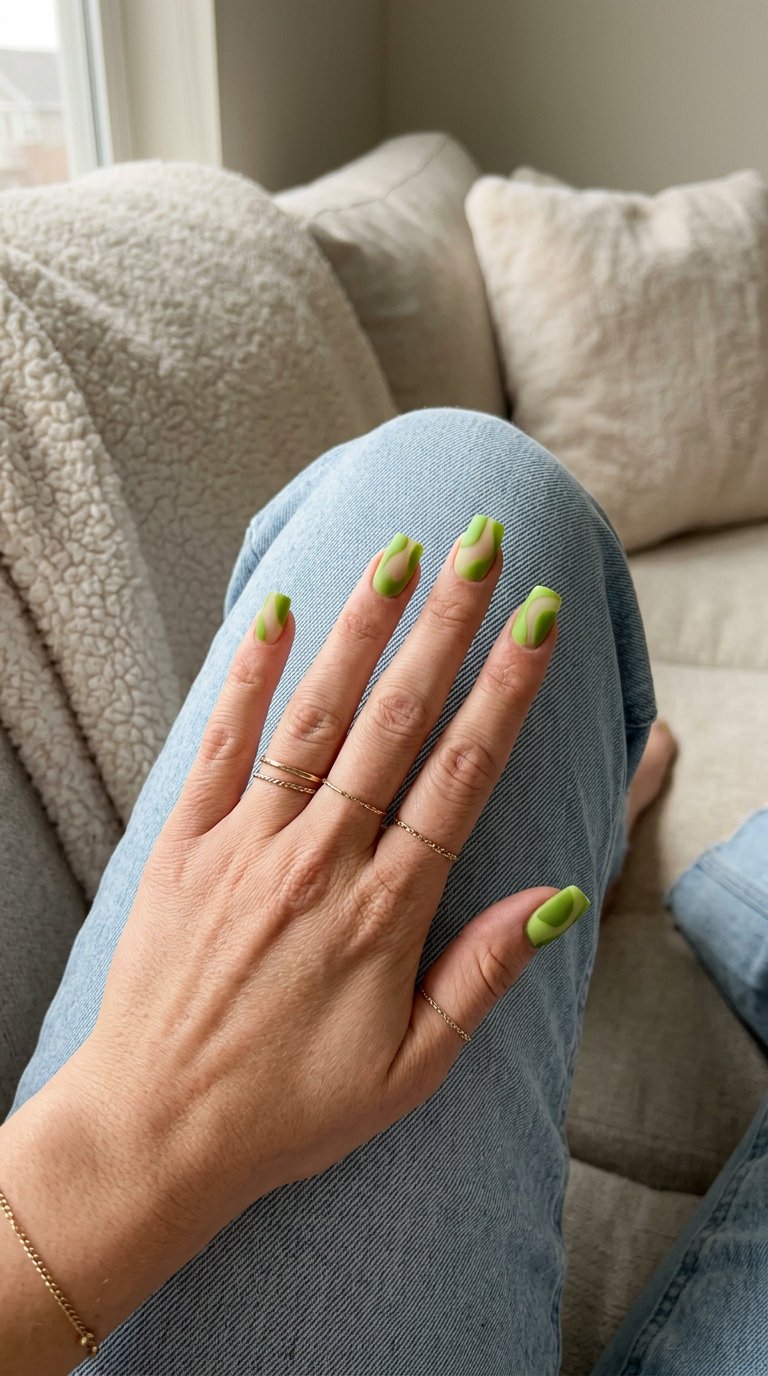
The silhouette: straight sidewalls, a flat free edge, and crisp 90° corners — filed straight across, no rounding. Flatters: narrow nail beds and slim fingers, because the straight edge visually adds width and balance. Length sweet spot: short to medium; long squares start to look bulky and catch on everything. Wear & tear: one of the strongest shapes on the chart — the reinforced corners hold polish and structure well — though sharp corners do snag knitwear more than you’d expect. Verdict: the no-nonsense workhorse. If our dedicated guide to square nails is anything to go by, this shape isn’t going anywhere in 2026.
2. Round Nails

The silhouette: an edge that curves gently to mirror the natural dome of your fingertip — the shape your nails almost already are. Flatters: wide nail beds, shorter nails, and anyone whose natural nails peel, bend, or snap — there are no stress points to catch. Length sweet spot: short; round barely reads as a “shape” past medium anyway. Wear & tear: the most durable shape on the entire chart, full stop. Verdict: underrated and everywhere once you notice it. It’s also the answer for toenails, which we’ll cover in the FAQ — and a great starting point if you’re browsing pedicure ideas for summer.
3. Squoval Nails
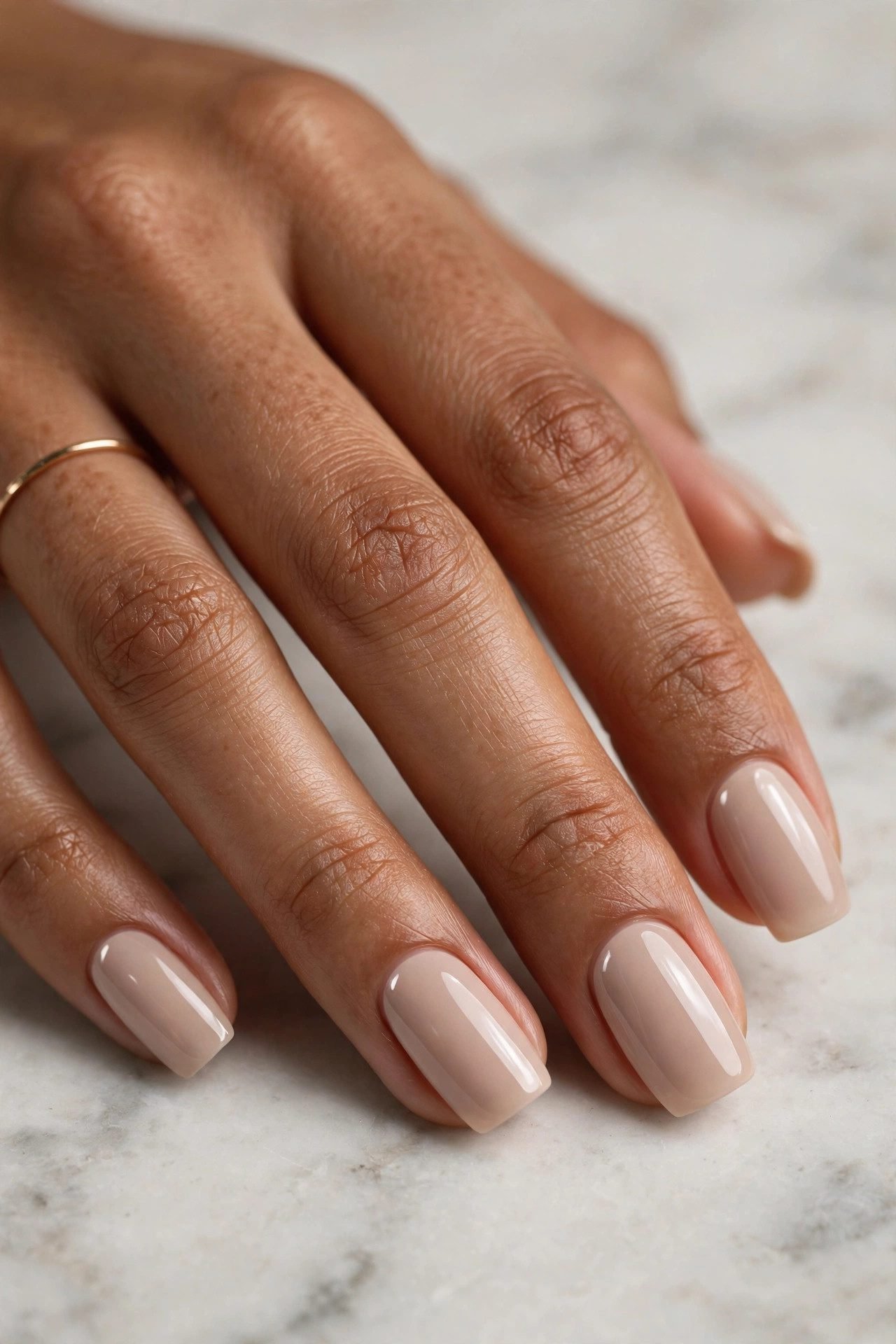
The silhouette: square structure with corners softened into a shallow oval curve — the two biggest shapes hybridised into one diplomatic silhouette. Flatters: everyone. Genuinely — every nail bed width, every finger length, every dress code from boardroom to bar. Length sweet spot: short to medium, where it looks intentional rather than over-grown. Wear & tear: square-level strength without the snagging corners; fills grow out almost invisibly. Verdict: the universal donor of nail shapes. It’s also the perfect runway for a crisp French tip, which needs that straight-but-soft edge to sit evenly.
4. Oval Nails

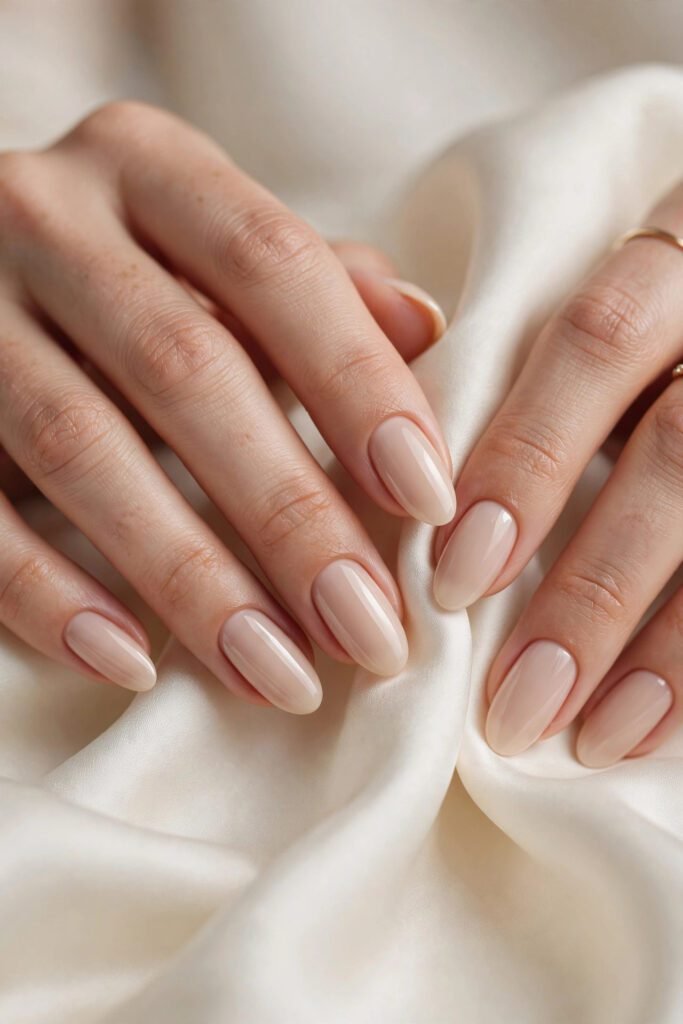
The silhouette: sidewalls filed into a continuous curve so the whole edge forms a smooth egg — no corners anywhere. Flatters: wide nail beds and shorter fingers; the rounded line pulls the eye lengthwise and makes hands look more slender. Length sweet spot: medium — too short and it collapses back into round, too long and it weakens. Wear & tear: decent, but the thinned sidewalls flex more than a square. Verdict: the quiet romantic of the chart. Pair it with something soft and milky — it’s the shape behind the milky white nails look that refuses to leave feeds.
5. Almond Nails

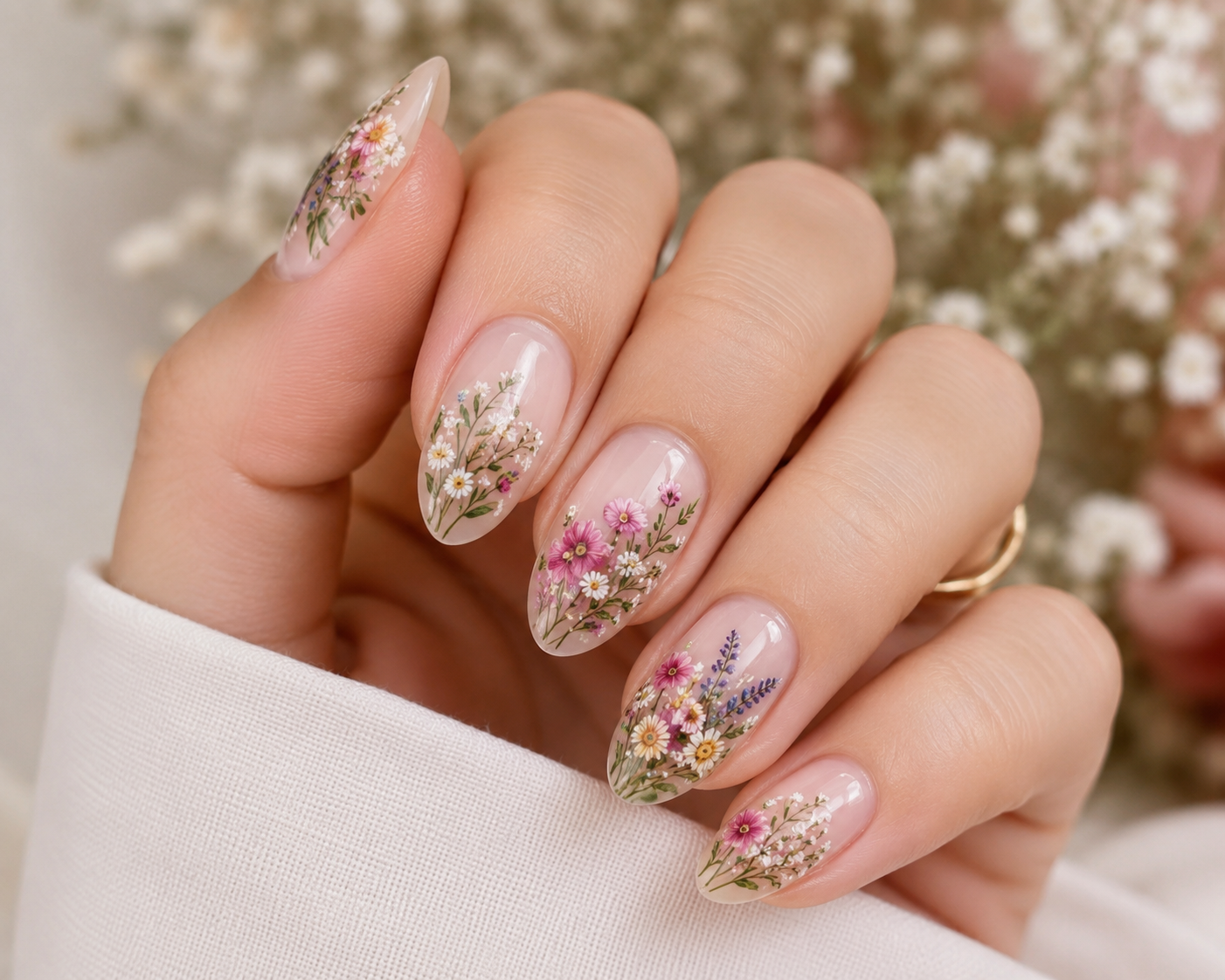
The silhouette: tapered sidewalls that meet in a soft, narrow point — slimmer than oval, gentler than stiletto. Flatters: honestly, most hands — but especially shorter fingers and wider beds, because nothing elongates a hand like an almond. Length sweet spot: medium to long; you need roughly 3–4 mm of free edge before the taper reads as almond instead of oval. Wear & tear: the tip flexes, so natural nails need some strength behind them — gel or acrylic structuring helps. Verdict: the slimming icon. Our full library of almond nail designs proves the shape carries any design, and if you’re not blessed with length yet, short almond nails are the 2026-friendly compromise.
6. Coffin (Ballerina) Nails

The silhouette: tapered sidewalls ending in a flat, squared-off tip — shaped like the toe of a pointe shoe, hence the alias. Flatters: long, narrow hands with confident finger length; on short nails the flat tip just looks unfinished. Length sweet spot: medium to long, almost always with enhancements underneath. Wear & tear: the flat corners are the first casualties — they chip, so structured gel or acrylic is standard. Verdict: the Instagram heavyweight. When it’s done right — properly built, properly balanced — nothing else carries length with the same presence, which is exactly why our coffin nail designs guide runs so deep.
7. Stiletto Nails

The silhouette: filed aggressively on both sides to a fine, true point — no flat edge at all. Flatters: small, narrow nail beds and hands that can carry drama without tipping into costume. Length sweet spot: long only — a stiletto needs serious length before the point reads sharp rather than stubby. Wear & tear: the most fragile shape on the chart; realistically it’s an enhancement shape, not a natural-nail one. Verdict: an occasion-first shape — shoots, parties, holidays — not a Tuesday keyboard shape. If that trade-off appeals to you, our guide to nail art has ideas worth the upkeep.
8. Lipstick Nails

The silhouette: the free edge is filed at a diagonal slant, like a bullet of lipstick cut on an angle — asymmetric, vintage, and very deliberate. Flatters: medium-length nails on ring and middle fingers, where the slant reads as editorial rather than accidental. Length sweet spot: medium to long; too short and the angle disappears entirely. Wear & tear: the lower corner of the slant is a snag point, so it needs regular maintenance filing. Verdict: the conversation-starter. Paint it a true vintage red — the shape was born in the 1940s, and it still belongs with classy red nails more than anything else.
9. Edge Nails
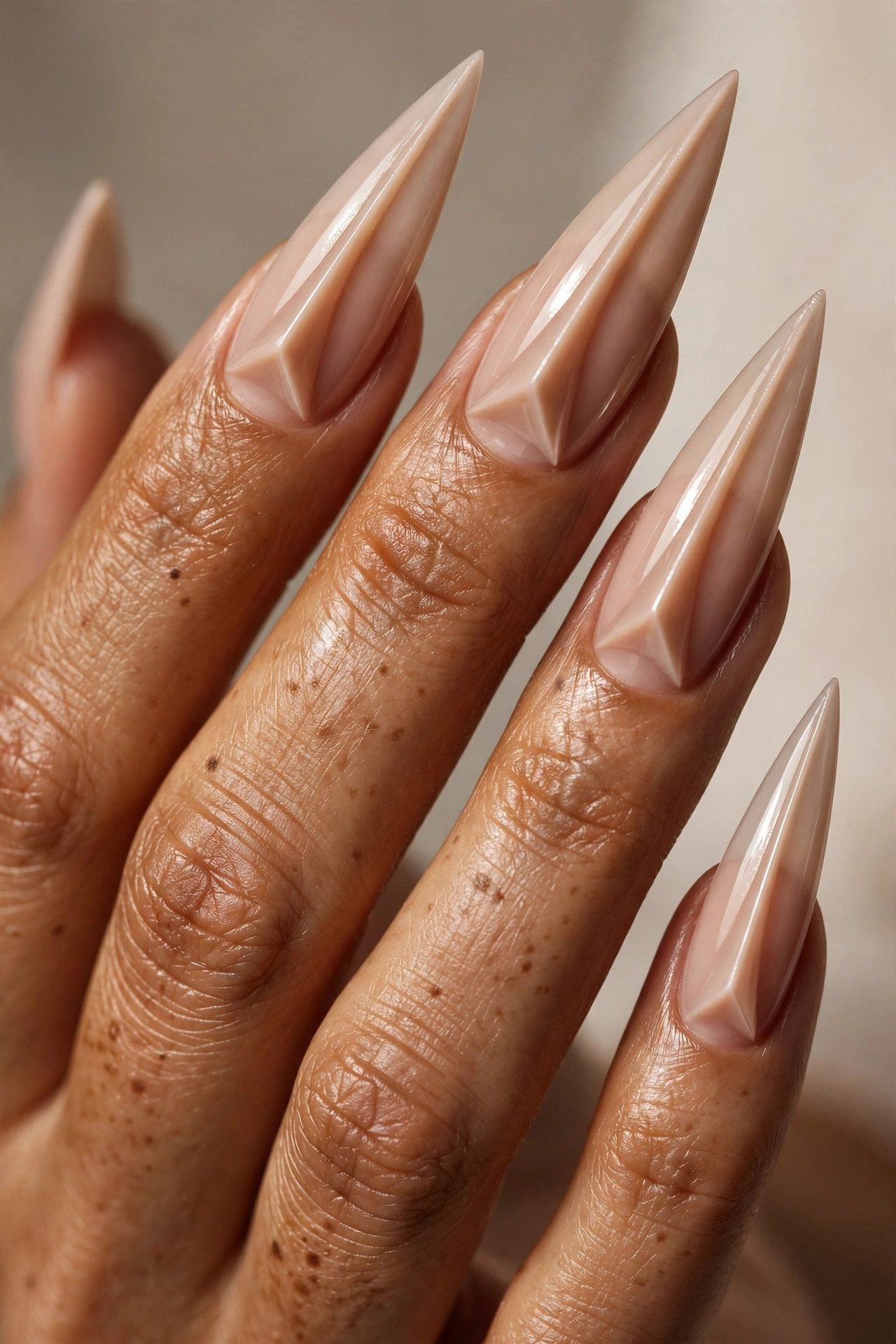
The silhouette: a stiletto taken architectural — the tip is filed into a pyramid with a raised ridge running down the centre like a rooftop. Flatters: long nails built in hard gel or acrylic; this is not a shape a natural nail can hold. Length sweet spot: long only. Wear & tear: that raised ridge is both the look and the liability — it catches, chips, and demands a careful tech. Verdict: editorial, futuristic, and rare — you’ll mostly see it on set and on runways. If your saved folder is full of sculptural 3D sets, this is the shape your board has been asking for.
10. Flare (Duck) Nails

The silhouette: the free edge flares outward into a fan, wider than the nail bed itself — shaped like a duck’s foot, hence the name that took over TikTok. Flatters: statement sets and art-heavy looks; the widened tip is extra canvas, not extra elegance. Length sweet spot: medium — the flare needs some length to fan out but collapses under excessive length. Wear & tear: the flare is sculpted, usually in acrylic, and holds better than you’d guess; the edges still need protecting. Verdict: pure Y2K revival. It’s polarising, photogenic, and utterly unbothered by your opinion — which is exactly the point.
11. Tapered Square Nails

The silhouette: a square whose sidewalls ease inward slightly before meeting the flat tip — the coffin’s more practical little sister. Flatters: wider nail beds that want the coffin look without committing to long, vulnerable length. Length sweet spot: short to medium. Wear & tear: nearly as strong as a classic square, with far less corner snag. Verdict: the smart cheat. It reads longer and slimmer than a standard square while keeping the durability — ideal if coffin dreams keep dying at your keyboard.
12. Russian Almond Nails

The silhouette: almond taken to its extreme — an aggressive taper plus a curved “belly” profile built from underneath in gel or acrylic, popularised by Russian nail salons. Flatters: slim nail beds and hands that want maximum elongation; the curved underside makes even long nails look fine-boned. Length sweet spot: long only, and always built on a structured enhancement. Wear & tear: surprisingly sturdy for its look — the architecture distributes stress well — but repairs need a skilled tech. Verdict: luxury-salon territory. It’s the preferred base for high-end 3D art, so expect your appointment (and your invoice) to reflect that.
How to Choose Your Nail Shape: The Finger Match Test
Now that all twelve are on the table, narrow it down in under two minutes with four quick questions — the same ones techs size you up with while you’re still choosing a colour.
How wide is your nail bed? Look straight down at your fingers. Wide beds get visually slimmed by round, oval, and almond shapes, which curve the line inward. Narrow beds do better with square, squoval, and tapered square, whose straight edges add a little width and presence. Matching the shape to your bed width is the single biggest upgrade most people can make.
How long are your fingers? Shorter fingers gain the most from elongating silhouettes — oval and almond stretch the hand’s line. Longer fingers can afford grounding shapes like square and coffin, which would overwhelm a petite hand. If your fingers are long and slim, congratulations: every shape in the chart is in play.
What does your natural nail do? If your free edge naturally curves downward, round and oval will always look tidy on you, while square corners fight your growth pattern. If your nails grow straight and strong, the structured shapes — square, tapered square, coffin — sit beautifully. Working with your growth pattern instead of against it can add weeks between appointments.
What does your week actually look like? The lifestyle test eliminates more shapes than any mirror. Daily typing, gym sessions, contact lenses, kids’ lunchboxes — all of it punishes long, fragile silhouettes. If your hands work for a living, round, squoval, square, and tapered square will outlast everything else in the chart, and you’ll never resent them for it.
Still torn between two shapes? Take the more conservative one at this appointment, wear it for two weeks, and reassess. Shape regret is cheap to fix; a snapped enhancement set is not.
Shape × Length: What Works Where
Length and shape are married decisions — the same silhouette can look couture at one length and chaotic at another. Here’s the honest pairing matrix from the nail shape chart, adapted to whatever free edge you’re working with.
Short nails (0–2 mm of free edge): round is the natural champion, with squoval and square right behind. If you love the almond look but your nails won’t cooperate, the short-almond compromise — a soft taper on a short base — has become one of the most requested looks of the year, and our roundup of short nail designs shows how much art a small canvas can actually carry.
Medium nails (2–5 mm): the sweet spot where most shapes come alive. Squoval, oval, almond, and tapered square all hit their stride here, and even a cautious coffin becomes possible at the top of the range. If you’re growing your nails out, this is the length where you can “test drive” a silhouette before committing to long-term maintenance.
Long nails (5 mm and beyond): almond, coffin, stiletto, edge, flare, and Russian almond all demand this territory — and with it, structure. Past five millimetres, natural nails flex enough to snap at inconvenient moments, so most long sets are built on gel or acrylic architecture rather than left bare.
The Durability Ranking: Which Nail Shapes Survive Real Life
Every honest nail shape chart has an opinion on strength, so here’s ours, ranked from bulletproof to butterfly-wing. Use it as a reality check against the aesthetic rankings above.
The tank division (8–10/10): round leads at a perfect ten — no corners, no stress points, nothing to catch. Squoval and square follow at nine, trading a sliver of resilience for a straighter, more polished line. Tapered square clocks in at eight, keeping most of that strength with a slimmer waist.
The middle ranks (5–7/10): oval sits at seven, strong enough for daily wear but prone to flexing at medium lengths. Coffin and flare both land at five — their flat, wide tips are structural weak points that need reinforcement from gel or acrylic to last a full growth cycle.
The drama tier (3–4/10): lipstick manages a four thanks to its asymmetric snag corner. Stiletto and edge share the bottom at three: beautiful, sharp, and structurally doomed without professional building. None of this means “avoid” — it means budget the maintenance. And if you’re weighing which enhancement gives your chosen shape the best backbone, our breakdown of acrylic vs gel nails settles the comparison shape by shape.
How to Ask Your Nail Tech for Each Shape
Half the shape disappointments in salons come down to vocabulary, not skill. Walk in with the exact phrasing and you take the guesswork out of the appointment — here’s the script for the six shapes people most often get wrong.
- Squoval: “Squoval, please — straight sidewalls, corners softened to a shallow curve, medium length.”
- Almond: “Almond — taper from the sidewalls to a soft point, and leave me 3–4 mm of free edge.”
- Coffin: “Coffin — taper the sides, then file a flat tip. Please reinforce the corners.”
- Square: “True square — file straight down the sides, flat across the edge, corners sharp.”
- Oval: “Oval — no corners at all, a continuous curve matching my cuticle line.”
- Russian almond: “Russian almond — I want the curved profile built from underneath, not just filed thin.”
One universal tip: ask your tech to shape the nails after the soak-off and prep, not before. Filing damp, pre-soaked nails distorts the edge and is the quiet reason some shapes grow out lopsided.
Shapes, Colours and Finishes That Pair Beautifully
Shape sets the architecture; colour sets the mood. Some pairings simply work harder than others, and a few are near-guarantees.
Short, strong shapes — round, squoval, square — carry creamy neutrals and sheer finishes effortlessly, because their clean lines do the talking. That’s the logic behind the short-almond-and-nude look everywhere right now, and if you’re choosing a shade rather than a silhouette, our guide to nail polish colors breaks the year’s palette down by skin tone.
Long, tapered shapes — almond, coffin, stiletto — love depth: burgundies, chocolates, deep blues. The shape’s length already elongates the hand, so rich, saturated colour reads luxurious rather than heavy. For that quiet-luxury direction, see our edit of old money nails.
The French gradient deserves its own mention because it’s shape-sensitive: it sits best on squoval, oval, and almond, where the smile line can follow a curve. The soft pink-to-white build behind the baby boomer nails trend is the same principle taken to its dreamiest conclusion. And for life’s biggest days, almond and oval are the classic bridal choices — our complete guide to wedding nails for brides plans shape, colour, and timing around the engagement photos.
Keeping Your Shape Looking Fresh
A shape isn’t a one-day decision — it’s a maintenance rhythm. Weekly, a two-minute file session keeps your silhouette honest: file in one direction with a fine-grit file, never a back-and-forth saw motion, which layers damage into the edge and invites splits along exactly the lines you filed.
Between salon visits, cuticle oil daily is the cheapest lifespan extension for any manicure — flexible nails bend before they break. A proper nail care routine covers the full picture: hydration, protection, and the habits that quietly thicken natural nails over months, not days.
If you wear enhancements, respect the fill schedule — every two to three weeks for acrylic, three to four for structured gel — and when a set needs to come off, remove it properly rather than picking. Our step-by-step on how to remove gel polish exists precisely because peeled-off gel takes a layer of nail plate with it, and a damaged plate can’t hold a sharp silhouette.
Planning ahead for the holidays? Shape first, colour second — that’s the order every seasonal set should follow, and our seasonal guide to Thanksgiving nail shapes shows the sequence in action for autumn’s busiest table.
Nail Shape Chart FAQ
What is the most popular nail shape right now? Squoval and short almond are trading first place — squoval owns the everyday slot because it flatters everyone, while short almond dominates feeds and Pinterest boards. Long coffin remains the occasion favourite, but the overall trend arrow for 2026 points shorter and stronger.
Which nail shape makes fingers look longer and slimmer? Almond, without close competition. The tapered sides extend the finger’s line, and the soft point avoids the harshness a stiletto can add. Oval is the runner-up and the better pick for wider beds.
What is the strongest nail shape? Round — the curved edge has no corners to catch and no stress points, which is why it’s the default recommendation for natural nails that break. Squoval and square follow closely; stiletto and edge sit at the bottom of every strength ranking.
What’s the difference between coffin and ballerina nails? None. They’re two names for the same silhouette — tapered sides with a flat tip. “Ballerina” references the pointe shoe, “coffin” references, well, the coffin. Your tech will know both.
What nail shape should I get for short nails? Round or squoval first — both flatter a short bed and survive daily life. If you want trend, the short almond taper delivers the elongated look on minimal length; just keep the point soft so it doesn’t read as unfinished.
Should toenails be square or round? Neither extreme: file toenails straight across, then soften the corners slightly. Cutting a deep curve into the corners encourages ingrown toenails — a point the American Academy of Dermatology stresses in its nail care basics. The same straight-across rule applies when you file, which is why summer pedicure ideas always start with shape before polish.

For more ideas and inspiration like this, save your favorites to our Pinterest boards and follow us on Facebook for fresh posts every week.
The Final Word: Pick the Shape, Then Everything Else Follows
That’s the complete nail shape chart — twelve silhouettes, each with a personality, a maintenance bill, and a hand type it was born to flatter. Choose the shape that matches your nail bed, your schedule, and your patience for fills; the colour choice gets easy the moment the silhouette is right. When you’re ready to design on top of your new shape, our full archive of nail designs for 2026 is organised by shape, length, and season — start there and your next three appointments are already planned.