
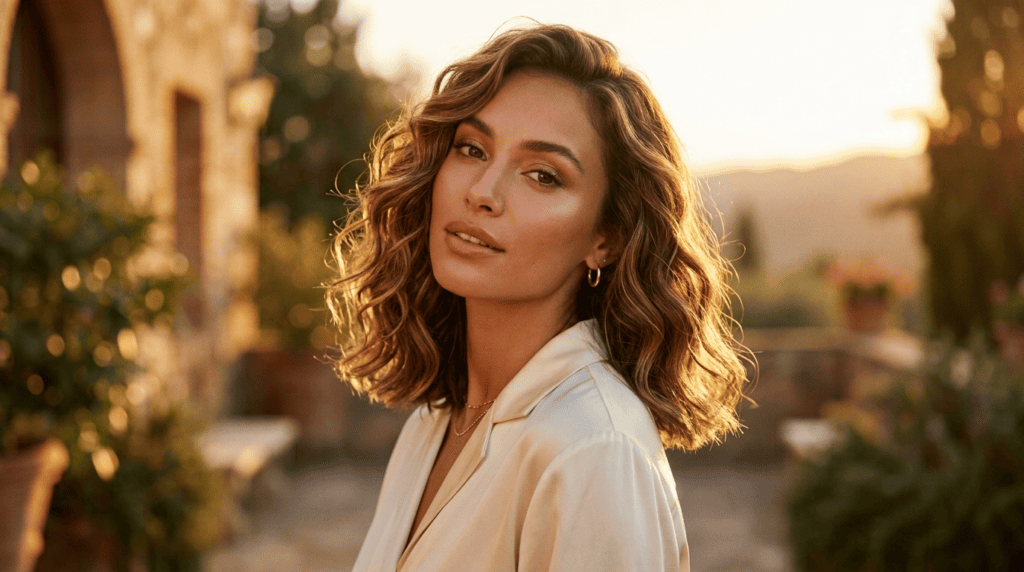
Wavy hair is the most misunderstood texture in the world — because it is neither straight nor curly, and every tutorial assumes it is one of the two.
The straight-hair guides say “just add waves.” The curly guides say “define your curls.” And the wavy-haired woman sits in the middle with hair that frizzes like curls but falls flat like straight hair — following both routines and failing both.
Here is what changes everything: wavy hair is its own texture with its own rules. Waves need lift at the roots, definition at the mid-lengths, and protection from the two things that kill them — brushing when dry and heavy products. Style the wave as a wave, and it becomes the most effortless-looking texture in the room.
So this guide covers everything wavy — the three wave types and how to identify yours, the twelve styles that flatter every wave, the five hacks that fix the biggest wavy problems, and the care routine that keeps the pattern alive. Read it once and the “in-between hair” becomes the texture advantage it always was.
The waves were never the problem. The missing manual was.
Follow our Pinterest boards for daily wavy hair inspiration, and join us on Facebook so you never miss a texture guide.
The 30-Second Answer (Save This)
Why does wavy hair frizz? Brushing when dry, heavy products, and hot water — the three wavy-pattern killers.
The fastest fix: style soaking wet with leave-in, scrunch with a cotton t-shirt, and never brush once dry.
The best daily style: the clipped-back half-up — lifts the roots, shows the wave, takes thirty seconds.
That is the wavy life in three lines. Now the full manual.
First — Identify Your Wave Type (2A, 2B, or 2C)

Every wavy head is one of three patterns, and each styles differently.
2A — The Loose Wave: barely-there S-waves that read almost straight when brushed. Fine texture, flat roots, frizzes when touched. The pattern that needs the most definition help.
2B — The True Wave: defined S-shapes from mid-length down, straighter at the roots. The most common wavy type — holds styles well, frizzes at the surface.
2C — The Bold Wave: thick, defined waves with a few actual curls mixed in. The closest to curly — the most volume, the most frizz-prone, the most product-hungry.
The test: brush your hair wet, let it air-dry with no product, and look in the mirror. Straight with a hint of bend = 2A. Clear S-shapes = 2B. Waves with real curl pieces = 2C. Your type decides which styles below will work best on your head.
The Wave Prep (The Routine Every Style Assumes)
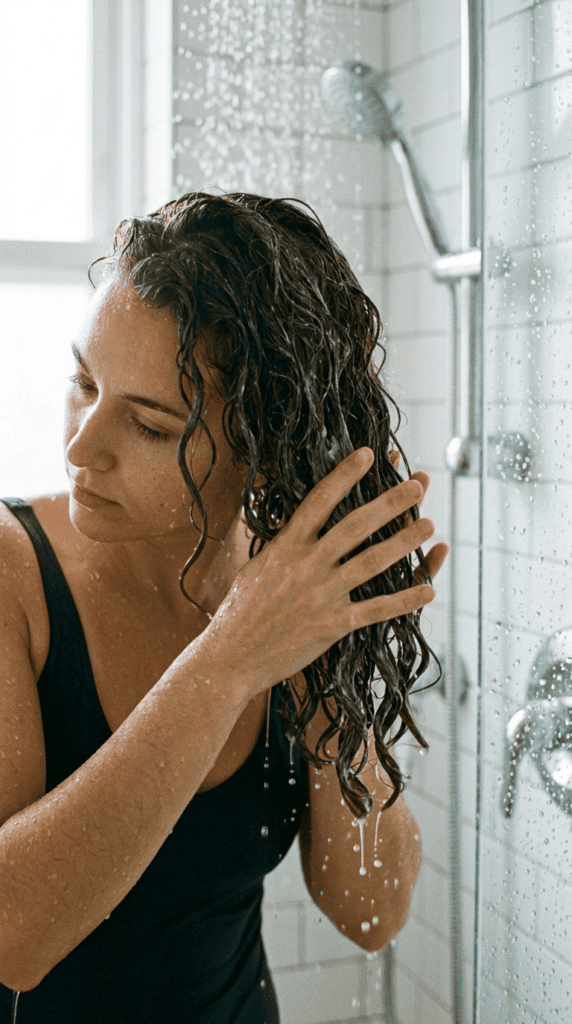
Wavy styles work only on prepped waves — the four-step foundation.
Step 1 — Wash and condition as usual. The sulfate-free system matters double for waves — the products from our hair care routine 2026 guide are the wave-safe starting point.
Step 2 — Apply leave-in to soaking wet hair. Not damp — soaking. A coin-sized amount raked through with fingers. This is the anti-frizz foundation every style builds on.
Step 3 — Scrunch, never rub. Cup the ends in your palms and squeeze upward toward the scalp. Scrunching encourages the wave; rubbing destroys it.
Step 4 — The t-shirt plop. Wrap hair in a cotton t-shirt for ten minutes — the fabric that absorbs water without frizzing the pattern. Terry towels are the wave pattern’s oldest enemy.
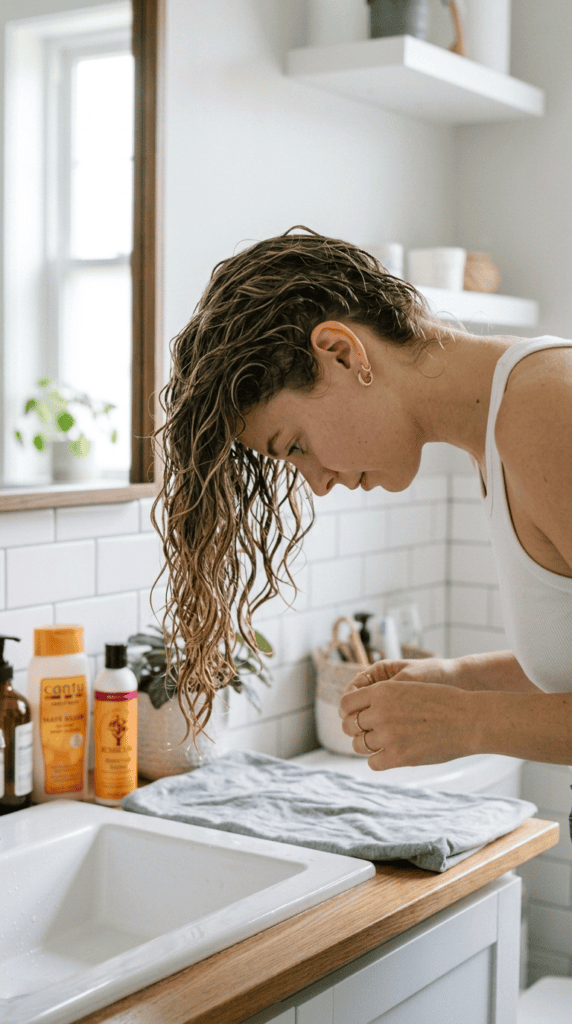
Four steps, ten minutes, and every style below holds twice as long.
The 12 Wavy Styles (By Time and Occasion)
☀️ The Everyday Styles (5 Minutes and Under)
1. The Clipped-Back Half-Up
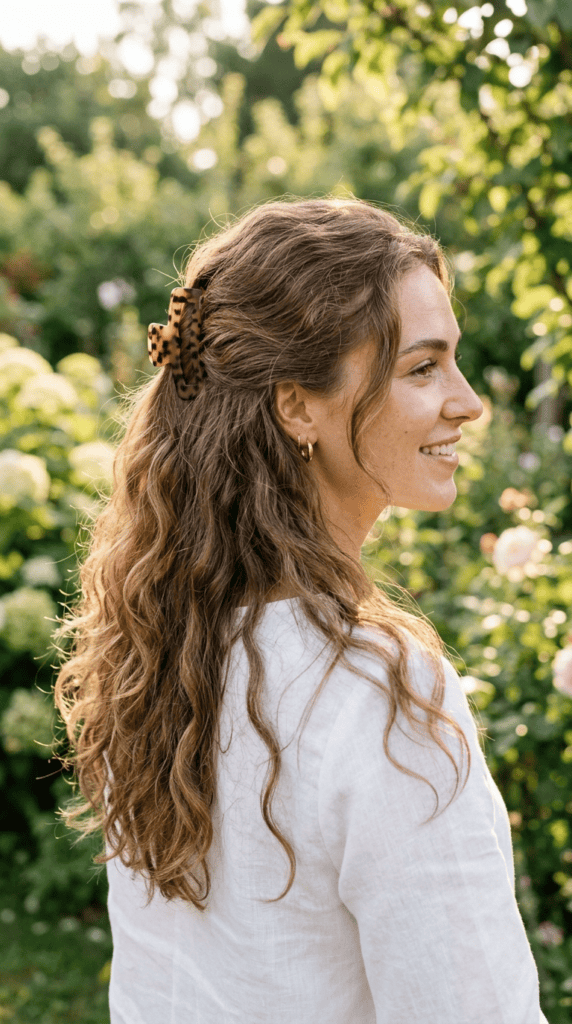
Take the top third of your hair, twist it loosely, and secure with one claw clip at the back. The wave pattern stays visible below, the roots get lifted above, and the style reads intentional in thirty seconds.
Why waves love it: the clip lifts the flat-root problem that 2A and 2B waves fight daily — the style and the fix in one move.
2. The Low Knot Half-Up
Two front sections pulled back and knotted together once, left to fall naturally. The half-up without any elastic visible — the style that reads effortless because there is nothing holding it but a knot.
The 2B bonus: defined waves read the knot as texture; the style and the pattern support each other.
3. The Deep-Part Tuck
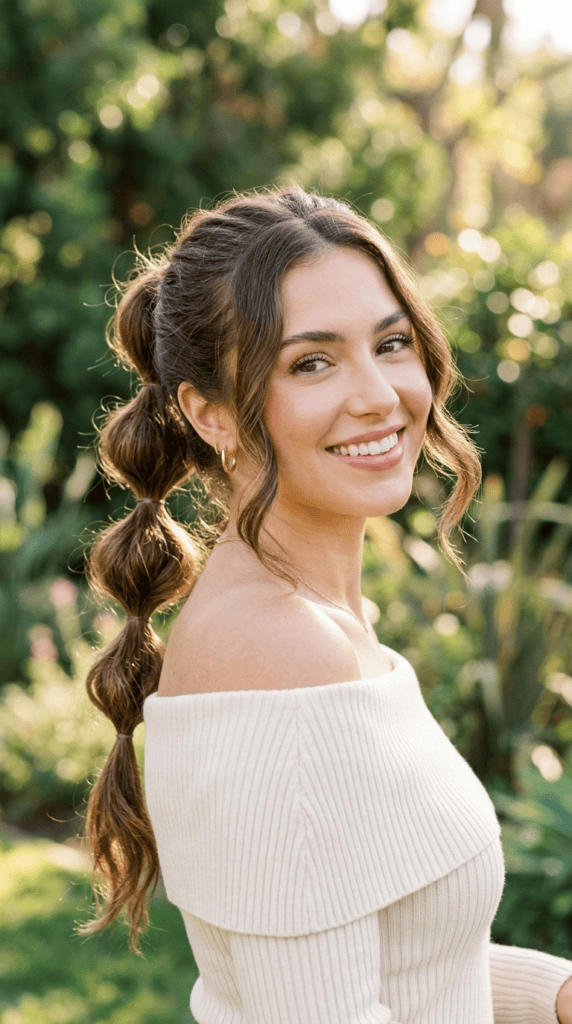
Deep side part, then tuck the lighter side behind the ear — one bobby pin crossed underneath to hold. The asymmetric style that reads styled with one pin.
Why it works for waves: the deep part adds the root lift at the heavier side, and the tucked side shows the wave pattern cleanly. One pin, two fixes.
🌅 The Date-Night and Event Styles (10 Minutes)
4. The Soft Wave Refresh
Day-two or day-three waves revived — water and leave-in in a spray bottle, scrunched section by section. The refresh that brings the pattern back without rewashing.
The revival science: wavy patterns die from dryness, not from time — the water-and-leave-in spritz reactivates the product already in the hair. Two minutes, and day-three reads day-one.
5. The Loose Braid Waves
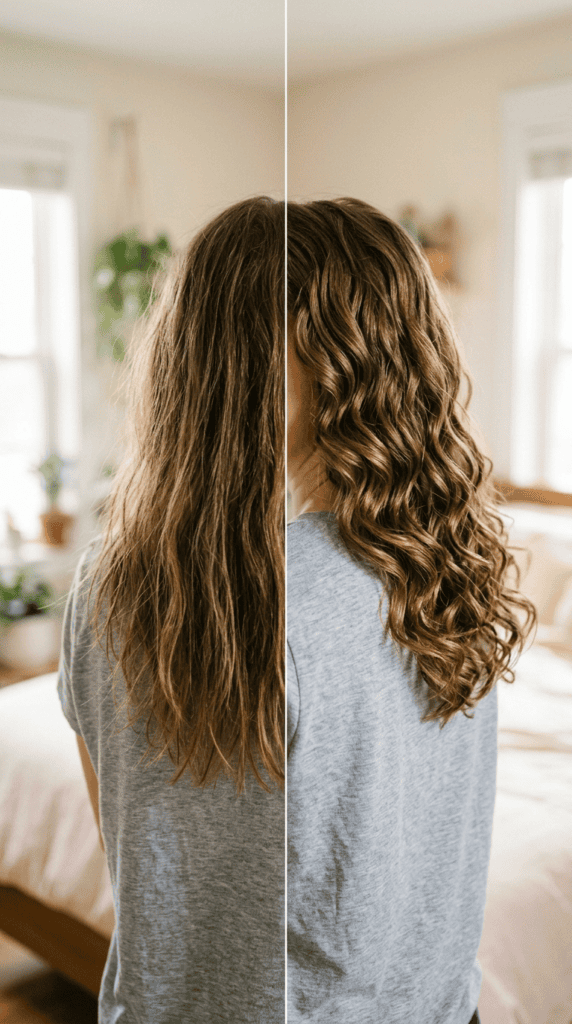
One loose braid for two hours (or overnight for more), released and finger-separated. The heatless wave-set that turns nearly-straight 2A hair into defined beachy waves.
The 2A rescue: 2A waves disappear by noon on their own — the braid-set is the definition treatment that makes the loosest pattern hold. The overnight method from our thanksgiving curly hair guide’s heatless section, wave-adapted.
6. The Half-Up Claw Twist
Both front sections twisted backward and secured with a large claw clip — the twisted half-up with more volume than the knotted version. For the events where the full down-style feels too flat.
7. The Side-Swept Waves
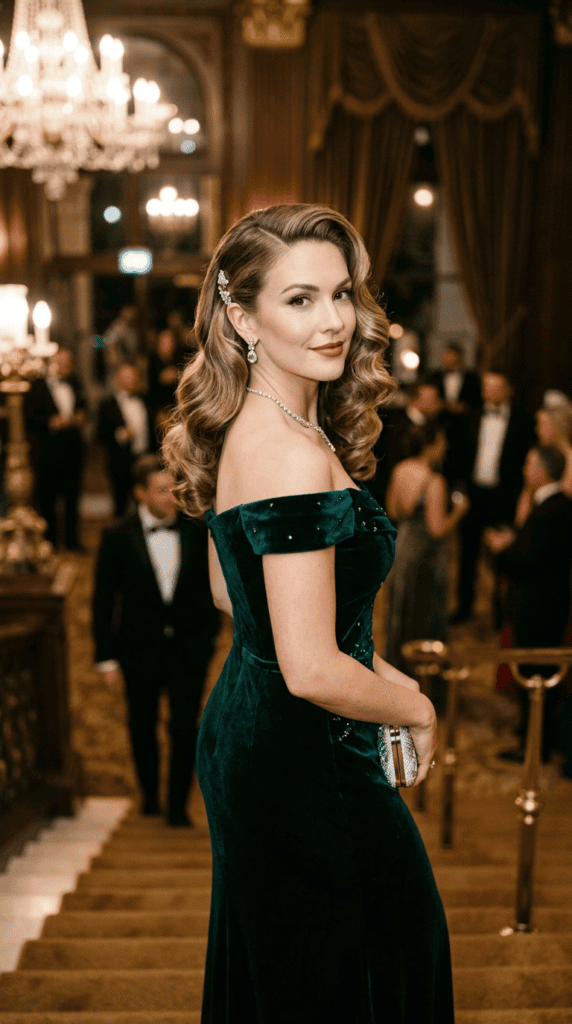
Deep side part, all waves swept to one side, pinned loosely behind the ear on the lighter side. The old-Hollywood wave placement that photographs like an event.
The event note: this is the style for weddings and dinners — the side-sweep reads occasion even on week-old waves.
🌙 The Overnight Styles (Set Before Sleep)
8. The Two-Braid Overnight Set

Two loose braids before bed — released into uniform waves every morning. The daily heatless wave system for 2A and 2B patterns.
The consistency trick: braid at the same dampness level nightly and the waves come out identical daily — the uniformity that random heat-styling never achieves.
9. The Bantu-Style Wave Set
Small twisted sections all over the head, released into voluminous 2C-style waves. The method that gives flat waves real body overnight.
The 2C note: 2C waves wear this set as definition rather than volume — the twists organize the pattern instead of adding body.
🌊 The Wave-Friendly Cuts (TheStyles That Need the Right Cut)
10. The Long Bob (Lob) with Waves

The collarbone lob — the cut that makes waves read intentional. The lob’s weight pulls waves into a defined S-shape instead of letting them scatter.
The cut note: the lob works with every wave type, which is why it dominates every wavy-hair Pinterest search. The full cut guide lives in our medium length haircuts 2026 guide.
11. The Butterfly Cut for Waves
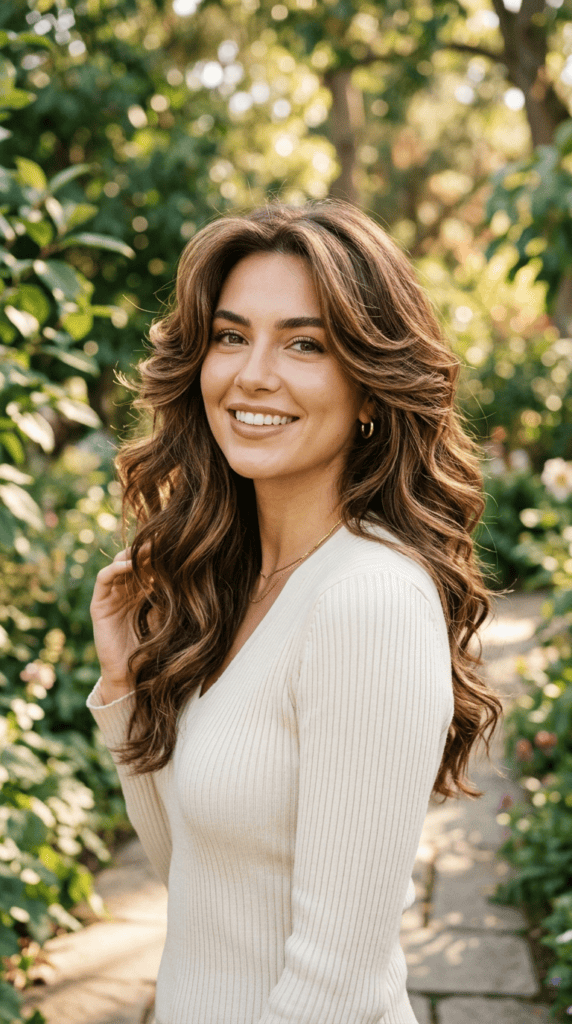
The face-framing layered cut that makes waves read voluminous — the layers give the waves lift at the frame while the length stays. The cut-color-curl trio from our butterfly haircut guide, wave-native.
12. The Layered Shag
The shag’s layers give 2C waves the structure to read defined instead of frizzy — the cut that turns the heaviest wave pattern into texture.
The 2C note: 2C waves and shags are the pairing that stylists recommend most — the layers remove the weight that pulls 2C waves flat.
The 5 Wave Hacks (The Problems Every Wavy Girl Knows)
Hack 1 — The frizz fix: the frizz lives in dry surface hair, not in the pattern. One drop of oil on wet palms, smoothed over — not raked through — kills surface frizz in ten seconds. The oil seals; raking re-fuzzes.

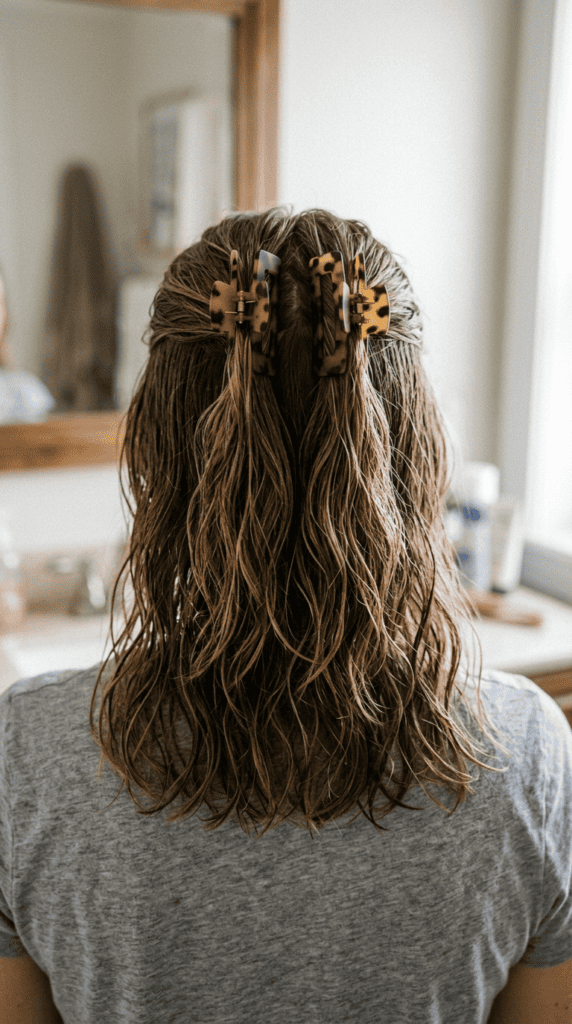
Hack 2 — The flat-roots fix: clip the roots at the crown while hair dries — two claw clips at the part lines, removed when dry. The lift that lasts all day, achieved during the dry.
Hack 3 — The second-day revival: water and leave-in in a spray bottle, scrunched in sections. Day-two waves read better than day-one when revived correctly — the second-day texture is the wavy girl’s privilege.
Hack 4 — The hoodie-hair fix: the static and flat spots from winter hats revive with the same water spritz and a re-scrunch — the winter survival from our winter hair braid guide’s hat-reveal section, wave edition.
Hack 5 — The product-buildup reset: wavy hair collects product at the scalp faster than any texture — one clarifying wash every two weeks resets the pattern. Skip this and the waves flatten no matter what products follow.
The Wave Care Routine (The Full System)
The care that keeps the pattern alive between styles — the four pillars.
Wash: sulfate-free shampoo twice weekly maximum, conditioner mid-lengths to ends only. The scalp gets shampoo; the waves get conditioner — the two-zone system that keeps roots clean and ends hydrated.
Deep condition weekly. The hydration that wave patterns drink — the weekly mask from our hair care routine for women guide’s moisture chapter.
Dry with cotton, never terry. The t-shirt plop and the cotton pillowcase — the two fabric swaps that stop the friction frizz at its source.
Heat with protection, sparingly. The diffuser on low is the wavy girl’s best heat tool — and the heat protectant before it, every time. The full protection system lives in our hair care routine 2026 guide.
Wavy Hair FAQ
How do I make my wavy hair more defined?
Style soaking wet with leave-in conditioner, scrunch upward, plop in a cotton t-shirt for ten minutes, and never brush once dry. The definition comes from moisture and hands-off drying — brushing and hot water are what scatter the pattern.
What is the difference between 2A, 2B and 2C hair?
2A waves are loose and read almost straight when brushed, 2B waves show clear S-shapes from mid-length, and 2C waves are thick and defined with some true curls mixed in. Each type styles differently — 2A needs the most definition help, 2C needs the most frizz control.
Should wavy hair be brushed?
Only when wet with conditioner in — brushing dry wavy hair breaks the pattern into frizz. Between washes, finger-detangle or use a wide-tooth comb on conditioned hair, and the wave pattern stays intact.
What products do wavy hair actually need?
Three essentials: a leave-in conditioner applied to wet hair, a light mousse or wave spray for hold, and a drop of oil for surface frizz. The heavy curl creams that Type 3 and 4 hair use weigh waves down — the wavy routine is the lighter version.
What haircuts work best for wavy hair?
The collarbone lob, the butterfly cut, and the layered shag — all three give waves the structure to read defined. The one-length cut lets waves scatter; the layered cuts organize them, which is why the cut decision shapes every styling day that follows.
More questions? Ask us on Facebook and we will match a routine to your exact wave type.

The In-Between Was the Advantage
Three wave types, twelve styles, and the five hacks that fix what every wavy girl thought was unfixable — wavy hair stops being the confusing middle the moment it gets its own manual.
Identify your type tonight. Try the four-step prep tomorrow. And when the waves hold from morning to midnight for the first time, the in-between texture becomes the one you would never trade.
Save this guide to our Pinterest boards so it is on your phone every wash day, and pair the wave education with the cuts in our medium length haircuts 2026 guide and the care in our hair care routine for women collection — the waves decoded, fully.
New texture guides every week. Stay wavy, stay defined! 🌊