


Sneakers are the only shoe that works with literally everything — and the shoe that most people wear wrong.
The sneaker aisle offers ten different families — the clean whites, the chunky dad sneakers, the retro runners, the high-tops, the skate classics — and every one pairs with different outfits. The white sneaker that works with every dress reads wrong beside the baggy jeans that the chunky sneaker completes. The sneaker family has rules, and the rules are why some sneaker outfits read styled while others read like you gave up.
So this guide decodes every sneaker type — what each one pairs with, what each one reads, and the one rule that separates styled sneakers from default sneakers. The sneaker aisle becomes a map, and every outfit gets its sneaker.
The sneaker is the outfit’s last decision and its loudest signal. Decode it.
Follow our Pinterest boards for daily sneaker styling, and join us on Facebook so you never miss a shoe guide.
The Golden Sneaker Rule (The One That Separates Styled from Sloppy)
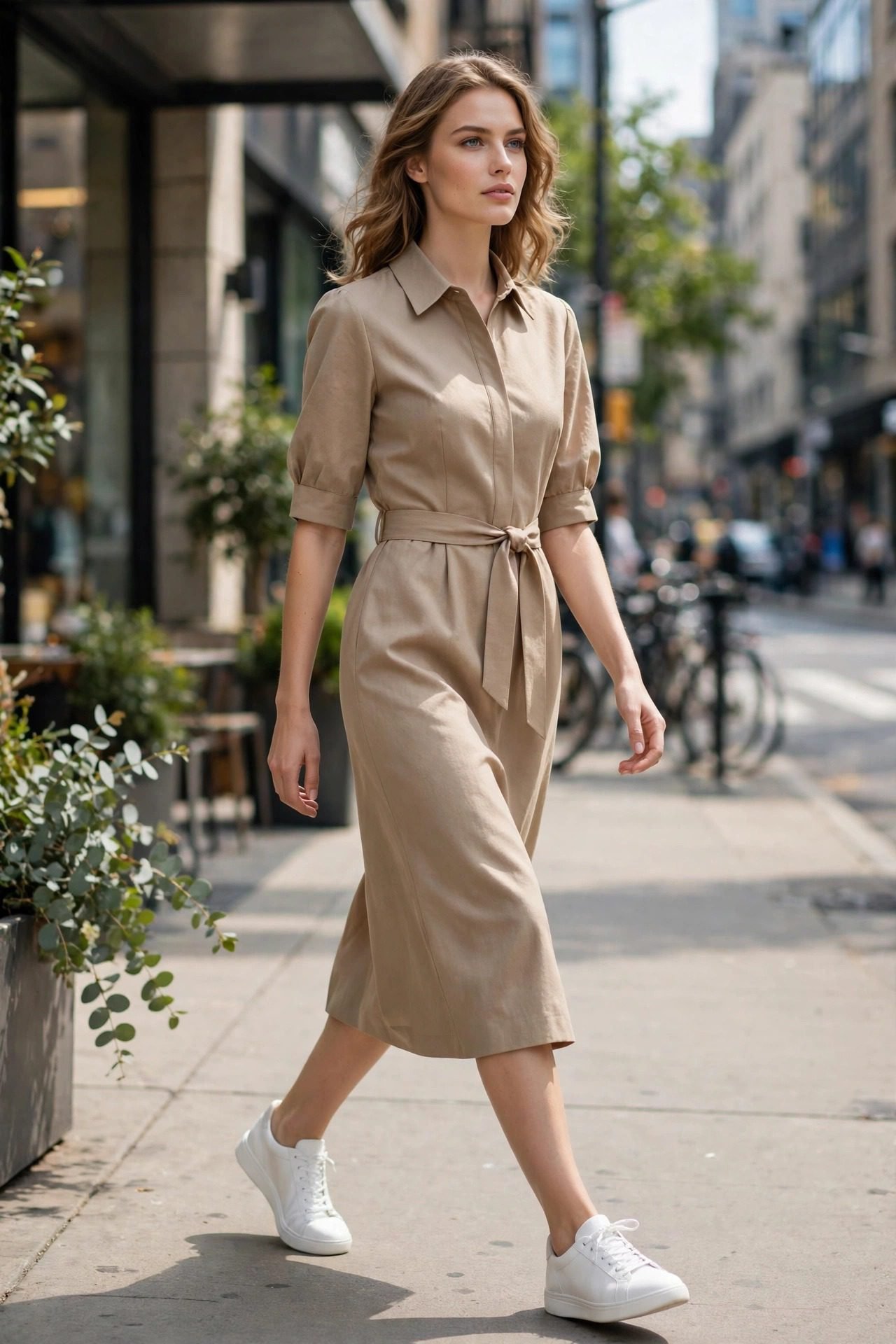
One rule decides whether sneakers read styled or default — the clean test.
Clean sneakers read styled. Dirty sneakers read default.

The same white sneaker reads editorial when clean and careless when scuffed — the condition of the sneaker is the single biggest factor in how any sneaker outfit reads. The wipe-down before leaving is the one habit that makes every sneaker formula in this guide work.
The second rule: the sneaker’s bulk matches the outfit’s volume — chunky sneakers for baggy fits, slim sneakers for fitted fits. The volume-matching from every proportion discussion applies to the shoes double, because the shoe is where the outfit meets the ground and the eye reads the balance.
Both rules together — clean and volume-matched — make every sneaker formula below work.
Sneaker Type 1: The Clean White Sneaker — The Universal

The sneaker that pairs with literally everything — the white leather minimal sneaker, the most versatile shoe in fashion history.
The personality: the blank canvas — the white sneaker that reads styled with dresses, jeans, suits, skirts, and every outfit in between. The sneaker that made “sneakers with everything” a legitimate styling philosophy.
What to wear them with:
- Midi dresses and skirts — the sporty-elegant contrast that reads current.
- Tailored trousers — the office-casual sneaker that creative codes allow.
- Baggy jeans — the classic pairing, when the sneaker is clean.
- Literally everything else — the white sneaker is the sneaker equivalent of the white tee.

The maintenance commandment: the white sneaker lives or dies by its cleanliness — the wipe-down after every wear, the deep clean monthly, and the replacement when the whitening stops working. The white sneaker that stays white is the sneaker that stays in rotation. The scuffed white sneaker is the fastest sloppy signal in fashion.
The buying note: leather white sneakers outlast canvas by years and clean easier — the leather version is the investment, the canvas version is the seasonal refresh. The leather from our boots style guide guide’s quality logic applies to white sneakers identically.
Sneaker Type 2: The Chunky Dad Sneaker — The Statement

The exaggerated-sole sneaker — the volume statement that turned “ugly” into the most fashionable shoe of the decade.
The personality: the statement sneaker — the chunky sole that reads fashion-forward and pairs with the outfits that balance its volume.
What to wear them with:
- Baggy jeans — the volume matching volume, the street formula that reads intentional.
- Fitted dresses — the chunky-feminine contrast that photographs editorial.
- Tailored trousers — the unexpected pairing that reads fashion-week.
The one-volume rule: chunky sneakers demand the rest of the outfit hold proportion — the fitted top with the baggy jeans, or the slim dress with the chunky sole. All-chunky reads costume; the anchored chunk reads styled. The proportion rule from our guide on how to style baggy jeans guide applies to the shoes directly.
The color note: the white or neutral chunky sneaker is the versatile version; the colorful chunky sneaker is the statement that needs a neutral outfit to support it. One loud element per outfit — the chunky sneaker is often that element.
Sneaker Type 3: The Retro Runner — The Current It-Sneaker

The vintage-inspired running sneaker — the Samba/Onitsuka family that became the most current sneaker of the decade.
The personality: the current sneaker — the retro runner that reads fashion-aware without trying. The sneaker that every street style photographer photographs.
What to wear them with:
- Baggy jeans and a baby tee — the formula that the retro runner was born for.
- Barrel-leg pants — the modern silhouette that the retro runner completes.
- Midi skirts — the sporty-feminine contrast that reads current.
The trend note: the retro runner is the current sneaker trend — and the trend has lasted long enough to be a classic. The Samba family’s three-year run is the longest sneaker trend in recent memory, and it shows no signs of slowing. The runner is the sneaker to buy this season.
The style note: the retro runner suits slim-to-regular fits best — the vintage silhouette sits proportionally with current fits, and the baggy-denim pairing works when the jeans are tapered at the ankle.
Sneaker Type 4: The High-Top — The Statement Ankle
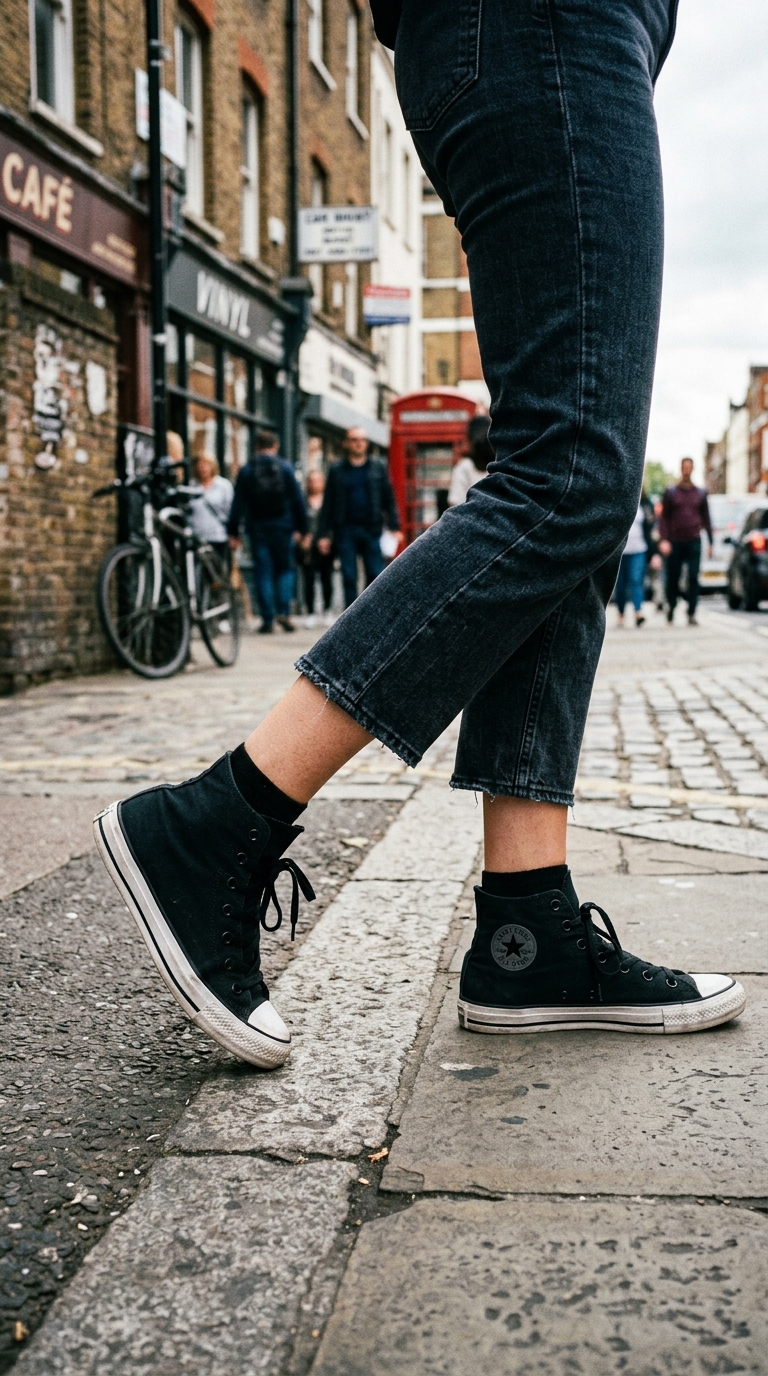
The sneaker that covers the ankle — the Converse and Jordan family that reads street, sport, and statement at once.
The personality: the personality sneaker — the high-top that makes the ankle the outfit’s detail zone and the sneaker the outfit’s loudest element.
What to wear them with:
- Slim or straight jeans — the jeans that let the high-top read. The baggy jeans hide the high-top’s entire identity.
- Shorts and skirts — the summer pairing that shows the full high-top.
- The tucked or cropped tops — the proportion that balances the high-top’s visual weight.
The pairing rule: the high-top needs visible space — the skinny or straight jean, the short hem, the cropped pant. The high-top hidden under baggy hems is the high-top wasted. The visibility is the style.
Sneaker Type 5: The Skate Classic — The Origin Story

The Vans and Converse low-top family — the original sneaker that started the casual-shoe revolution and never left.
The personality: the origin sneaker — the skate classic that reads every aesthetic from grunge to clean-girl. The sneaker that has survived every trend cycle since the 70s.
What to wear them with:
- Everything the 90s built — the flannel, the slip dress, the mom jeans, the baby tee. The skate classic is the 90s revival’s official shoe, from our 90s fashion guide’s permanent pieces.
- Casual everything — the skate classic reads right beside every casual outfit in the closet.
The canvas truth: the skate classic wears in beautifully — the canvas that molds to the foot and fades with character. The skate classic that looks worn reads authentic; the skate classic that looks new reads untested.
The one caution: the flat sole and thin canvas offer no support for long days — the skate classic is the style shoe, not the walking shoe. The all-day errand sneaker is a different family.
Sneaker Type 6: The Performance Sneaker — The Function Family
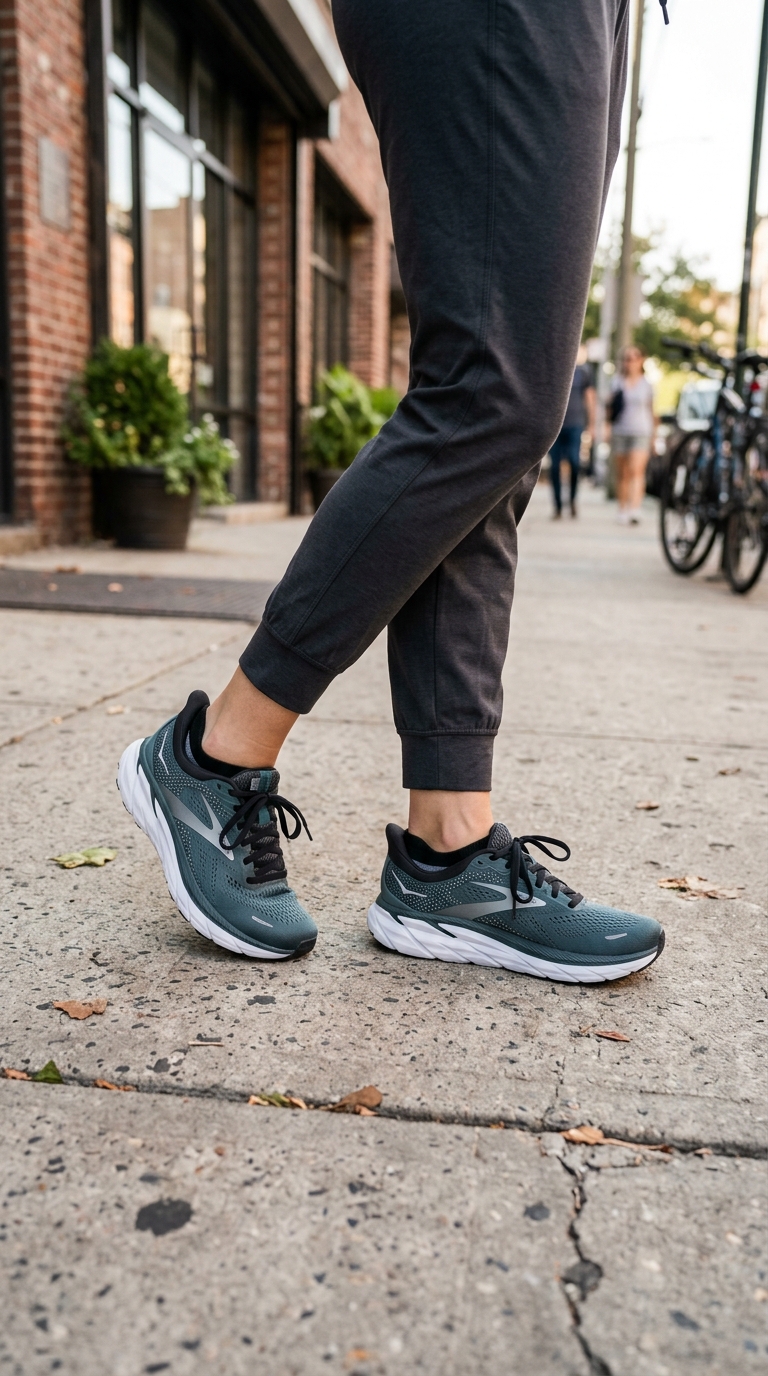
The actual athletic sneakers — the running shoes and trainers that were built for sport and now live in fashion.
The personality: the function-first sneaker — the performance sneaker that reads athleisure and pairs with the athleisure outfits from our how to style baggy jeans guide’s athleisure formula.
What to wear them with:
- Athleisure builds — the leggings, the joggers, the matching sets. The performance sneaker’s native habitat.
- The fashion-performance mix — the trend that put running shoes beside tailored pieces — the mix that reads current when the rest is styled.
The honest note: the performance sneaker reads athleisure, not fashion — the running shoe beside a dress reads gym-adjacent unless the rest of the outfit is deliberately styled. The performance sneaker in the fashion context needs the styling support the fashion sneakers don’t.
The Sneaker Cleaning Guide (The Maintenance That Keeps Every Pair Styled)

The cleaning habits that keep every sneaker in this guide reading styled — the routine per material.
Leather sneakers: the wipe-down after every wear with a damp cloth, the deep clean monthly with leather cleaner, and the conditioning when the leather starts looking dry. The leather sneaker that gets wiped daily reads new for years.
Canvas sneakers: the hand-wash with mild soap and cold water — the machine wash warps the canvas. Air-dry always; the dryer shrinks and yellows the canvas.
The mesh performance sneakers: the hand-wash with mild detergent, air-dry away from heat. The mesh that machine-dries melts and warps — the air-dry is non-negotiable.
The white sneaker rescue: the magic eraser on the rubber soles, the toothpaste trick on the leather (gently), and the replacement decision when the whitening stops working. The white sneaker’s lifespan is determined by the owner’s cleaning commitment.
The Sneaker Rotation (Why One Pair Isn’t Enough)

The sneaker math that most people get wrong — the rotation that extends every pair’s life.
The two-pair minimum: one white sneaker for the styled outfits, one dark or statement sneaker for the casual builds. The two-pair rotation lets each pair rest and recover between wears — the rest that extends the life of both.
The three-pair ideal: the white leather (the universal), the retro runner (the current), and one statement pair (the chunky or the colorful). The three-pair rotation covers every outfit in the wardrobe and doubles each pair’s lifespan through the rest days.
The wear pattern: sneakers need twenty-four hours to decompress after wearing — the pair worn yesterday is the pair that shouldn’t be worn today. The rotation is the shoe’s recovery time, and the recovery is what keeps the shape and the cushioning alive.
The cost-per-wear math from our guide on how to look expensive on a budget guide applies to sneakers triple — the rotated three pairs outlast the single worn-daily pair by years.
Sneakers FAQ
What sneakers go with everything?
The clean white leather sneaker — it pairs with dresses, jeans, suits, skirts, and every outfit in the wardrobe. The white sneaker is the sneaker equivalent of the white tee: the universal base that reads styled beside everything when kept clean. One pair of white leather sneakers is the foundation of the entire sneaker rotation.
How do I keep white sneakers clean?
Wipe with a damp cloth after every wear, deep clean monthly with leather cleaner, use the magic eraser on the rubber soles, and replace when the whitening stops working. The leather versions clean easier than canvas and last years longer — the leather white sneaker is the investment version of the universal.
What sneakers are trending for 2026?
The retro runner leads — the Samba and Onitsuka family that has lasted three years and counting. The chunky dad sneaker holds its place, the skate classics never left, and the high-top returns seasonally. The retro runner is the sneaker to buy this season.
Can I wear sneakers with dresses?
Yes — the clean white sneaker with a midi dress is one of the most current pairings in fashion, and the contrast reads sporty-elegant. The chunky sneaker with a fitted dress reads editorial. The skate classic with a sundress reads 90s. Every sneaker family pairs with dresses — the proportion and the cleanliness decide the read.
How many pairs of sneakers should I own?
Three — the white leather universal, the retro runner or chunky statement for the current looks, and one casual pair for the gym and errands. The three-pair rotation doubles each pair’s lifespan through the rest days and covers every outfit in the wardrobe.
More questions? Ask us on Facebook and we will help you build the sneaker rotation that matches your wardrobe.

The Sneaker That Matches the Outfit
Six sneaker families, the golden rule, and the rotation that extends every pair — sneakers stop being the default shoe and become the outfit’s deliberate final decision tonight.
Count your sneaker families — the white leather, the retro runner, the chunky statement. The rotation maps itself against this decoder, and the next sneaker purchase becomes the planned slot instead of the impulse.
Save this decoder to our Pinterest boards so it is on your phone at the store, and pair the sneaker guide with the boot decoder in our boots style guide guide and the outfits they complete in our casual outfits for women collection — every shoe family decoded.
New shoe decodes every week. Stay clean, stay rotated! 👟



[…] Platform sneakers, knee-high boots, ballet flats, and wedge heels — the era’s four. Every look above names its match, and the full sneaker science lives in our sneakers guide. […]
[…] Lifting wants a flat, stable sole so force travels through a planted heel; running and HIIT want cushion and a little bounce. If you buy only one pair, choose a crossover trainer that leans toward the work you do most — the full breakdown lives in our sneakers guide. […]