Every woman who has ever walked out of a salon with a fresh set of nail extensions knows the specific confidence it produces — hands that photograph beautifully, fingers that look longer, a manicure that survives three weeks of real life. But walk into that same salon and ask for “extensions” and you have actually said nothing at all: acrylic, hard gel, soft gel tips, polygel, dip, fibreglass, and press-ons are all extensions, and they behave nothing like each other in cost, wear, comfort, and damage risk.
This guide fixes that. It profiles every nail extension type in the same seven fields — so you can compare like with like instead of relying on a technician’s preference — then puts all seven side by side in one master table, walks you through which type fits which life, does the honest monthly cost math, and covers the two things most guides skip: how to live with extensions for the first 48 hours, and how to remove them without shredding the nail underneath. By the end, you will not just know the types — you will know your type.
Save this guide to your Daily Juggar Pinterest boards before your appointment, and browse our wider nail ideas library for the design you will want painted on top.
What Nail Extensions Actually Are (and What They Are Not)

Nail extensions are artificial material — powder, gel, mesh, or a pre-formed tip — added ON TOP of your natural nail to create length and shape that your nail plate cannot grow or support on its own. That definition matters, because it separates extensions from everything else on the salon menu. A gel overlay adds strength but no length. A manicure adds color but no structure. Extensions change the architecture itself: they give you a longer, thicker canvas that holds whatever design you want — from a classic set of french tips to full chrome work that would chip off a natural nail in a day.
Two construction methods exist across every type. Tip extensions glue or bond a pre-shaped plastic tip to the natural nail, then cover it with the strengthening material. Sculpted extensions are built freehand over a temporary form placed under the nail edge, creating the whole nail from material alone — stronger at the stress point, more expensive, and the mark of a senior technician. Neither method is “better”; sculpted wins on fit and strength, tips win on speed and price.
One truth before the index, because it prevents most disappointment: extensions do not damage nails — behavior damages nails. Ripped-off sets, skipped fills, prying at lifts, and solvent-free removal do the damage. The material is almost never the villain; the maintenance habits are. Keep that in mind as we go through the index.
The Extension Index: Every Type, Same Seven Fields

Seven types, identical fields, so the comparison is honest. Each profile ends with an Index note — the one detail that changes real-world results.
1. Acrylic Extensions
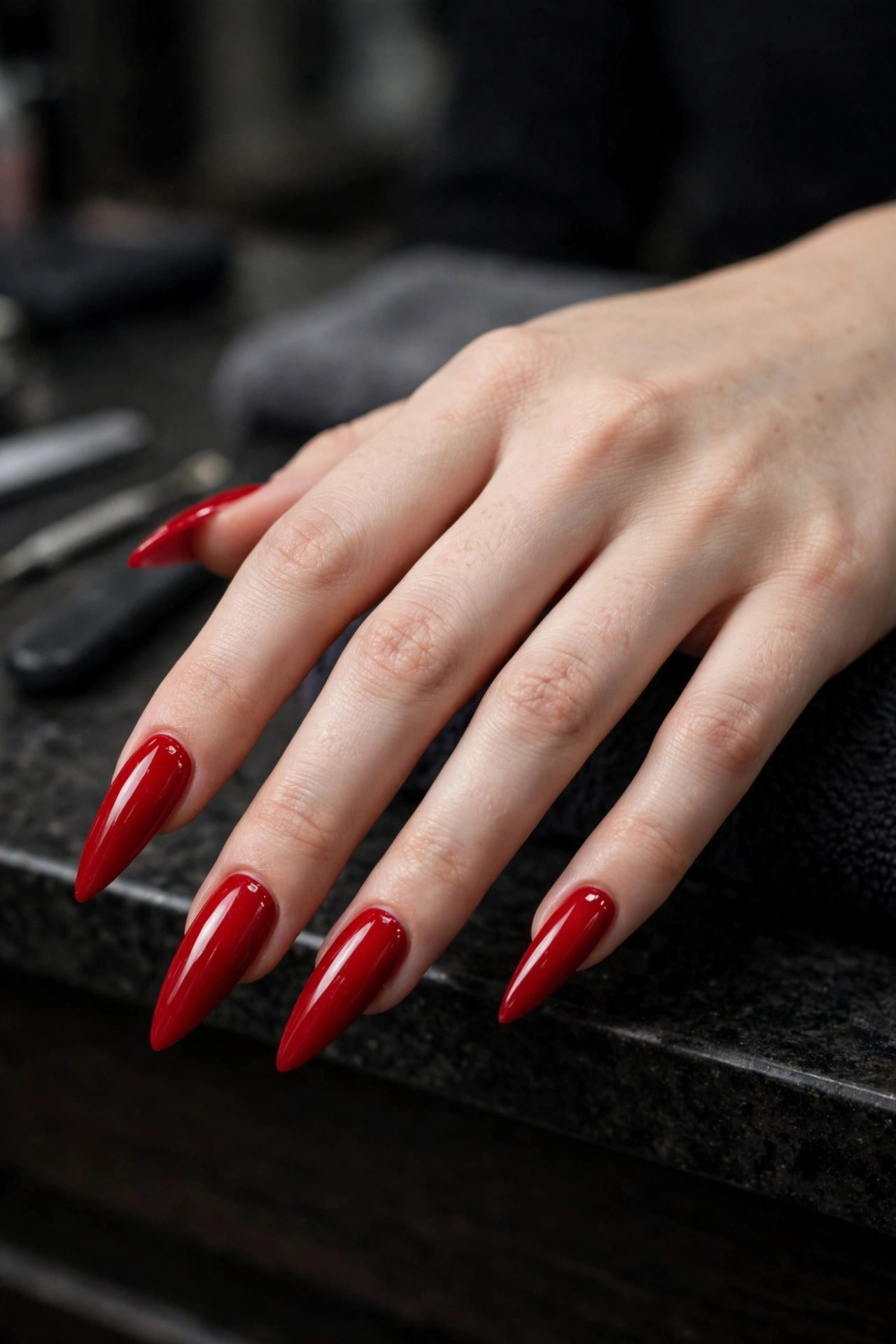
The original and still the industry workhorse: a liquid monomer mixed with a powder polymer that hardens in air within minutes, sculpted over tips or forms into any length and shape. Acrylic is the strongest material on this list, which is why it remains the default for dramatic lengths and for anyone whose hands actually work for a living. The full library of looks it supports lives in our acrylic nail designs guide.
- The basics: Liquid-plus-powder system, air-cured, applied over tips or sculpted on forms.
- Wear time: 2–3 weeks before a fill; many wear sets for months with regular fills.
- Cost & chair time: Typically $40–70 for a full set, $25–45 for fills, 60–90 minutes (prices vary by city and salon).
- Best for: Maximum strength, long lengths, hands-on jobs, dramatic shapes.
- The deal-breaker: Hardest removal (a long acetone soak or professional file-down), a strong salon odor during application, and the highest risk of natural-nail thinning when removal goes wrong.
Index note: strength lives in the apex — the raised curve near the cuticle. If a set is filed flat there, it snaps no matter how thick it feels.
2. Hard Gel Extensions
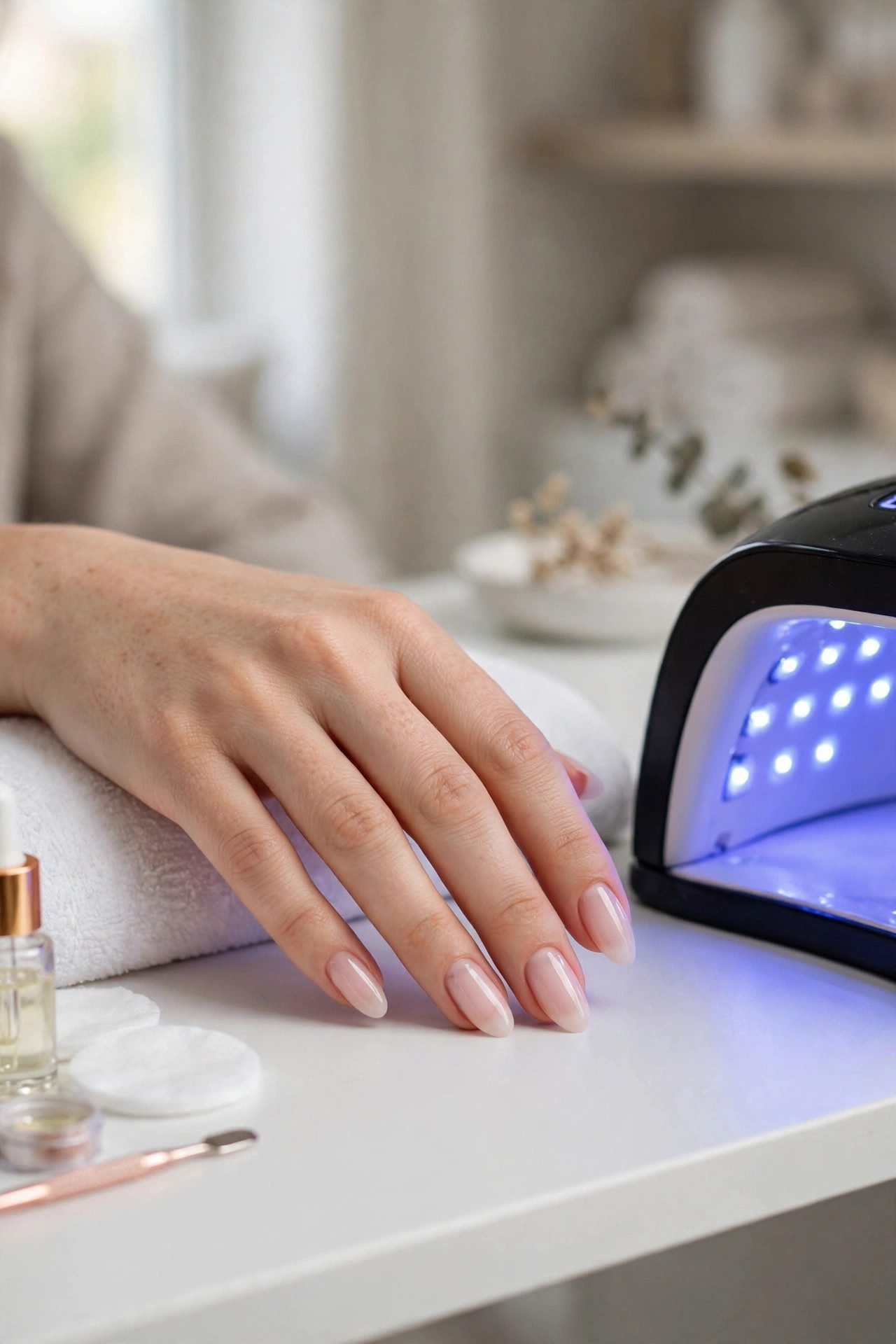
Brush-on gel that stays pliable until it is cured under a UV or LED lamp, layered over tips or built in sculpting forms. Hard gel is nearly as strong as acrylic but flexes slightly, which makes it more forgiving on impact — and it is completely odorless. The system overlaps heavily with what we compare in our acrylic vs gel guide, and the full design range it carries is in our gel nails library.
- The basics: Thick self-leveling gel, lamp-cured in layers, over tips or sculpted in dual forms.
- Wear time: 3–4 weeks — the longest fill interval on the list.
- Cost & chair time: Typically $60–90 for a full set, 90–120 minutes.
- Best for: Strength with a more natural flex, odor-sensitive clients, long grow-out periods.
- The deal-breaker: Hard gel cannot be soaked off — ever. Removal means a careful professional file-down, so it is unforgiving of impatience and non-negotiable about salon removal.
Index note: hard gel is the material of choice for the “natural but longer” look because it self-levels into a thin, true-to-nail curve.
3. Soft Gel Tips (the Gel-X Family)

Full-coverage soft gel tips — pre-formed, transparent nails in every size and shape — bonded to the natural nail with gel adhesive and cured under the lamp. This is the system that went viral under the Gel-X name, and its rise is easy to explain: it delivers a complete extension set in about the same time as a regular gel manicure, with the most natural look of any strong option. Shorter lengths from this family pair beautifully with the styles in our short nail designs guide.
- The basics: Pre-made soft gel full-cover tips + gel adhesive, lamp-cured, then shaped and painted.
- Wear time: 2–3 weeks, sometimes 4 on healthy nails.
- Cost & chair time: Typically $55–85, 60–75 minutes — among the fastest full-set services.
- Best for: First-timers, natural-look lovers, anyone who wants length without chair-time commitment.
- The deal-breaker: Less impact-resistant than acrylic — a hard knock can crack or pop a tip, and the material costs more to replace at home than glue-on alternatives.
Index note: the entire system lives or dies on sizing — a tip even half a millimeter too narrow will lift within a week. Insist on perfect size-matching.
4. Polygel Extensions
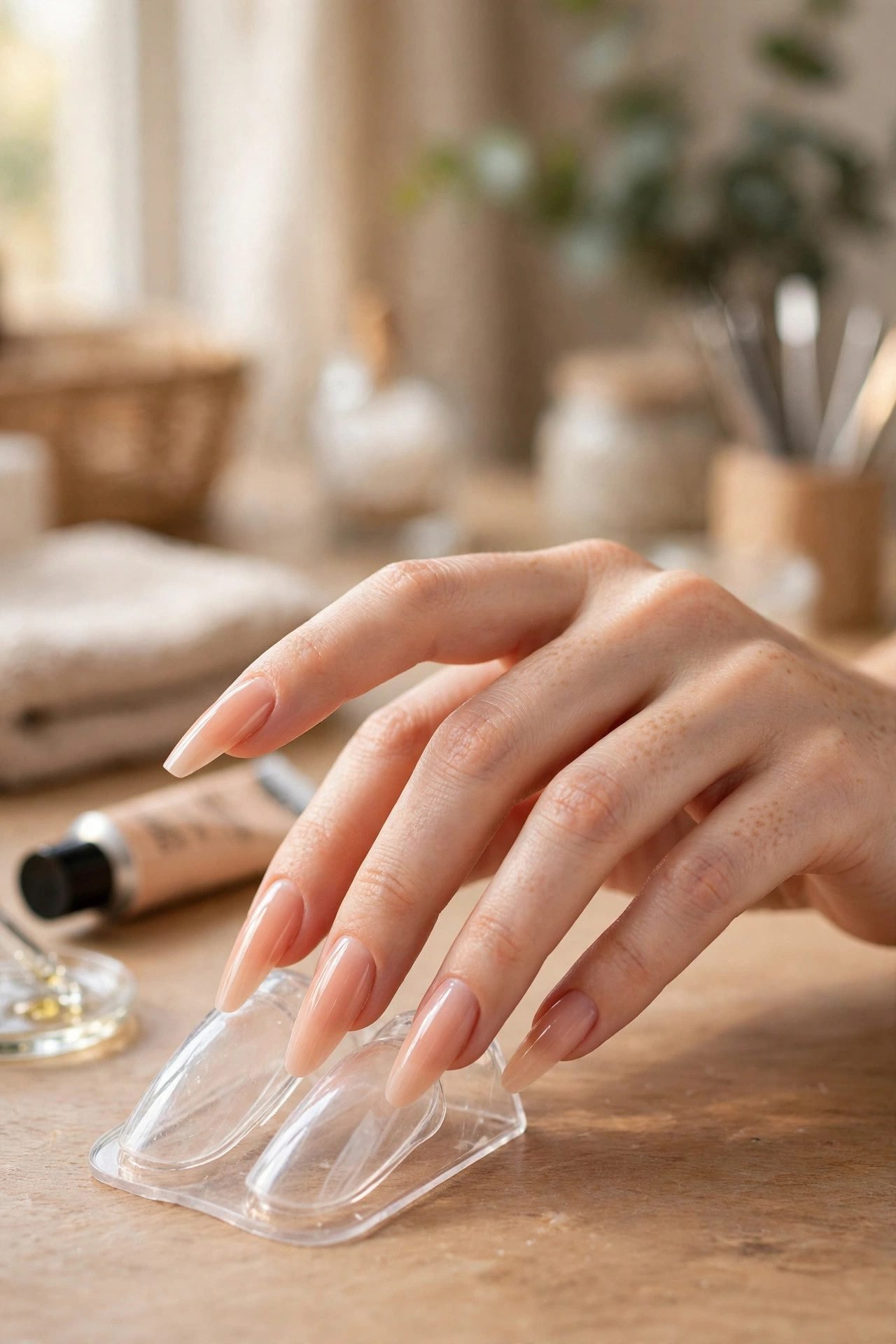
The hybrid: polygel is a premixed paste of gel and acrylic powder that combines acrylic’s buildable strength with gel’s light weight and zero odor. It is applied in beads, molded over dual forms, and cured under the lamp. Polygel feels noticeably lighter on the nail than acrylic — a real difference at longer lengths — and its self-leveling texture makes shaping forgiving. It remains the hardest to find: fewer salons stock it, and home kits vary wildly in quality.
- The basics: Gel-acrylic hybrid paste, molded on dual forms, lamp-cured.
- Wear time: 2–3 weeks.
- Cost & chair time: Typically $60–100, 75–105 minutes.
- Best for: The light-but-strong middle ground, longer lengths on weak nail plates.
- The deal-breaker: File-off removal (like hard gel), limited salon availability, and a home-market flooded with low-grade kits.
Index note: polygel’s lightness is its selling point at length — if long acrylics have ever felt heavy or “pulled” on your nail bed, this is the fix.
5. Dip Powder Extensions
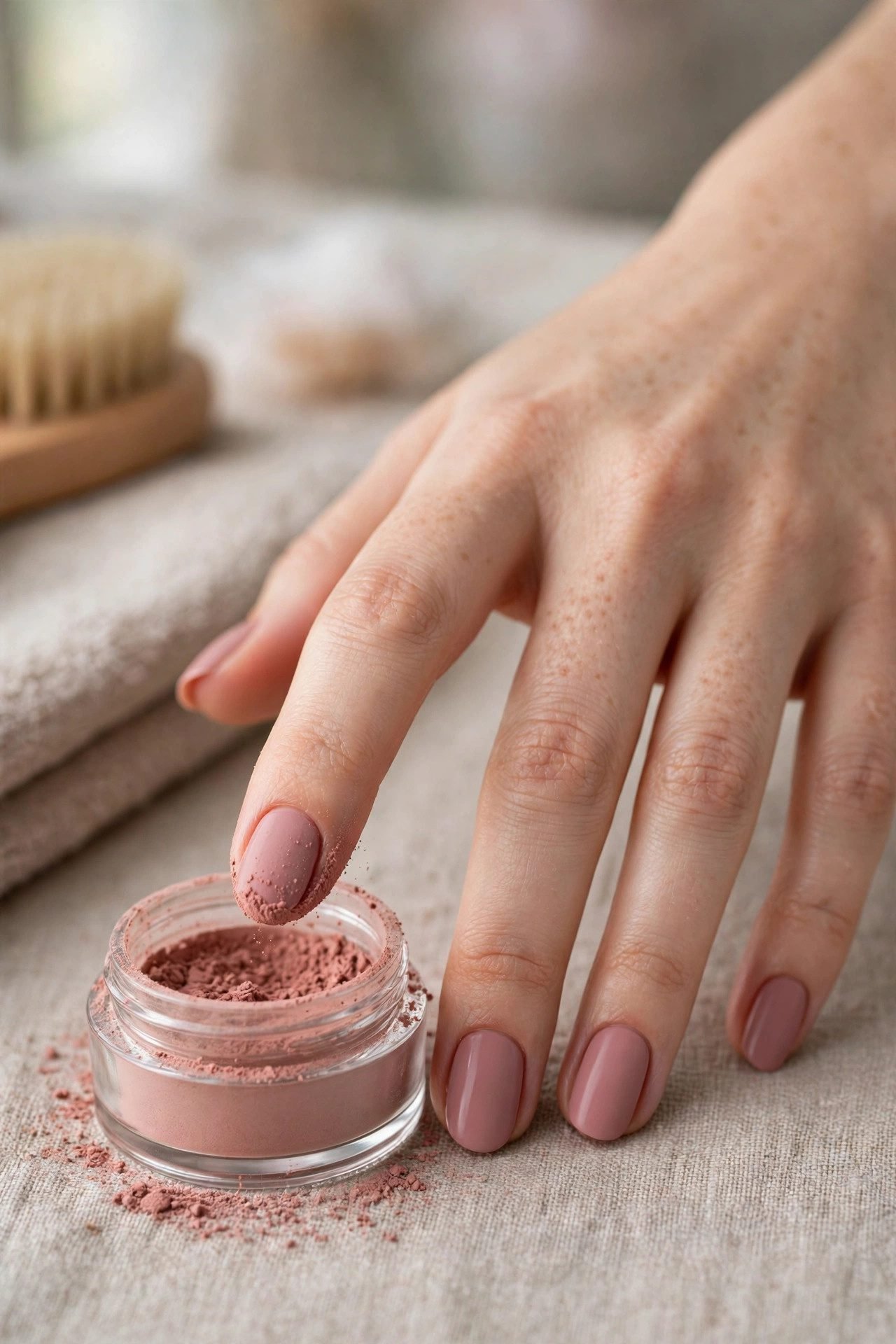
Dip is best known as a strength overlay on natural nails, but with a tip glued on first, it becomes a genuine extension system: resin layers built up by dipping into colored powder and sealed with an activator — no UV lamp involved. It sits lighter than acrylic and cures instantly, which is its entire appeal. The system’s ceiling is real, though: dip cannot build long, sculpted lengths, so it belongs to the short-and-medium tier.
- The basics: Glued tip + resin-and-powder layers, activated without a lamp.
- Wear time: 2–3 weeks.
- Cost & chair time: Typically $45–70, 60–75 minutes.
- Best for: Short-to-medium length without UV exposure, clients who hate lamp heat.
- The deal-breaker: Removal is an acetone soak that too many salons rush or scrape — and sloppy dip removal is one of the most common causes of damaged nail plates.
Index note: ask your salon to NEVER file the top seal off aggressively before soaking — that pre-file is where most dip damage happens.
6. Fibreglass and Silk Wrap Extensions

The couture option: a mesh of fibreglass or silk laid over the nail (or a tip), saturated with resin, and filed to an almost invisible thinness. Wraps build the most natural-looking, thinnest extension in existence — from across a table, nobody can tell. The trade is strength: wraps are the gentlest and weakest system, designed for modest length and for repairing, not conquering.
- The basics: Fibreglass or silk mesh + resin, layered thin, air or lamp cured.
- Wear time: 1–2 weeks — the shortest of the salon systems.
- Cost & chair time: Typically $50–80, 75–90 minutes (a slow, precise service).
- Best for: Thinnest natural look, transitioning nail-biters, repairing a split nail mid-growth.
- The deal-breaker: Not built for length or impact — a wrap that meets a heavy door edge will not survive it.
Index note: wraps are the classic “grow-out coach” — used for one or two cycles to carry a bitten or split nail to a healthy free edge, then switched for something stronger.
7. Press-On Extensions
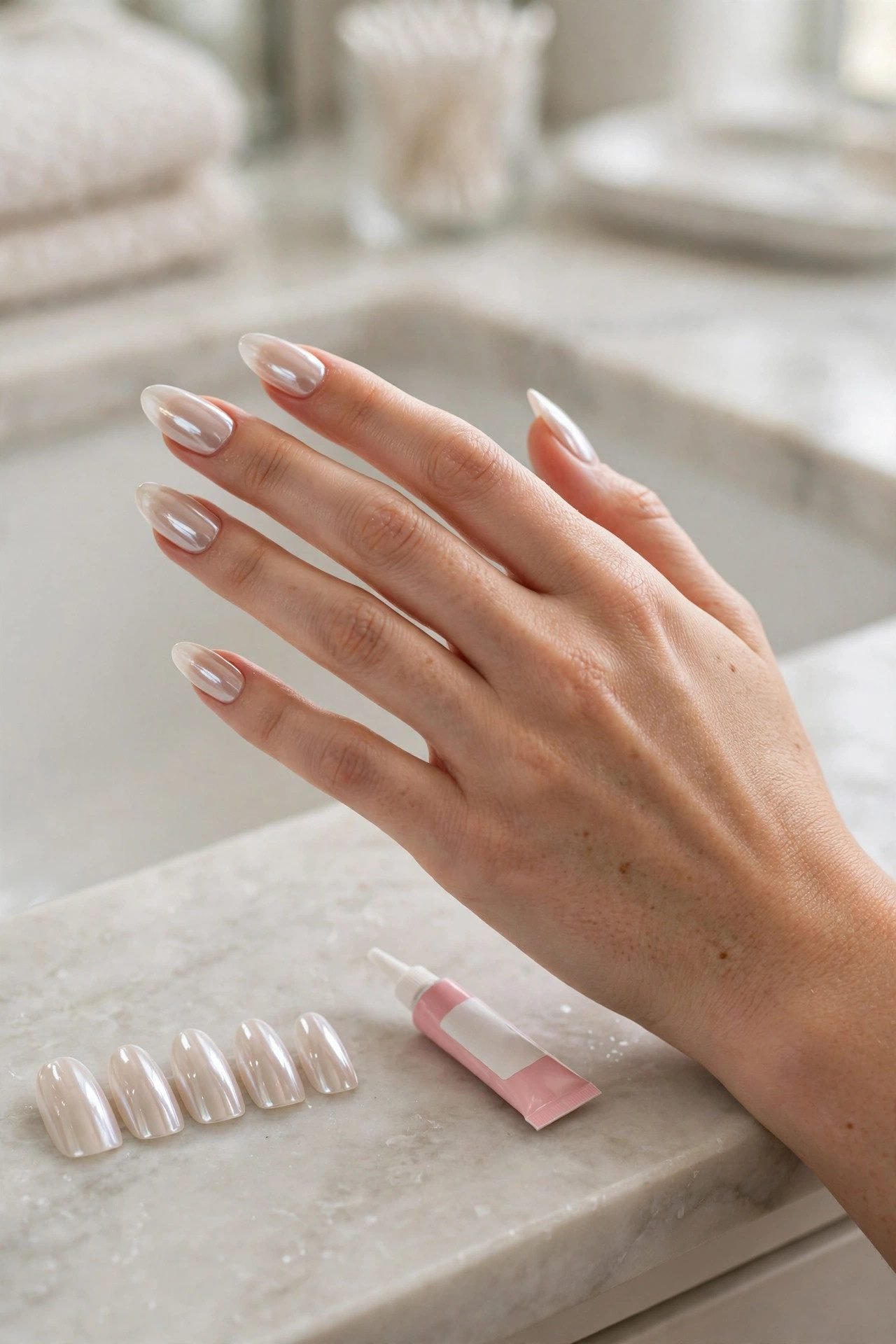
Yes, press-ons are extensions — the modern ones are molded, reusable, and dramatically better than the drugstore boxes of a decade ago. Applied at home with glue (one to two weeks of wear) or adhesive tabs (days, but zero damage), they deliver any length and shape in twenty minutes for the cost of lunch. For anyone reading this guide before a weekend event, they are the correct answer, and their quality ceiling keeps rising.
- The basics: Pre-made tips sized to your nails, applied with nail glue or adhesive tabs at home.
- Wear time: 1–2 weeks glued, 2–5 days on tabs; reusable if removed properly.
- Cost & chair time: $10–40 per set, 20 minutes in your bathroom.
- Best for: Budget, zero commitment, events, testing a shape before committing at a salon.
- The deal-breaker: Glue removal done wrong rips the nail plate — and cheap sets look cheap from arm’s length.
Index note: always size the full set BEFORE gluing anything — laying out ten nails on the table first is the difference between “salon” and “obvious.”
The Master Comparison Table

Every type, side by side. Costs are typical US salon ranges and vary by city; wear times assume healthy nails and disciplined care.
| Type | Applied with | Typical wear | Chair time | Soaks off? | Best for |
|---|---|---|---|---|---|
| Acrylic | Monomer + powder | 2–3 weeks + fills | 60–90 min | Yes (acetone) | Maximum strength & length |
| Hard gel | Brush-on gel, lamp | 3–4 weeks | 90–120 min | No — file only | Strength with natural flex |
| Soft gel tips / Gel-X | Pre-made tips + gel | 2–3 weeks | 60–75 min | Yes (acetone) | Fast, natural-looking sets |
| Polygel | Hybrid paste, dual forms | 2–3 weeks | 75–105 min | No — file only | Light weight at length |
| Dip (with tips) | Resin + powder, no lamp | 2–3 weeks | 60–75 min | Yes (acetone) | No-UV short-medium strength |
| Fibreglass / silk | Mesh + resin | 1–2 weeks | 75–90 min | Yes (acetone) | Thinnest natural look |
| Press-ons | Glue or tabs, at home | 3 days–2 weeks | 20 min | Soak or tab-peel | Budget & events |
Read the soak column carefully — it quietly decides your long-term nail health. Soakable systems forgive a curious home removal; file-off systems (hard gel, polygel) do not, and should only ever be removed by the salon that applied them.
Which Nail Extensions Are Right for You?

Match your reality to the scenario — that is faster than comparing materials in the abstract.
If this is your first set ever: soft gel tips. The service is fast, the look is natural, removal is a gentle soak, and the cost tells you whether the extension lifestyle suits you before you invest in heavier systems.
If your hands work for a living: acrylic, kept short-to-medium. It remains the only system that shrugs off gym grip, gardening, and keyboard marathons with equal indifference. Strength drops with length, so a practical length is what keeps the set alive.
If you are growing out bitten or damaged nails: fibreglass wraps for one or two growth cycles, or soft gel tips if you need more presence immediately. Both carry a fragile nail plate without judging it.
If you have an event in three days: press-ons, full stop. A quality set in your exact shape — and extensions are the fastest way to test-drive shapes like almond nails, coffin nails, or square nails before committing salon money — will outperform any rushed salon booking.
If your skin reacted badly to gel polish before: do not gamble with salon systems. Acrylate allergies are real, they worsen with exposure, and they transfer across gel, acrylic, and dip. The safe tier is press-ons with tabs — no chemistry touches your plate.
If your wedding is coming: hard gel or sculpted acrylic, booked two to three cycles before the date so the final fill lands a week before — the same timeline logic we use in our wedding nails guide.
The Real Cost of Nail Extensions

The sticker price is only the entry fee. A set of nail extensions is a subscription, and the honest math looks like this: a $60 full set every three weeks plus $35 fills in between works out to roughly $130–160 a month — around $1,700–1,900 a year before tips. Add removal fees ($10–20 at many salons) and the occasional emergency repair, and the extension habit costs about as much as a car payment in many cities.
Three ways to spend that money better. First, fill instead of replacing: a well-built set filled on schedule costs less than half a new set, so booking fills ON TIME is the single biggest saving in the entire extension economy. Second, stretch the cycle safely: the 3–4-week wear of hard gel means fewer annual services than acrylic’s 2–3-week rhythm. Third, run a hybrid habit: salon sets for seasons that matter, quality press-ons for the in-between months — a pattern that cuts the annual bill nearly in half without ever showing it.
None of this makes extensions a bad buy. It makes them a deliberate one — and a deliberate spender books the right system, not just the right design.
Living With Extensions: The First 48 Hours and Every Week After
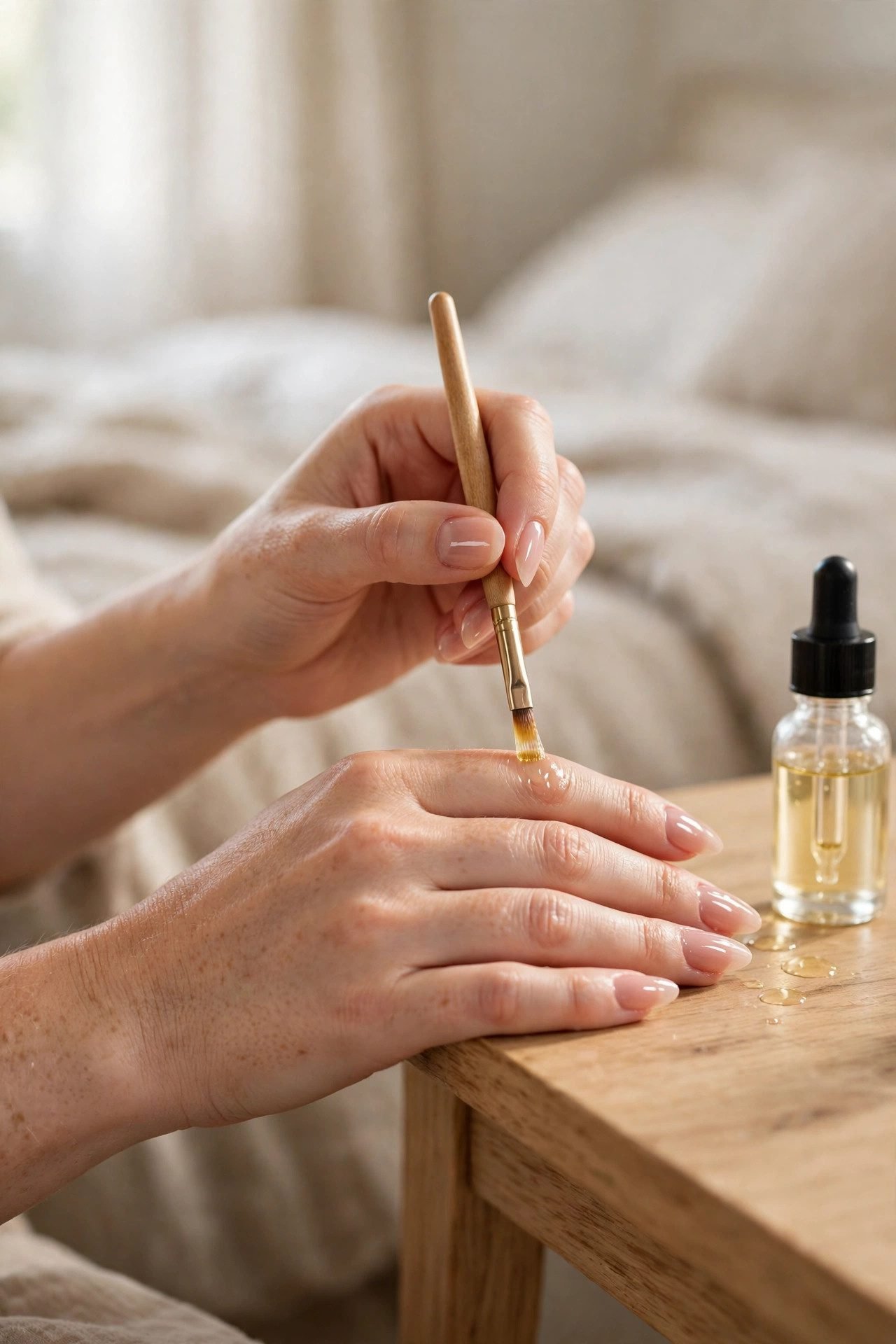
The first two days decide whether a set lives its full lifespan or dies young. In the first 48 hours: keep hands out of prolonged hot water (dishwashers, long showers, saunas — water wicks under the seal and starts lifts), skip any oil-based products near the cuticle line, and resist the instinct to test the edges. New extensions are fully cured but still finding their bond; treat them like wet nail polish that cannot be seen.
From day three onward, the weekly discipline is short. Cuticle oil every day — extensions pull the same oils your natural nail needs, and hydrated nails flex instead of cracking under the extension edge. Gloves for cleaning, gardening, and hair dye. And the lift check: once a week, run a thumb over every edge. A tiny lift is normal at week two or three and is solved at your fill. What is never normal is gluing a lifted extension back down yourself — sealed-in moisture becomes bacteria, and green spots under extensions are always a self-repair gone wrong. Lifts get looked at, not glued.
Two habits that quietly destroy sets: using nails as tools (opening cans, scraping labels, prying phone ports) and picking at the corner of any tip that feels loose. One pop usually takes the top layer of the natural plate with it — which is how three weeks of convenience becomes three months of recovery. The full recovery protocol, when you ever need it, lives in our nail care routine guide.
Removing Extensions Without Damage

Removal is where good extensions turn into bad nails, and the entire problem fits in one sentence: soakable systems get soaked, file-only systems get filed by a professional, and nothing gets forced. Ever.
For the soakable family — acrylic, soft gel tips, dip — the process is patience: the free edge trimmed, the surface lightly buffed, acetone-soaked cotton wrapped against each nail for 15–30 minutes, then gentle push-off with a wooden stick, re-soaking rather than scraping whenever material resists. The full step-by-step for the gel version lives in our how to remove gel polish guide, and it applies to soft gel tips exactly. For hard gel and polygel, there is no honest home method — the material only surrenders to controlled filing, and that is a salon chair, professional drill, and trained hand situation.
After any removal, give the plate a week of visible respect: no new set immediately, oil twice a day, and a clear or tinted strengthener if you want polish in the gap. Nails that get that rest week stay strong through years of extension cycles. Nails that get a fresh set the same afternoon are the ones that end up paper-thin — not because of the extensions, but because of the calendar.
When NOT to Get Nail Extensions
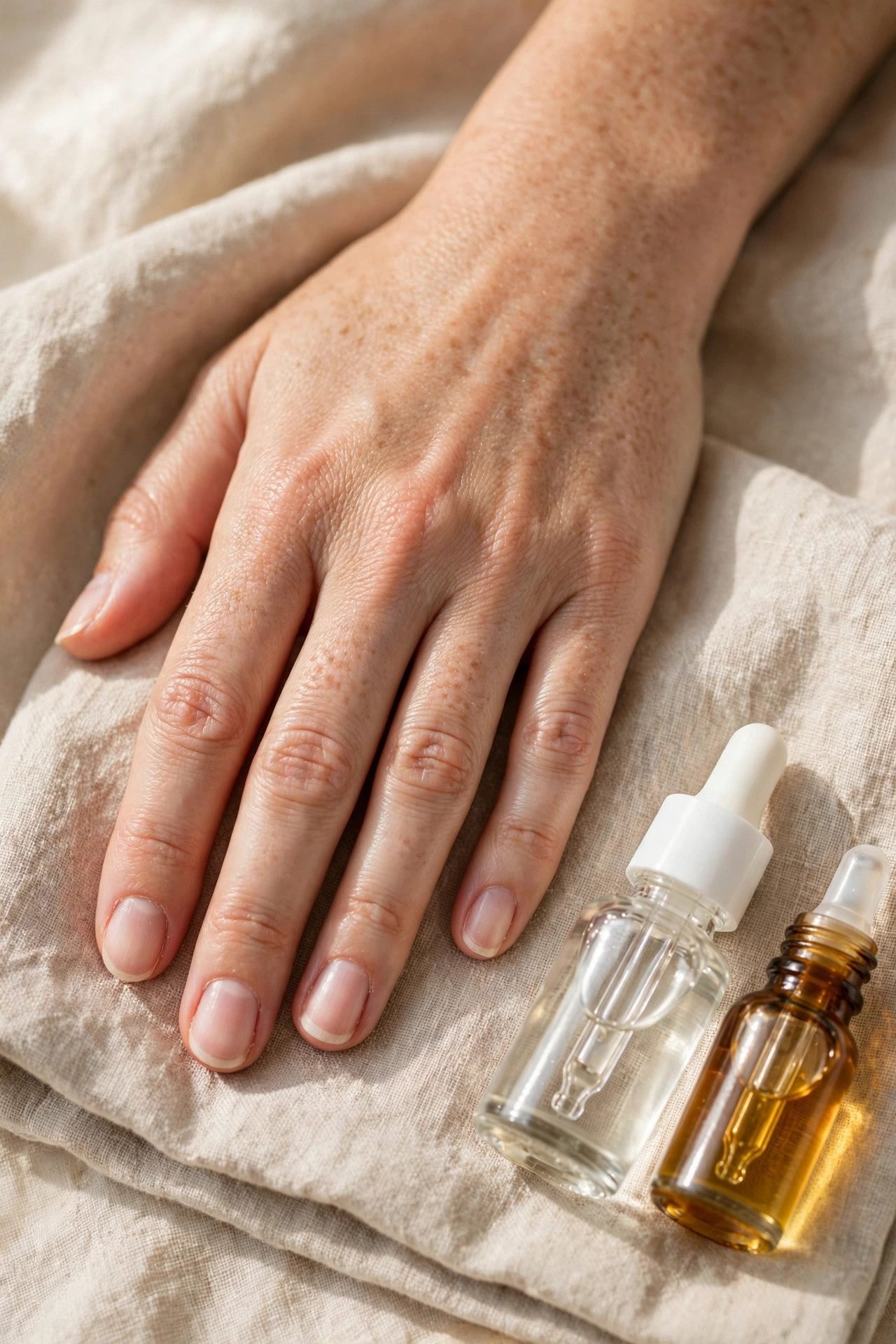
Responsible guidance includes the stops. Skip extensions — temporarily or entirely — in these situations: any active nail infection (green, yellow, or lifting discoloration needs treating first, and covering it with an extension makes it worse); a nail plate that is already thin, split, or freshly damaged, which needs a repair cycle before carrying weight; a known or suspected acrylate allergy, which does not fade with exposure but escalates; a picking or peeling habit, which turns every set into a hazard; and any season of life where the fill schedule cannot be kept — a set that ages six weeks unattended lifts, traps moisture, and undoes everything the salon built.
For every one of those situations, the alternative is not nothing — it is the short-length tier: a strengthening overlay, or the looks in our short nail designs guide that prove length is a style choice, not a requirement. Extensions are a tool in the manicure toolbox, not a membership fee for being put-together.
Nail Extensions FAQ
Which nail extensions look the most natural? Fibreglass and silk wraps are the thinnest and most invisible, followed closely by soft gel tips in clear. Sculpted hard gel also wins for its true-to-nail curve. Opaque colors and designs hide construction lines on any system — the naturalness question mostly matters for sheer and milky finishes.
Do nail extensions ruin your natural nails? No — removal behavior does. Soaked-off soft gel and acrylic leave the plate intact; ripped, pried, or scraped-off sets take layers of nail with them. File-off systems (hard gel, polygel) protect the plate precisely because only professionals touch their removal. Your nails reflect your habits, not the material.
How long do nail extensions last? Two to four weeks depending on system — acrylic and soft gel tips run 2–3 weeks to a fill, hard gel stretches to 3–4. With disciplined fills, many clients keep continuous sets for months; the natural nail underneath keeps growing the whole time.
What is the difference between gel extensions and acrylic? Acrylic hardens in air from a liquid-plus-powder mix; gel cures under a lamp. Acrylic is stronger and cheaper but heavier, smelly, and soak-off only with effort. Gel flexes more, wears longer between fills, and includes both soakable (soft gel tips) and file-only (hard gel) versions. The full head-to-head is in our acrylic vs gel comparison.
Can I remove nail extensions at home? Only the soakable systems — acrylic, soft gel tips, dip, wraps — and only with the patient acetone method. Hard gel and polygel must go back to the salon for professional filing. Never rip, pry, or clip off extensions, whatever the system: that is the single biggest nail-damage event in beauty.
How long should I take a break between extension sets? There is no universal rule — healthy plates under well-maintained sets tolerate continuous cycles. The break matters after damage, after aggressive removal, or if you notice thinning: one to two months of bare, oiled, strengthened nails resets the plate. Listen to your nails, not the calendar.

Final Word
Nail extensions are not one service — they are seven, each with its own personality: acrylic’s strength, hard gel’s endurance, soft gel tips’ natural speed, polygel’s lightness, dip’s no-lamp practicality, fibreglass’s invisibility, and press-ons’ freedom. The right question was never “which extensions are best” but “which system fits your hands, your budget, and your calendar” — and you now have every field of every answer.
Whatever system you choose, the design on top is where your personality lives — and every option here connects back into the wider nail designs library. Save this guide to your Daily Juggar Pinterest boards for your next salon visit, and follow Daily Juggar on Facebook so the next complete guide reaches you first.