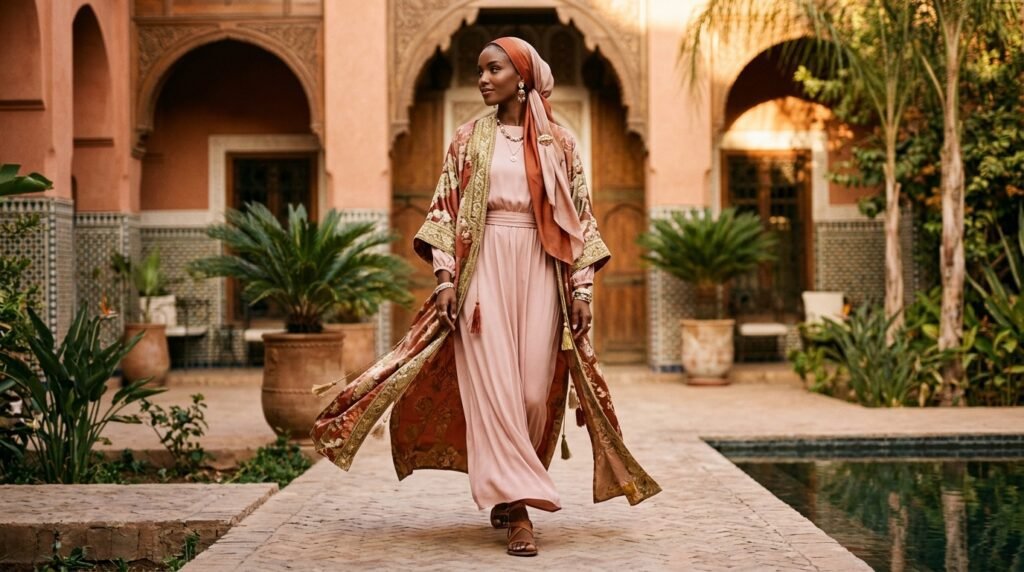

Modest fashion outfits are not about hiding — they are about styling differently, and the industry is finally catching up to what modest dressers always knew.
The industry treats modest dressing as a restriction — a list of things to cover, a list of things to avoid, a design brief built around what cannot be shown. The women who actually dress modestly know the opposite: modest fashion is a design language with more creative range than most — the layering that adds dimension, the silhouettes that create drama, the proportions that play with volume, and the details that do the talking without showing skin.
Here is what changes the game: modest fashion is not about hiding — it is about styling differently. The same creativity that any fashion lover applies, applied through a different set of proportions. The result is a style language that reads elegant, intentional, and completely personal.
So this guide presents modest fashion through five style codes — Classic, Layered, Structural, Flowy, and Statement — each a complete approach to covered dressing that reads like a choice, not a compromise. Every code with its pieces, its styling, and the occasions it serves.
Five codes. Endless combinations. The style was never limited.
Follow our Pinterest boards for daily modest fashion inspiration, and join us on Facebook so you never miss a style guide.
The Modest Fashion Reality (The Industry’s Fastest Growth Story)
The numbers tell the story the industry ignored for years.
The market speaks: modest fashion is a $400+ billion global market — Muslim consumers, Orthodox Jewish consumers, Christian modest dressers, and the non-religious women who simply prefer covered styling. The industry finally noticed, and the designers followed — modest fashion now walks every major runway.
The misunderstanding it corrects: modest fashion is not one culture’s dress code — it is a global styling language spoken in the Middle East, South Asia, Southeast Asia, Africa, Europe, and the Americas simultaneously. The diversity within modest fashion is the diversity of fashion itself.
The creative range: the layering, the volume play, the proportion work, and the textile storytelling — modest fashion uses every styling tool in the book, applied through proportions that read covered and couture at once.
Style Code 1 — The Classic (Timeless Modest Dressing)

The codes start with the one that never dates — the classic modest wardrobe built on timeless pieces.
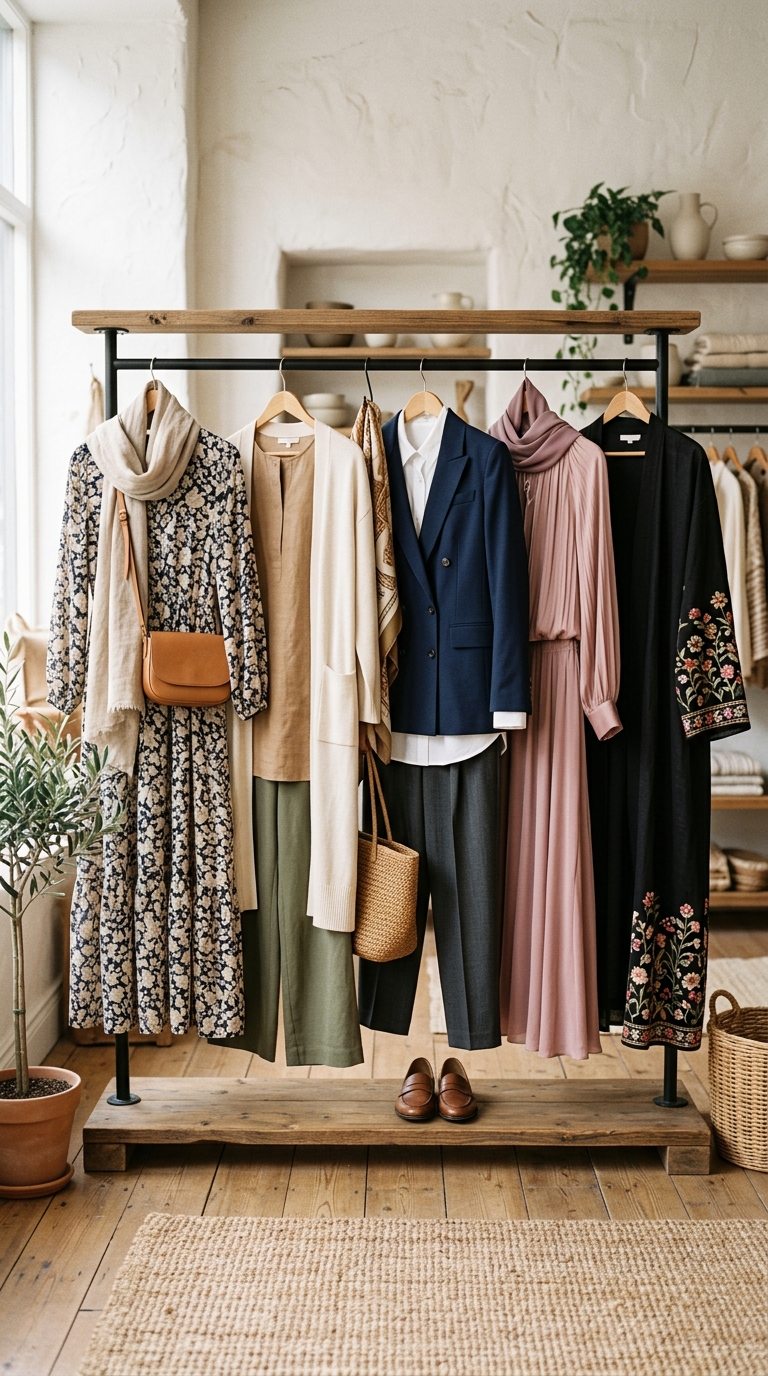
The pieces: the maxi dress in solid jewel tones, the wide-leg trousers with tunics, the midi skirts with long-sleeve blouses, the structured abayas, and the long cardigans that layer over everything.
The styling language: clean silhouettes, quality fabrics, and the details that read expensive — the tonal dressing from our fall capsule wardrobe 2026 guide, applied to modest proportions.
The occasion range: work, dinners, weddings, and every event between — the classic code that reads appropriate everywhere and stylish always.
The key pieces to own: one structured maxi dress in a jewel tone, one wide-leg trouser in black, one longline cardigan in cream, one silk tunic in white, and one scarf collection in the seasonal palette. Five pieces, complete classic wardrobe.
Style Code 2 — The Layered (The Dimension Builder)

The code that treats layering as art — pieces over pieces, lengths over lengths, the composition that adds dimension to every outfit.
The pieces: the long cardigan over the midi dress, the turtleneck under the slip dress from our fall fashion trends 2026 guide, the kimono over the wide-leg set, the duster over the fitted base.
The styling language: the layering creates the dimension that single-layer dressing cannot — the lengths playing against each other, the fabrics contrasting, the colors composing.
The layering rules: the inner layer fitted, the outer layers progressively looser — the proportion that reads styled rather than bulky. One pattern maximum per layered look — the layering carries the interest.
The best layering pieces: the longline duster, the kimono cardigan, the sleeveless long vest, the open abaya — the pieces designed to layer over everything from our wardrobe essentials guide, extended for modest proportions.
Style Code 3 — The Structural (The Architecture Approach)

The code that uses structure as the design statement — tailored pieces, architectural silhouettes, and the blazers that structure modest outfits like sculpture.
The pieces: the oversized blazer over wide-leg trousers, the structured long jacket over column dresses, the tailored vests over wide pants, and the suiting that modest fashion wears better than anyone.
The styling language: the structure reads the intention — the tailoring that says styled, the proportions that say designed. The suiting from our work outfits for women guide’s formal tier, in modest proportions.
The best structural pieces: the oversized blazer in camel or black, the tailored wide-leg trouser, the long structured vest, and the abaya with tailored details — the pieces that bring the architecture.
The occasion: the work code and the formal code — the structural approach that reads professional and powerful at every meeting and every event.
Style Code 4 — The Flowy (The Movement Language)

The code of movement — the flowing fabrics, the maxi volumes, the silhouettes that move with every step and photograph alive in every frame.
The pieces: the flowy maxi dresses, the pleated midi skirts, the wide palazzo pants, the chiffon layers, and the fabrics that move — chiffon, satin, georgette, and the silks that catch wind.
The styling language: the movement IS the statement — the fabric that photographs alive, the hem that catches the breeze, the silhouette that reads free.
The best flowy pieces: the pleated midi skirt in champagne or sage, the georgette maxi in jewel tones, the chiffon layered abaya, and the palazzo pants that move beautifully — the pieces that our honey blonde hair golden-hour pairings belong beside.
The photo note: the flowy code photographs best outdoors — the movement reads alive in natural light, the golden hour turning every frame editorial.
Style Code 5 — The Statement (The Bold Expression)

The code of the statement piece — the one bold element that carries the outfit while everything else supports it.
The pieces: the statement sleeve blouse, the embroidered statement abaya, the bold-print maxi dress, the colored statement coat — the one piece that does the talking.
The styling language: the statement piece is the outfit’s voice, and everything else whispers — the base stays neutral, the accessories stay minimal, and the statement stays singular. The one-statement rule from every styling guide, applied to modest fashion’s boldest expressions.
The best statement pieces: the embroidered abaya with the detail work, the printed maxi that reads like art, the statement-sleeve blouse in the bold color, and the colored statement coat that turns every winter outfit into the event.
The pairing: one statement piece, one neutral base, minimal accessories — the formula that makes the statement read designed rather than loud.
The Modest Fashion Color Palette (The Colors That Read Rich)

The palette that reads elegant in modest proportions — the colors that do the styling work.
The rich neutrals: cream, camel, chocolate, and charcoal — the base palette that layers beautifully and photographs expensive.
The jewel tones: emerald, sapphire, burgundy, and amethyst — the saturated family that reads regal in covered silhouettes.

The earth tones: terracotta, olive, rust, and sand — the natural family that reads warm and grounded.
The seasonal accents: one accent color per season — the burgundy for winter, the sage for spring — the accent that keeps the modest wardrobe current without chasing trends.

The complete seasonal palette lives in our fall nail colors guide — the nail shades that pair with every modest outfit’s palette.
The Modest Fashion FAQ
What is modest fashion?
A styling language built on covered proportions — maxi lengths, long sleeves, high necklines, and layered compositions — that expresses personal style through fabric, color, silhouette, and detail rather than skin exposure. Modest fashion spans every culture, every season, and every formality level, and it is the fastest-growing segment in the global fashion industry.
How do I build a modest fashion wardrobe?
Start with the five classic pieces — the jewel-tone maxi, the wide-leg trouser, the longline cardigan, the silk tunic, and the scarf collection. Add the layering pieces (kimono, duster, vest), then the structural pieces (oversized blazer, tailored trousers), and the statement pieces as personal taste directs. Five pieces start the wardrobe; the codes expand it.
What is the difference between modest fashion and hijab fashion?
Hijab fashion includes the head covering as part of the practice — the scarves and wraps that complete the modest look for Muslim women. Modest fashion is the broader styling language that both includes and extends beyond the head covering — the clothing proportions that modest dressers across every faith and no faith share.
Can modest fashion be fashionable and trendy?
Absolutely — modest fashion participates in every trend through adapted proportions. The wide-leg trousers, the oversized blazers, the statement sleeves, and the maxi lengths are all current trends that modest fashion wears natively. The fastest-growing fashion segment did not grow by ignoring trends; it grew by adapting them.
What fabrics work best for modest fashion?
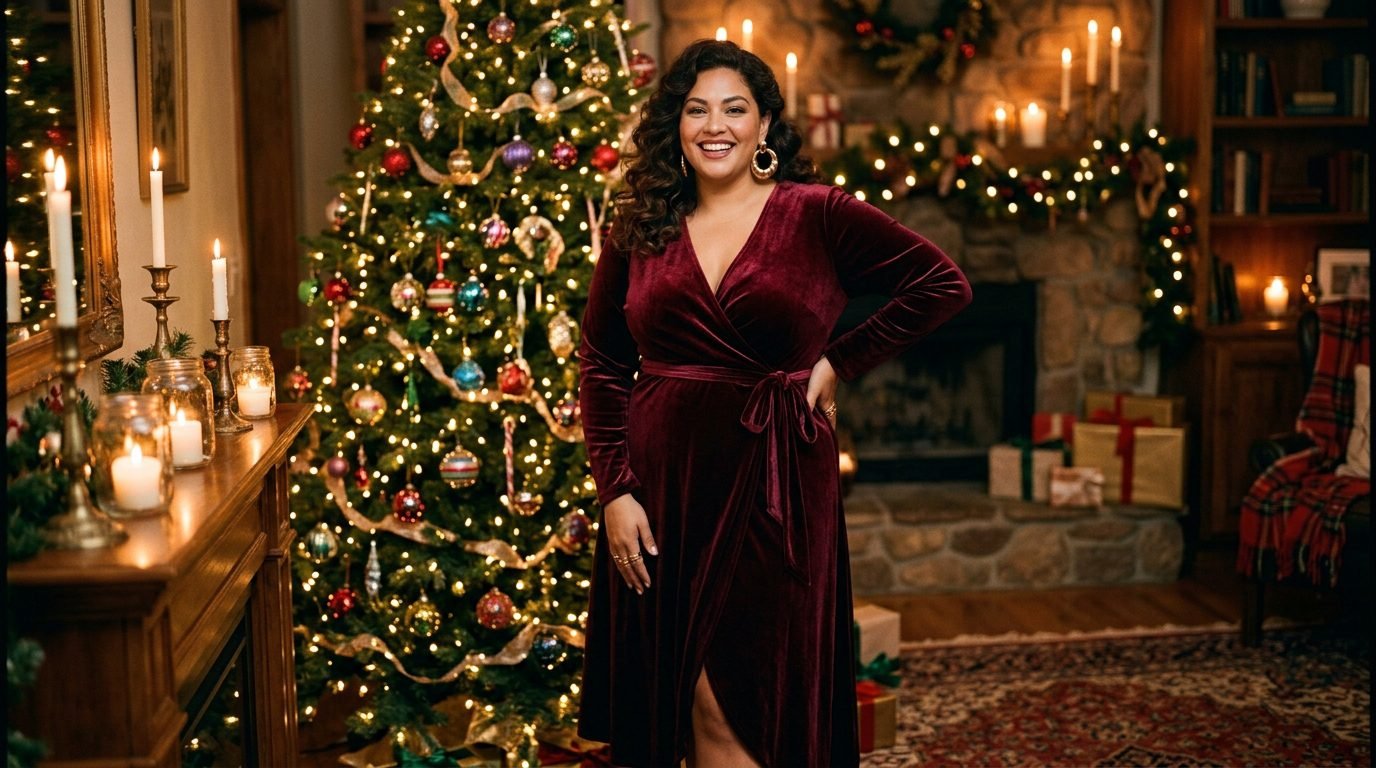
The fabrics that hold their shape and drape beautifully — linen and cotton for the daily, silk and satin for the occasions, chiffon and georgette for the layers, and velvet for the winter formal. The fabric that moves and skims reads elegant in covered proportions; the fabric that clings reads the opposite of the modest intention.
More questions? Ask us on Facebook and we will help you build your modest wardrobe around your style code.

The Style Was Never Limited
Five codes, the global reality, and the creative range that the industry finally sees — modest fashion outfits are the styling language that proves coverage and couture were never opposites.
Pick your code tonight — Classic if you are starting, Layered if you love dimension, Structural if you mean business, Flowy if you photograph alive, and Statement if the bold piece found you. Build the code into a wardrobe, and the covered dressing becomes the most creative project in your closet.
Save this guide to our Pinterest boards so it is on your phone while you build, and pair the modest pieces with the layering logic from our fall capsule wardrobe 2026 guide and the colors from our honey blonde hair guide’s golden warm palette — the code chosen, the wardrobe built, the style expressed.
New style guides every week — for every woman, every choice. Stay covered, stay couture!


[…] pairing: this bag beside the flowy code from our modest fashion outfits guide — the boho bag and the flowy code are a natural […]
[…] ★★. The move: flowing fabric catches light in motion — the modest version decoded in our modest fashion outfits […]
[…] sparkle that survives the grandmother test. The modest version of this exact energy lives in our modest fashion outfits […]
[…] decade’s version runs in our y2k outfits guide, and the office-safe minis adapt through our modest fashion outfits […]