
Blouse designs decide everything — and they are the smallest garment in the outfit.
The saree drapes beautifully — and the wrong blouse flattens it. The lehenga sparkles — and the wrong neckline ruins the frame. In Western wear, the same truth holds: the trousers, the skirt, the suit — all of them wait for the blouse to decide whether the outfit reads styled or assembled.
Here is what the design guides skip: blouse design is three separate decisions, not one. The neckline frames the face and chest. The back is the second look everyone catches when you walk away. The sleeves balance the whole composition. Get all three right and the blouse does the styling; get one wrong and the outfit announces the mistake.
So this guide decodes all three — the neckline families, the back designs, and the sleeve architecture, with the pairings for sarees, lehengas, and Western wear alike. Whether the blouse you are designing is silk and embroidered or cotton and minimal, the decisions are identical.
The blouse is small. Its decisions are not.
Follow our Pinterest boards for daily fashion inspiration, and join us on Facebook so you never miss a style guide.
The Neckline Families — The First Decision

The neckline frames the face, the neck, the shoulders — the blouse’s first job, and its six families cover every look.
The boat neck — the wide horizontal line sitting at the collarbone. The elegant, the regal, the neckline of royal portraits. It widens shoulders visually and pairs with everything from silk sarees to tailored trousers.
The V-neck — the elongating vertical. The neckline that lengthens the neck and frames the chest — the flatterer of fuller busts and shorter necks alike.
The sweetheart — the romantic curve. The neckline that reads feminine and festive, pairs with statement jewelry, and photographs beautifully in every occasion frame.
The high collar — the modest, the architectural, the neckline that carries embroidery like a frame carries art. The collar blouse is the traditional wear’s crown — and the minimal Western look’s most current update.
The off-shoulder — the shoulder-baring celebration. The neckline that turns collarbones and shoulders into the outfit’s jewelry — modern, festive, and photogenic in every frame.
The keyhole — the small opening in a high-neck frame. The modest-yet-alluring middle — a button of skin where the neckline stays closed everywhere else.
Each neckline carries its jewelry pairing: boat necks want chokers or nothing, V-necks want pendants, sweethearts want chokers or bibs, collars want earrings only. The neckline chooses the jewelry before the jewelry chooses itself — the same coordination logic that runs our thanksgiving cozy accessories guide’s zones.
The Back Designs — The Second Look

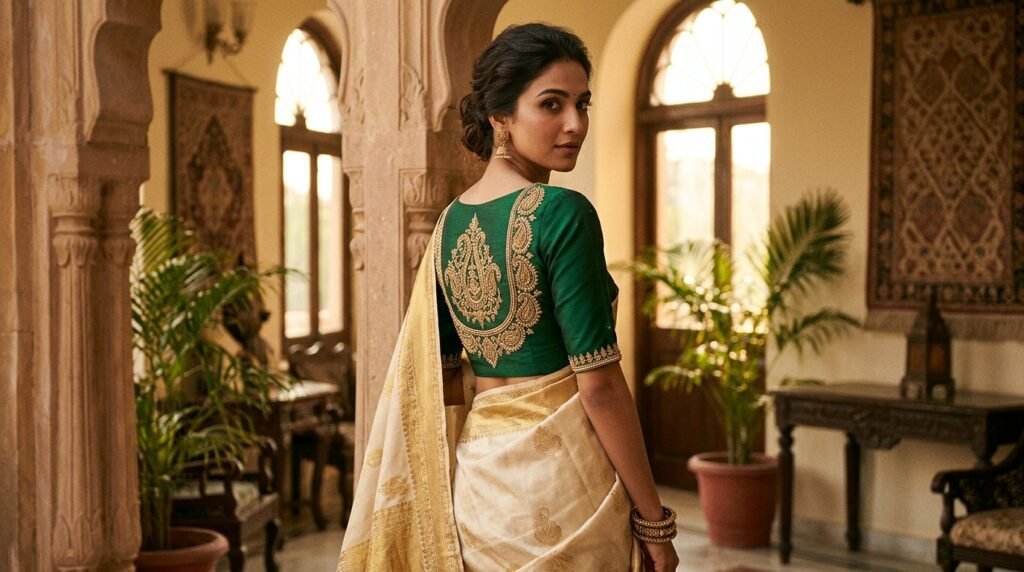
The back of the blouse is the look everyone catches when you walk away — and Indian blouse tradition treats it as the design’s second canvas.
The deep back with dori ties — the classic: a low back with tie-strings crossing or hanging. The dori-tie detail is the blouse’s built-in jewelry — beads, tassels, or bare ties, each reading a different occasion.
The sheer back — illusion fabric across the back with embroidery or embellishment scattered through — covered and bare at once, the modern traditional favorite.
The keyhole back — the small teardrop or circle opening — modest, elegant, and the button detail in the center turning function into design.
The full-coverage back — the completely closed back with the design living in the embroidery, buttons, or seam work. The formal choice, the winter choice, and the religious-ceremony choice.
The V-back or U-back — the deep shapes that mirror the front’s logic — the back that pairs with low-back saree drapes and reads intentional from every direction of the room.
The Western parallel: the tie-back blouse, the open-back blouse, the lace-back — Western wear’s back designs follow the same families. The blouse’s back is a cross-cultural language, and every outfit benefits from thinking about it.
The Sleeve Architecture — The Balance Decision

The sleeves are the blouse’s balance system — and their families cover every arm, every season, and every formality.
Sleeveless — the classic sleeveless blouse pairs with statement jewelry doing the arm work — the traditional saree pairing and the Western summer pairing alike.
Cap sleeves — the small coverage that reads delicate. The sleeve for fuller arms that want a suggestion of structure, and the sleeve that never fights the blouse’s other details.
Elbow-length sleeves — the workhorse length — formal enough for ceremonies, comfortable through long events, and the canvas for the elbow-length embroidery that traditional blouses showcase.
Full sleeves — the winter wedding answer, the modest choice, and the sheer-full-sleeve trend that reads modern-traditional at once. Sheer sleeves with embroidered cuffs are the current favorite.
Puff sleeves — the volume statement — from subtle gathering to full dramatic puffs. The puff sleeve reads vintage-romantic and pairs with sleek bottoms to balance the volume.
Bell sleeves — the flare at the wrist — the sleeve that moves beautifully and photographs with drama in every hand gesture.
The balance rule: the sleeve and the neckline negotiate. Deep neckline wants minimal sleeves; high collar wants the sleeveless or cap balance. One statement zone per blouse — the blouse that shouts from front, back, and sleeves simultaneously reads cluttered before it reads designed.
The Fabric Decision — What the Blouse Is Made Of

The blouse’s fabric decides its structure, its comfort, and its occasion.
Silk — the traditional queen. Raw silk holds structure, pure silk drapes with sheen, and silk brocades carry the pattern woven in. The wedding and festival blouse’s home.
Cotton — the daily and the summer answer. Cotton blouses breathe through long events and hold prints beautifully — the fabric for the casual saree and the Western button-down alike.
Velvet — the winter luxury. Velvet blouses pair with silk sarees and lehenga skirts, read festive at every light level, and photograph with the depth that flat fabrics lack — the same velvet logic from our christmas velvet nail finish guide, in garment form.
Net and sheer — the illusion fabrics — lined or layered, modern and festive. The sheer sleeve and sheer back trends live here.
Linen and blends — the Western casual family. The linen blouse breathes, wrinkles gracefully, and reads expensive-minimal in solid tones.
The Occasion Map — Which Blouse for Which Event

The same blouse families redistribute across occasions — the map that turns design knowledge into outfit decisions.
Wedding guests: the embroidered silk blouses, the deep backs with dori work, the fuller sleeves with heavy detail. The occasion that rewards the blouse’s full effort. Pair with the guest dress alternatives in our wedding guest dress ideas guide when the dress wins the vote.
The bride’s blouses: the red and gold traditions, the custom embroidery, the back designs that the wedding photographer captures in every frame. The bridal blouse is a design commission — planned with the same care as the gown in our wedding dress style guide.
Festive and party: the velvet and sequin blouses, the off-shoulder festive builds, the contemporary silhouettes with traditional fabrics. The party blouse reads modern while honoring the occasion.
Office and daily: the collared cotton blouses, the boat necks in solids, the minimal sleeves — the blouses that read professional and pair with sarees, trousers, and skirts identically. The workwear logic from our work outfits for women guide includes the blouse’s version of professionalism.
Casual Western: the linen blouses, the cotton tie-backs, the puff-sleeve whites — the Western blouse wardrobe that pairs with jeans, skirts, and the trousers from our work outfits for women guide’s rotation.
The Fit Rules — The Tailoring Truth

A blouse’s design lives or dies in the tailoring — the fit rules that apply across every family.
The shoulder seam test: the seam must land at the shoulder bone’s edge — the single measurement that decides whether the blouse reads tailored or borrowed.
The bust dart honesty: well-placed darts are the difference between a blouse that skims and one that tents — the tailoring detail worth its alteration price every time.
The back width: the back must allow arm movement without pulling — the blouse that rides up when you reach is sized or cut wrong, and no design saves it.
The length decision: blouse length changes with the bottom — saree blouses tuck and end at the waistband, Western blouses tuck or hang by the look. The length is a pairing decision, not a fixed number.
The alteration budget: the alteration fee from our guide on how to look expensive on a budget guide applies double to blouses — the ten-dollar shoulder adjustment is what separates bespoke-read from off-rack-read at every price point.
The Blouse Design FAQ
What are the most popular blouse neck designs?
The boat neck, V-neck, sweetheart, and high collar lead the families — boat necks for elegance, V-necks for elongation, sweethearts for romance, and collars for the embroidered traditional look. The back designs trend toward dori ties and sheer panels this season.
Which blouse back design is most stylish?
The deep back with dori ties remains the traditional favorite, while sheer embroidered backs lead the modern versions. The keyhole back is the modest-elegant middle — and the right back depends on the occasion’s formality and the drape it pairs with.
What sleeve length suits fuller arms?
Elbow-length sleeves and structured cap sleeves flatter fullest — both provide coverage with shape rather than clinging. Bell sleeves also work beautifully, adding movement that reads graceful rather than covering.
How do I choose a blouse neckline for my face and body?
Round and heart faces suit V-necks and deep necklines that elongate; longer faces suit boat necks and collars that widen. Fuller busts flatter in V-necks and sweethearts; smaller busts gain dimension in collars, ruffles, and boat necks with structure.
What fabric is best for blouse designs?
Silk for weddings and festivals, cotton for daily and summer wear, velvet for winter occasions, and linen for the Western casual wardrobe. The occasion chooses the fabric family; the design details choose the specific weave.
More questions? Ask us on Facebook and we will help you match a blouse design to your outfit and your occasion.

The Smallest Garment, The Biggest Decisions
Six necklines, six backs, seven sleeves, and the fit rules that hold them all — the blouse design guide that turns the outfit’s smallest garment into its biggest styling decision.
Decode the three decisions before the tailoring — neckline, back, and sleeves. Choose the fabric by the occasion. Budget the alteration. And the blouse that everyone assumed was simple will be the detail every outfit was missing.
Save this guide to our Pinterest boards so it is on your phone at the tailor, and pair the designs with the guest looks in our wedding guest dress ideas guide and the tailoring principles in our guide on how to look expensive on a budget — the blouse decoded, the outfit complete.
New fashion guides every week. Stay detailed, stay styled! 👚