
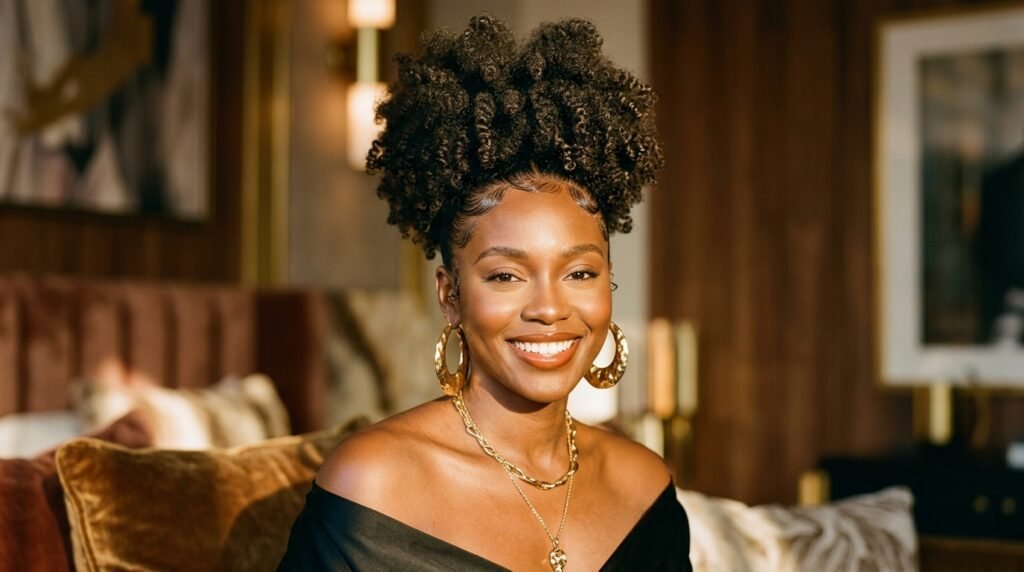

Natural hairstyles carry a question the rest of the hair world never has to ask — “will this style respect my texture, or fight it?”
Straight-hair tutorials assume cooperation. Curl tutorials get written for one curl type and expected to work for four. And the natural-haired woman stands between guides that don’t speak her language, holding hair that deserves better.
Here is what changes everything: natural hairstyles are not one category — they are four curl patterns with four separate playbooks, plus the protective styles that honor every pattern at once. The wash-and-go that flatters 3C curls is not the style for 4C coils, and pretending otherwise is how guides fail natural hair.
So this guide is organized by pattern first, then by style — natural hairstyles for waves, curls, and coils, plus the protective builds that give every texture a break. Heat-free where it matters, definition where it counts, and styles that celebrate the texture instead of hiding it.
Your texture is not a problem to solve. It is the style.
Follow our Pinterest boards for daily natural hair inspiration, and join us on Facebook so you never miss a texture guide.
The Pattern Menu — Find Your Texture First

Natural hair runs on the curl typing system — and each pattern has its own styling strengths.
Type 2 (Waves): S-shaped patterns, loose and flowing. The pattern that holds braided sets beautifully and fights humidity with product, not heat.
Type 3 (Curls): springy loops from loose (3A) to tight corkscrews (3C). The pattern with the most styling range — every updo, puff, and wash-and-go works here.
Type 4 (Coils): tight zigzags to dense coils. The pattern where protective styling shines and definition is a craft, not a default.
Find your type, jump to your section — and the protective styles at the end belong to everyone.
The Styling Foundation (Every Natural Style Starts Here)
The three steps that decide whether natural styles work — the prep that the straight-hair world skips.
Step 1: Hydration is the style. Natural hair styles from moisture, not against it — the leave-in conditioner applied to soaking-wet hair is what every style below is built on. Dry natural hair refuses to cooperate; wet-and-sealed natural hair bends to any design. The hydration science from our dry hair remedies guide is the foundation chapter.
Step 2: Section like a professional. Natural hair styles in sections — four clips dividing the head, one section styled at a time. The sectioning discipline is what makes 45 minutes feel like 20.

Step 3: Seal the moisture. The LOC method — liquid, oil, cream — the layering order that locks water into the strand. Every style below assumes this foundation, because natural styles hold only as long as the moisture does.
For Type 2 Waves — The Definition Seekers
Wave patterns fight flatness — these styles add definition while staying heat-free.
🌊 The Braid-Out Waves

Two loose braids overnight, released into defined S-waves. The heatless method that gives waves the definition they cannot hold naturally.
The build: damp hair, light mousse, two braids, silk scarf, sleep. The release-and-separate with oiled fingers is the morning’s only work — the waves that read styled from a heatless night.
🌊 The Wave-Enhancing Pineapple

The pineapple gather — curls and waves pulled to the crown in a loose high tie, preserving the pattern while you sleep. The morning release revives yesterday’s waves instead of requiring a restyle.
The trick that matters: a satin scrunchie, never elastic — the fabric is what keeps the pattern uncrushed.
🌊 The Braided Headband Wave
One tight braid along the hairline before bed — the crimped-texture crown in the morning. The texture that reads styled without a single hot tool. The overnight-build family from our winter hair braid tutorial, wave-adapted.
For Type 3 Curls — The Style Playground
The springy middle — where every category of natural style works.
💫 The Curly Pineapple Crown
The high pineapple worn as a style, not just protection — curls gathered high, volume celebrated, edges brushed. The style that reads regal in every direction.
The gathering trick: a soft scrunchie at the highest point, curls left loose and full — the crown that celebrates density.
💫 The Half-Up Curly Halo

Top curls gathered, bottom curls falling free — the style that shows the pattern in two acts. A satin scrunchie holds the top; the lower curls stay untouched.
The photo truth: the curly half-up photographs with dimension straight styles cannot imitate — the natural volume is the whole show. The same volume celebration from our thanksgiving curly hair guide’s 3B section.
💫 The Side-Swept Curly Bun

Curls gathered to one side into a loose, deliberately imperfect bun — flyaways reading as softness. The romantic asymmetry that curls make look alive.
💫 The Wash-and-Go, Elevated

The wash-and-go with the definition dialed up — product applied in sections, curls defined strand by strand, diffused or air-dried. The style that reads “effortless” and took forty minutes.
The definition craft: the shingling method — product raked through small sections, curl by curl. The forty minutes that read like natural perfection.
For Type 4 Coils — The Density Celebration
The coil patterns — where protective styling and definition are arts.
🌀 The High Coil Puff

Coils gathered high into a full, glorious puff — density worn as a crown. The style that celebrates the coil’s natural architecture.
The build: soft bristle brush to smooth the edges, coils gathered with a puff cuff or wrap tie, volume fluffed to its full glory. The puff that reads power in every direction.
🌀 The Flat-Twist Crown

Flat twists along the hairline curving into a gathered bun — the protective style that reads intricate and elegant. Twists hold definition on coils better than braids through humidity.
The overnight bonus: twists installed at night deepen definition by morning — the style that improves while you sleep.
🌀 The Bantu Knot Statement

Coils sectioned and wrapped into sculptural knots across the head — the style that is architecture and art at once.
The two-day design: knots worn as the style, released into a knot-out the next day — two looks from one setup. The holiday’s best two-for-one from our thanksgiving curly hair guide’s knot section.
🌀 The Coil-Out Definition
Coils worn down, fully defined strand by strand — the shingling craft at its most spectacular. The style for the events where the pattern is the outfit.
The patience price: this definition takes forty-five minutes and dries overnight — the style scheduled, not spontaneous.
The Protective Styles (Every Pattern’s Rest)
The styles that give natural hair its breaks — the builds that protect the ends while looking intentional.
🛡️ The Box Braids

Three-strand braids with added hair, section by section — the protective style that gives natural hair six to eight weeks of rest. The install is long; the mornings after are instant.
The care note: the scalp stays moisturized weekly — braids protect the ends, but the scalp still needs the oil routine from our dry hair remedies guide.
🛡️ The Two-Strand Twists
The gentler protective style — two strands twisted around each other, worn as-is or released into a twist-out. The style that protects and defines at once.
The twist-out payoff: twists worn three days, released into the defined twist-out — the two-styles-one-setup economy that natural hair lives on.
🛡️ The Satin-Lined Wrap

The head wrap worn over any style — the satin barrier that protects the pattern through sleep, weather, and the days between wash days. The wrap that reads elegant rather than hidden — the scarf styling from our thanksgiving cozy accessories guide’s velvet logic, in satin.
The Night Routine (Where Natural Styles Survive)
Natural styles die at night — the satin system that keeps them alive.
The satin pillowcase — the friction-free surface that preserves every style. The pineapple for curls — the gather that preserves the pattern. The satin scarf for edges and twists — the wrap that holds the work in place.
Night care is where natural styles are actually maintained — the morning is only the reveal. The full night system from our winter hair care guide protects the pattern through every season.
Natural Hairstyles FAQ
What are the best natural hairstyles for Type 3 curls?
The half-up curly halo, the side-swept curly bun, and the pineapple crown — all three celebrate the springy pattern without heat. The wash-and-go elevated with section-by-section definition is the full-down option that reads effortless after its forty-minute build.
How do I define my natural curls without heat?
Product on soaking-wet hair applied section by section — the shingling method defines strand by strand, then air-dry or diffuse. The braid-out and twist-out overnight sets add definition while you sleep, no heat involved at all.
What are protective styles and why do they matter?
Styles that tuck and protect the hair’s ends — the oldest and most fragile part of every strand — from friction, weather, and manipulation. Box braids, two-strand twists, and flat-twist crowns give natural hair weeks of rest while looking intentional.
How do I stop frizz in my natural hairstyles?
Hydration before styling, the LOC layering method, satin against the hair at night, and hands off after definition — frizz enters through dryness, friction, and touching. The refreshed frizz is cured with a water-and-leave-in spritz, not more product.
How often should I restyle my natural hair?
Every three to seven days depending on the style — wash-and-gos refresh daily with water spritz, twists last three to five days, and protective installs run six to eight weeks. The pattern tells you: when definition fades and moisture stops absorbing, it is restyle day.
More questions? Ask us on Facebook and we will match a style to your exact pattern and your morning schedule.

The Texture Was the Style All Along
Four patterns, twelve styles, and the prep that decides everything — natural hairstyles stop being a struggle the moment the pattern gets its own playbook.
Find your type tonight. Prep the hydration. Build the style that celebrates the texture you were given — because the coil, the curl, and the wave were never problems. They were the whole point.
Save this guide to our Pinterest boards so it is on your phone on wash day, and complete the texture education with our thanksgiving curly hair guide and the hydration foundation in our dry hair remedies guide — every pattern, one celebration.
New texture guides every week. Stay natural, stay celebrated! 🌀