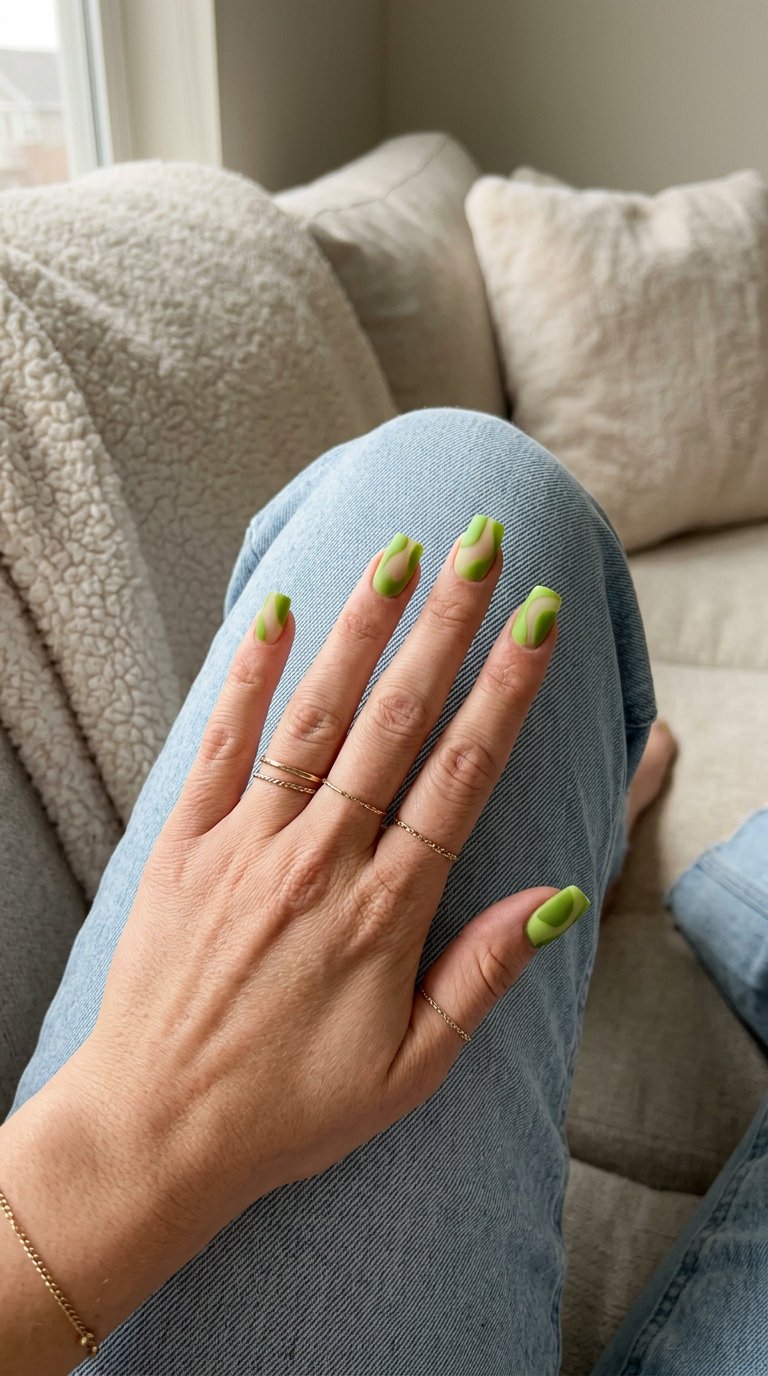

Green nails spent years as the shade everyone admired on other people — too bold for the office, too “out there” for the weekly shop. Then sage happened, and quiet luxury happened, and somewhere between a muted eucalyptus manicure and a jewel-cut emerald, green became the most interesting colour family in nail care. This guide walks the full spectrum: 22 shades, from the palest sage to deep emerald, organised from soft to statement — each with the small note that makes it wear like it was chosen by a stylist.
Every palette in this guide is saved to our Pinterest board, so you can pin the shades you love and hand the board straight to your nail tech. And if green’s neighbour is more your speed, our guides to blue nails and pink nails follow the same shade-by-shade logic.
Why Green Nails Are Having a Moment

The green revival isn’t an accident — it’s the meeting point of three currents. First, quiet luxury: muted greens like sage and olive slot into the neutral wardrobe the way camel and cream do, which is why the old money aesthetic adopted them wholesale. Second, the nature-to-nails pipeline: botanical, kitchen-garden, and forest shades photograph beautifully against everything from linen to gold jewellery. Third, depth: no other colour travels from palest pastel to near-black quite so gracefully, which gives green nails more range than any family except brown.
The practical case matters too. Greens are flatteringly complex — every green contains blue, yellow, or grey, which means there’s a version that harmonises with every skin tone. And deep greens wear like dark neutrals: chips hide, regrowth forgives, and the colour reads intentional for weeks. Our guide to fall nail colors already treats green as the season’s backbone; this article gives the family its full catalogue.
How to Pick Your Green
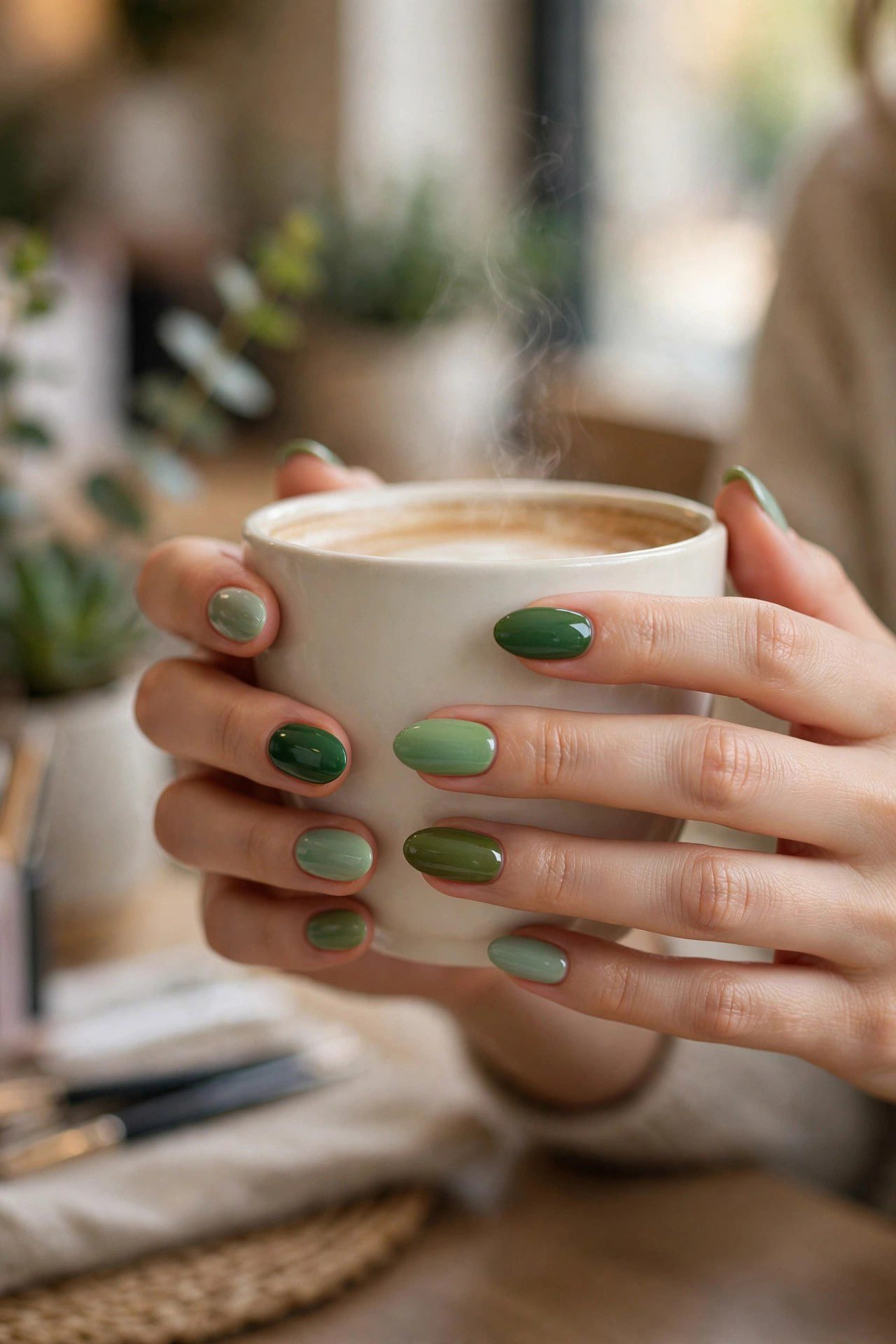
Green’s undertone does the deciding, and it takes thirty seconds to learn. Yellow-based greens — pistachio, olive, avocado, celery — flatter warm and golden undertones and glow against olive skin. Blue-based greens — mint, eucalyptus, bottle, pine — suit cool and pink undertones, the same way silver jewellery does. Grey-muted greens — sage is the queen here — are the universal donors, sitting between both camps and flattering virtually everyone.
Depth follows your nerve, not your skin: sage to the office, forest to dinner, emerald to occasions. If you’ve worn green before and it looked “off,” the undertone was the culprit, not the colour — swap yellow-base for blue-base and the same shade family transforms. The same undertone logic runs through our complete nail polish colors guide if you want to cross-check against your other shades.
The Green Spectrum — 22 Shades, Sage to Emerald
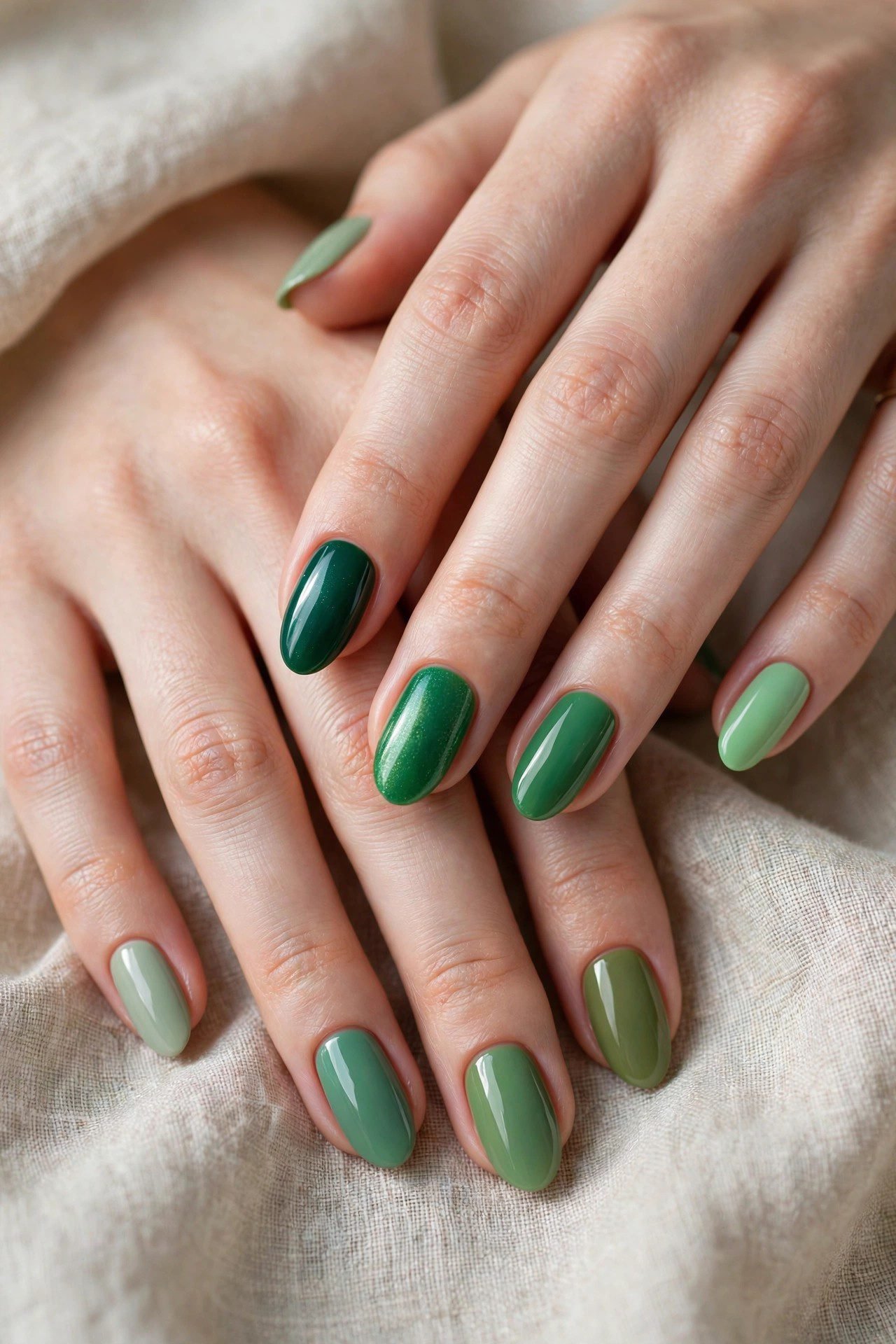
Twenty-two shades, five families, one journey from kitchen garden to jewel box. Every entry carries a green note — the undertone, finish, or styling detail worth knowing before you commit. Work top to bottom and notice where you stop scrolling; that’s your family.
The Sage & Soft Family — Muted Lights
The gateway greens: greyed-out, softened, and endlessly wearable. This family answers the question “can I wear green to work?” with a yes, every time. These shades behave like neutrals, pair with every metal, and grow out gracefully — which is why sage became the breakout shade of the decade rather than a one-season fluke.
1. Classic Sage

The definitive muted green: soft, greyed, and quietly sophisticated. It’s the green for people who “don’t wear green” — present enough to read as colour, calm enough to pass every dress code. On short squared nails it’s the closest thing to a neutral upgrade. Green note: this is the first green to buy — if you like it, the whole spectrum opens up.
2. Eucalyptus
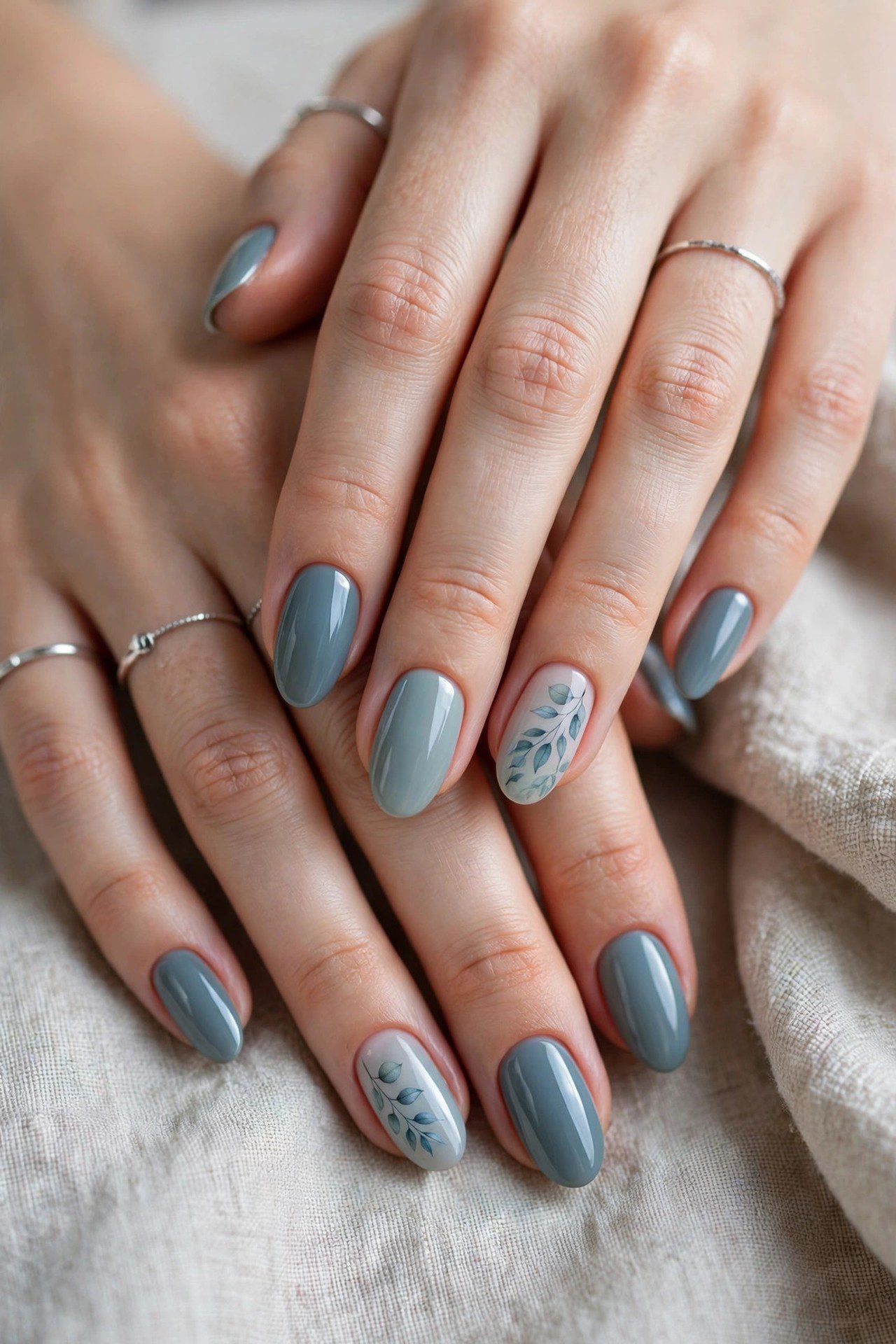
Sage’s cooler, greyer sibling, with spa-and-linen energy. The blue undertone flatters cool skin beautifully, and against silver jewellery it looks custom-designed. Green note: choose eucalyptus over sage if your jewellery box leans silver.
3. Pistachio
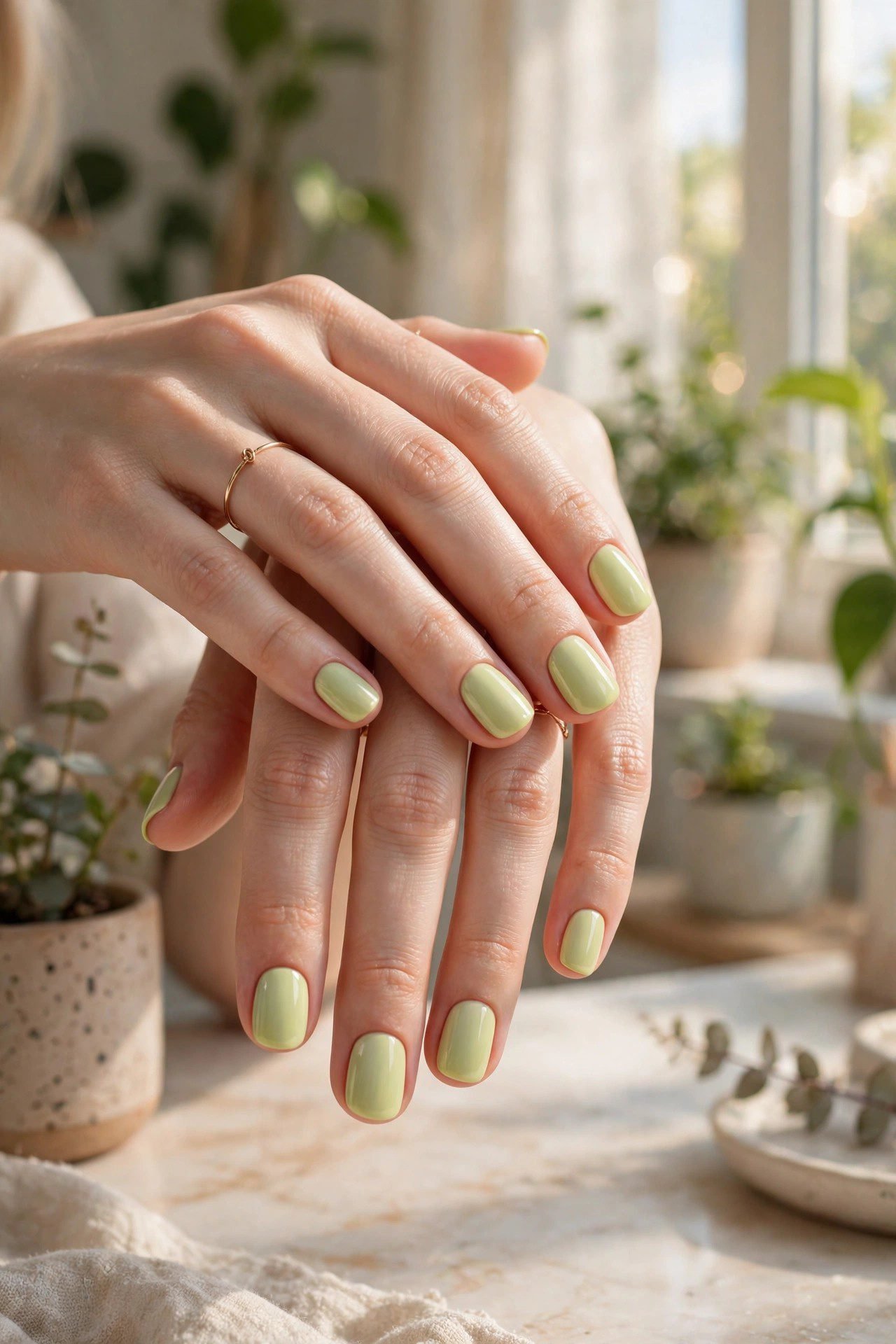
A pale, yellow-leaning pastel with genuine playfulness. It’s spring’s green — softer than mint, warmer than white — and it makes short nails look freshly expensive, like the inside of a macaron shop. Green note: two thin coats; pastels streak when layered thick.
4. Mint Cream

Pale blue-green with fifties diner nostalgia. It’s the coolest shade in the spectrum and the friendliest to fair, pink-toned skin, where it reads almost pastel-neon without the volume. Green note: mint yellowed by a cheap top coat is a known tragedy — use a non-yellowing formula.
5. Celery
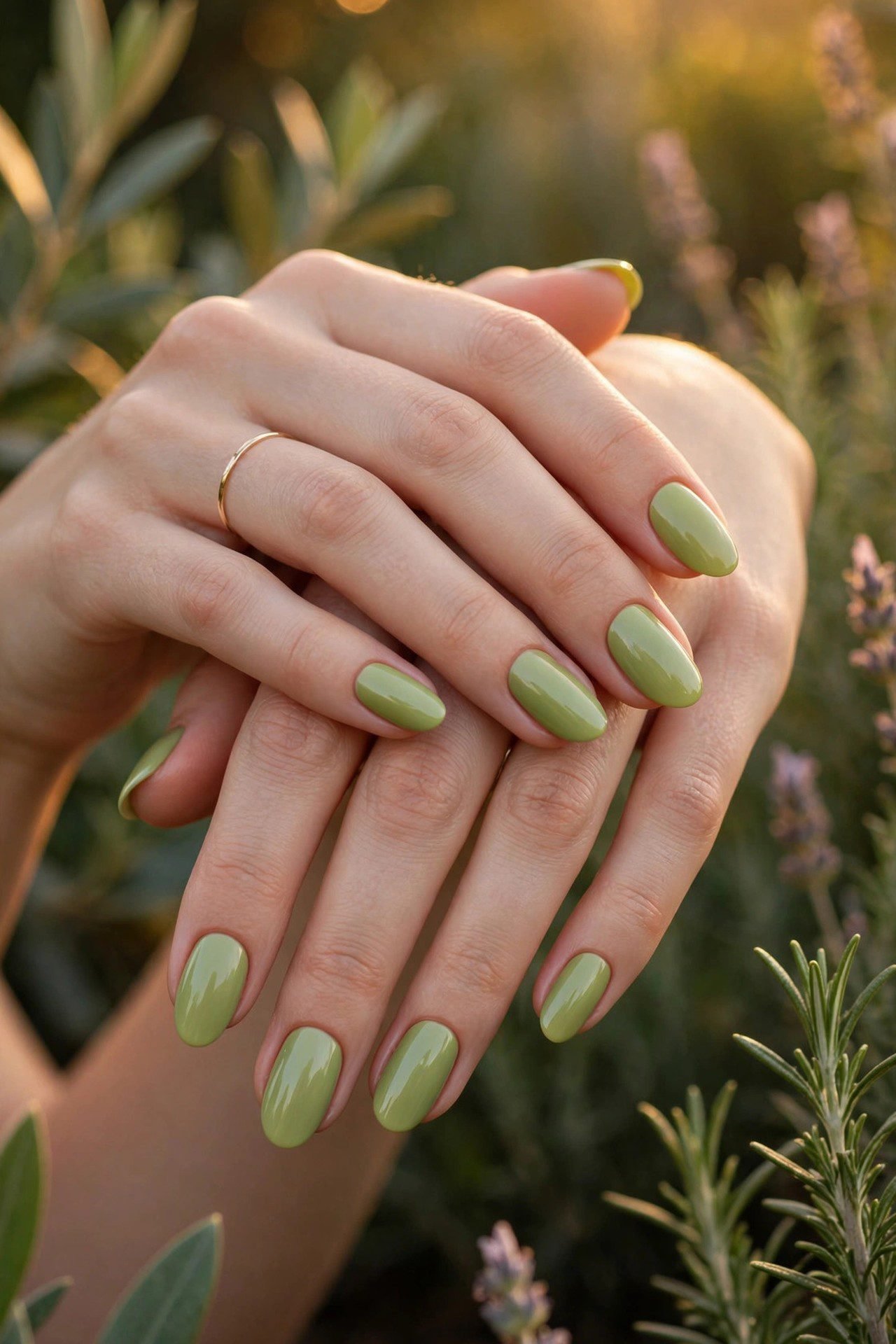
A light olive-tinged green, the bridge between sage and the earth family. It has sage’s softness with a whisper of warmth, and it flatters the golden undertones sage sometimes cools out. Green note: celery is the answer when sage feels too grey but olive feels too dark.
The Olive & Earth Family — Warm Grounded Greens
The greens of gardens and army jackets: warm, grounded, and quietly masculine in the best gender-neutral way. This family flatters warm undertones best and pairs with gold, tan leather, and every autumn texture you own. Olive especially has crossed into true neutral territory — there are people who wear nothing else.
6. Olive

The neutral green of the entire spectrum: khaki’s sophistication without the uniform. On warm and olive skin tones it looks like the polish was mixed for you personally, and it anchors every autumn wardrobe from denim to camel. Green note: olive with gold jewellery is the single best pairing in this whole article.
7. Khaki Green

Deeper and more utilitarian than olive, with genuine edge. In a matte finish it reads editorial; in gloss, field-jacket chic. It’s the green for people whose wardrobe already contains cargo pockets and work boots. Green note: matte is khaki’s natural habitat — gloss makes it look like paint.
8. Moss

Forest-floor green, deep and earthy with grey warmth. It’s autumn’s anchor — the shade that makes pumpkins, plaid, and gold leaf all look matched — and it wears as dark as navy with half the formality. Green note: moss is the deepest shade that still counts as “everyday” for most hands.
9. Avocado

Warm mid-green with genuine seventies warmth, named for the kitchen appliance and better than it. On golden and deeper skin tones it is luminous — one of the rare greens that reads as a glow rather than a colour. Green note: avocado over olive if you want warmth; over pistachio if you want depth.
10. Fern
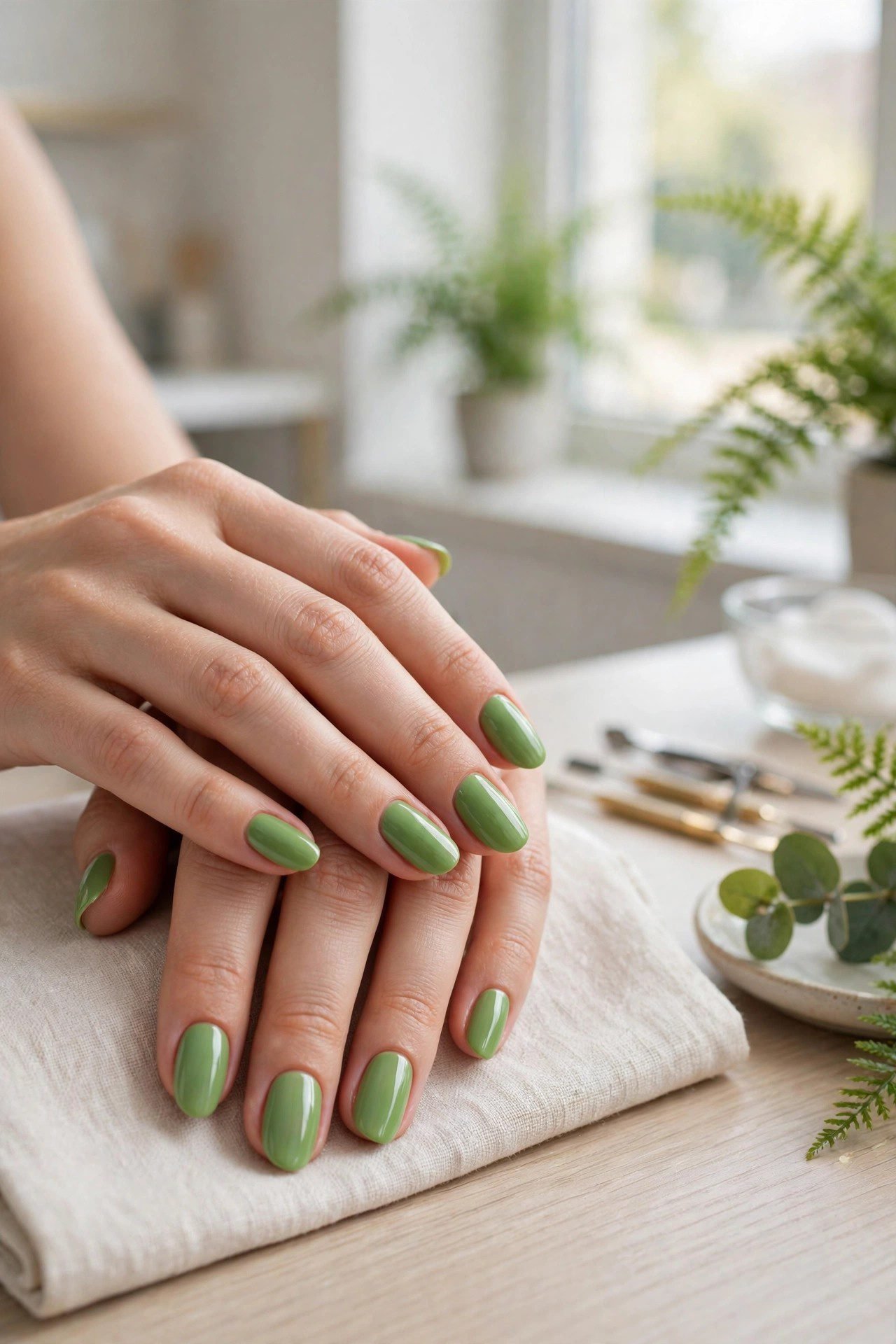
Fresh botanical mid-green, crème finish, garden-centre optimism. It’s the family’s most energetic shade — greener than olive, calmer than emerald — and it bridges spring into fall without changing wardrobes. Green note: fern is the shade to file under “holiday nails that survive the office Monday.”
The Forest & Deep Family — Dark Greens
The greens that behave like dark neutrals: deep, saturated, and quietly dramatic. Everything in this family wears to dinner, hides three weeks of wear, and photographs like expensive upholstery. If your nail history is red and black, this is the family that converts you to green — same presence, fresher story.
11. Forest Green
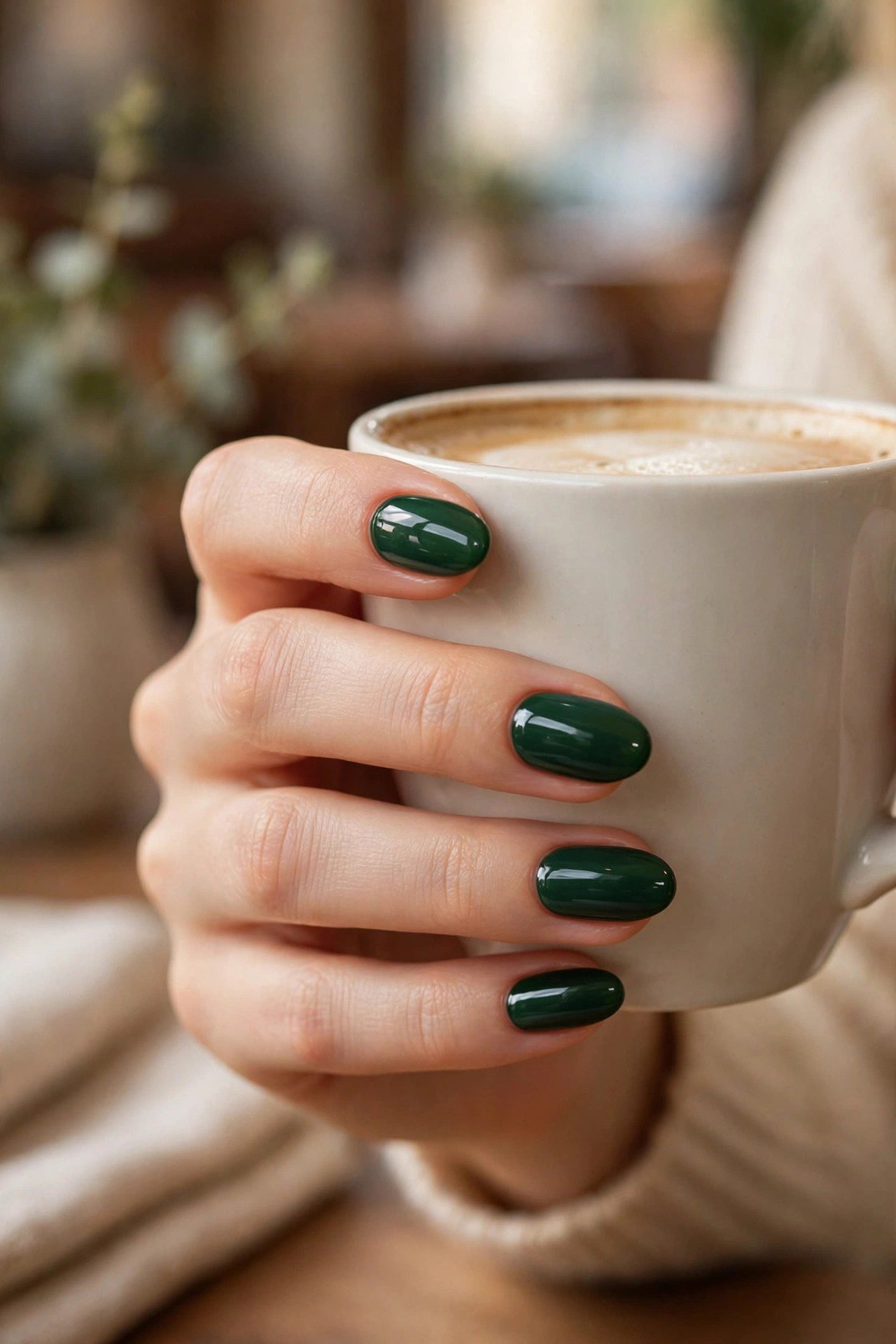
The classic deep green, and the family’s flagship: rich, woodsy, and quietly luxurious. It carries velvet dresses and wool coats with equal ease, and in a glossy finish it looks like expensive antique furniture. Green note: forest is the shade the quiet-luxury crowd means when they say “a deep green manicure.”
12. Bottle Green

Dark green with a blue heart, the colour of vintage glass bottles. The blue undertone makes it cooler and more evening-ready than forest, and it flatters cool skin tones spectacularly. Green note: bottle green + silver jewellery is the pairing; gold fights the blue.
13. Hunter Green
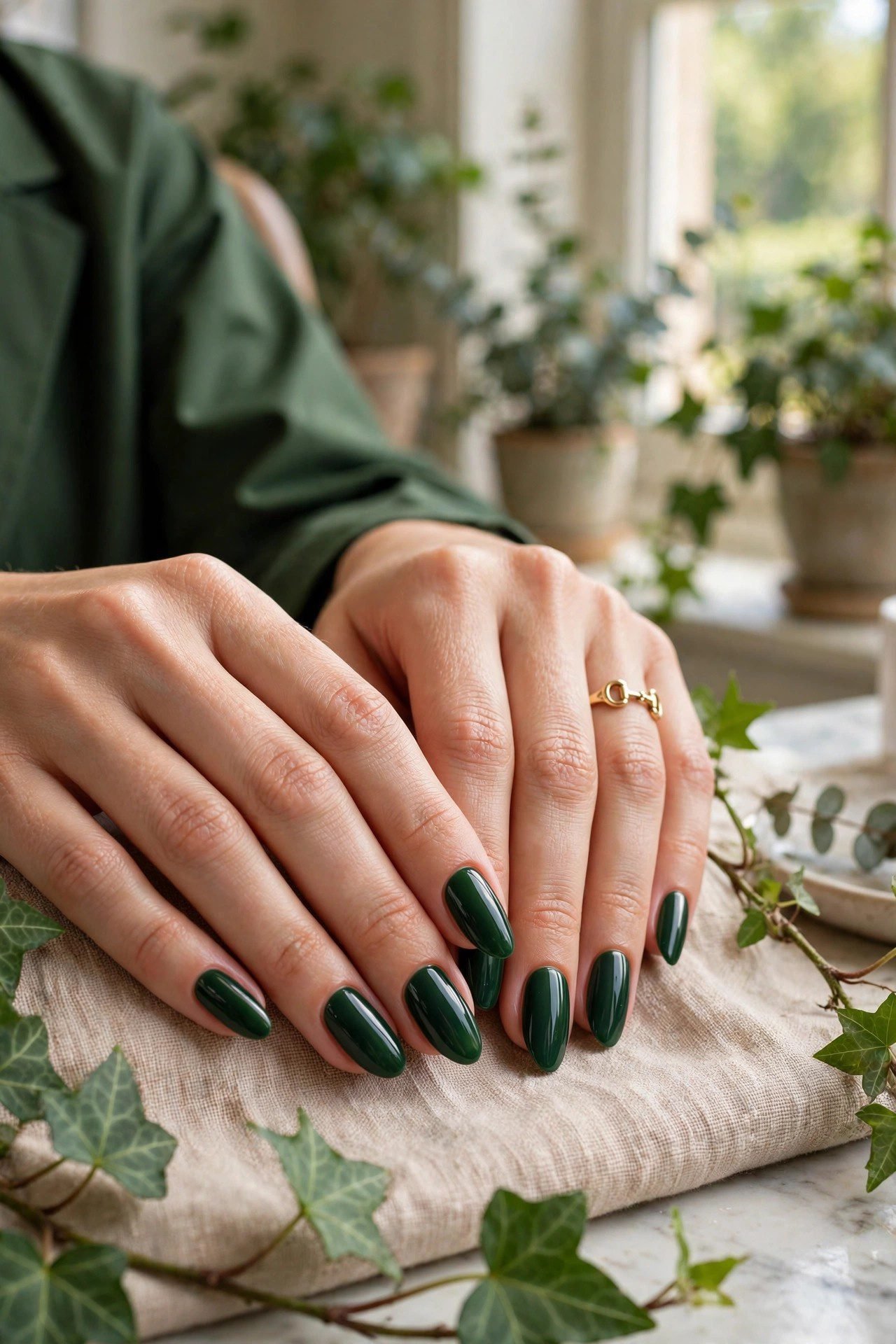
American heritage dark green — equestrian, Ivy, expensive raincoat. It sits between forest and bottle with a classic crispness, and it’s the most traditional deep green in the spectrum. Green note: hunter in high gloss is the “boardroom green” — ask for it by name.
14. Racing Green

British-racing green: so deep it borders black, with green visible only where light lands. It’s the shade for black-polish loyalists who want the same drama with actual depth, and it photographs nearly black with a secret. Green note: two coats reveal the green; a third erases it. Stop at two.
15. Pine

Blue-tinged winter green, festive without a single snowflake. It carries December as easily as navy carries January, and against the season’s reds it makes a pairing that feels traditional rather than bold — see how it sits in our Christmas nails edit. Green note: pine + a red accent nail is the grown-up version of the Christmas manicure — the red rules live in our classy red guide.
The Emerald & Jewel Family — Occasion Greens
The crown of the spectrum: saturated jewel greens built for evenings, events, and photographs. Emerald is the green that started this entire revival, and its modern finishes — chrome, velvet, glaze — are where the trend actually lives in 2026. Nothing in this family is casual; all of it is worth it.
16. Classic Emerald
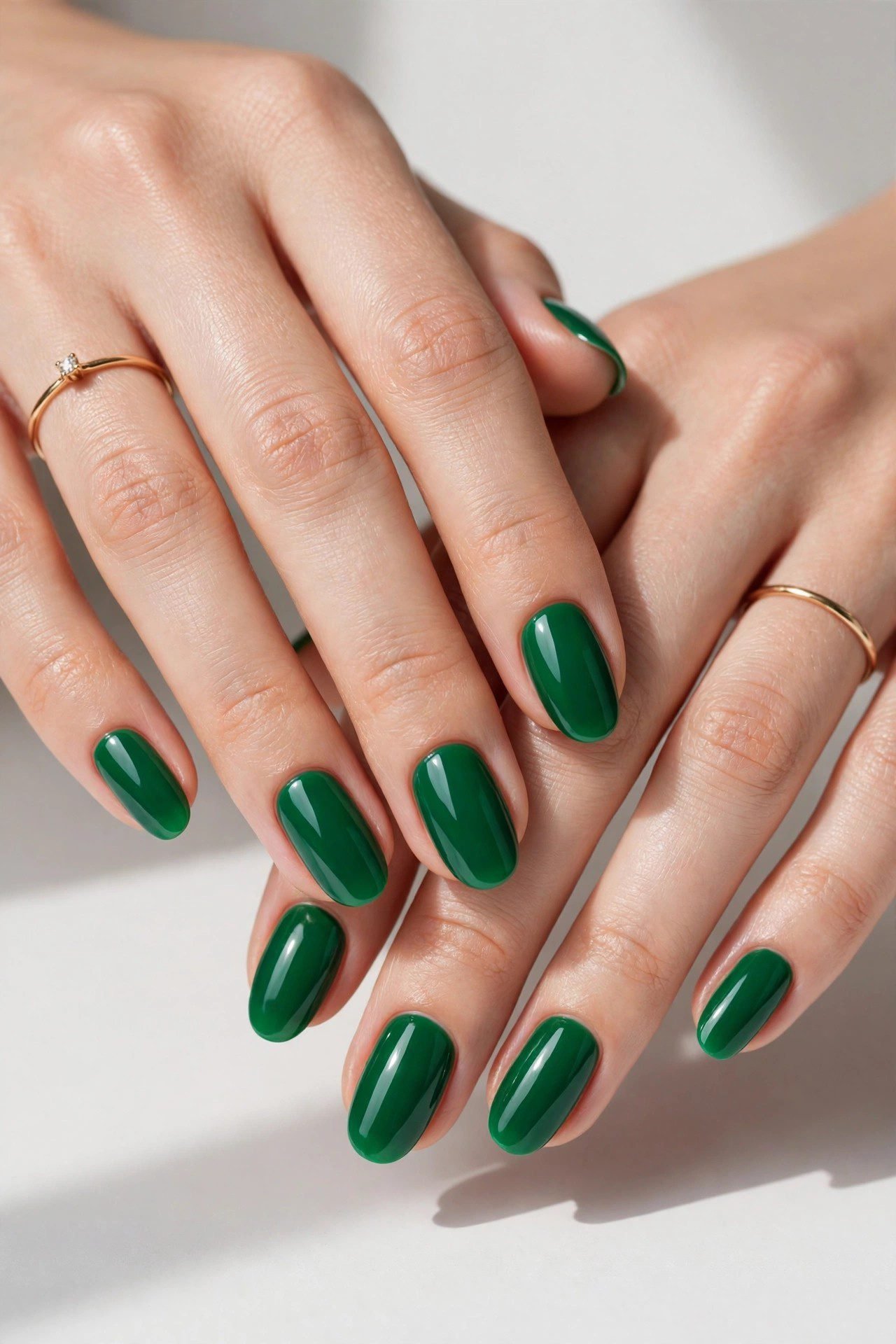
The jewel tone itself: vivid, saturated, and unmistakably expensive. Emerald is the occasion green — dinners, weddings, New Year’s — and on medium almond nails it looks like jewellery you chose yourself. Green note: two even coats, glossy top; emerald’s whole trick is saturation without streaking. For shape pairings, our almond nail designs library shows it at its best.
17. Jelly Emerald

Emerald rendered in translucent jelly, like stained glass over the nail. It keeps the jewel’s colour with half the weight, and the light moving through it makes short nails look newly expensive. Green note: three thin coats build the depth — one coat is a tint, two is a wash, three is the jewel.
18. Emerald Chrome

Emerald under a molten mirror finish, the trendiest green of the year by some distance. It photographs like liquid gemstone and needs absolutely nothing else on the hand. Green note: chrome needs a perfect base — every ridge becomes a valley in a mirror finish. The technique lives in our chrome nails guide.
19. Velvet Emerald

Emerald in a magnetic velvet finish, all plush shimmer and soft-focus light. Velvet gives jewel tones a fabric quality no crème can manage, and in green it’s the most requested salon finish of the season. Green note: no art on top — the finish is the statement. Method notes in our velvet nails guide.
20. Glazed Jade

Soft jade under a chrome glaze — the glazed-donut effect in its most soothing flavour. It sits between pastel and jewel with that lit-from-within sheen, and it’s the family’s answer to brides: serene, photogenic, and quietly distinctive — the same logic our wedding nails for brides guide applies to colour.
The Statement Greens — Two Design Classics
Two looks that use the spectrum rather than a single shade — the green nails that read as designs first and colours second.
21. The Sage French Tip
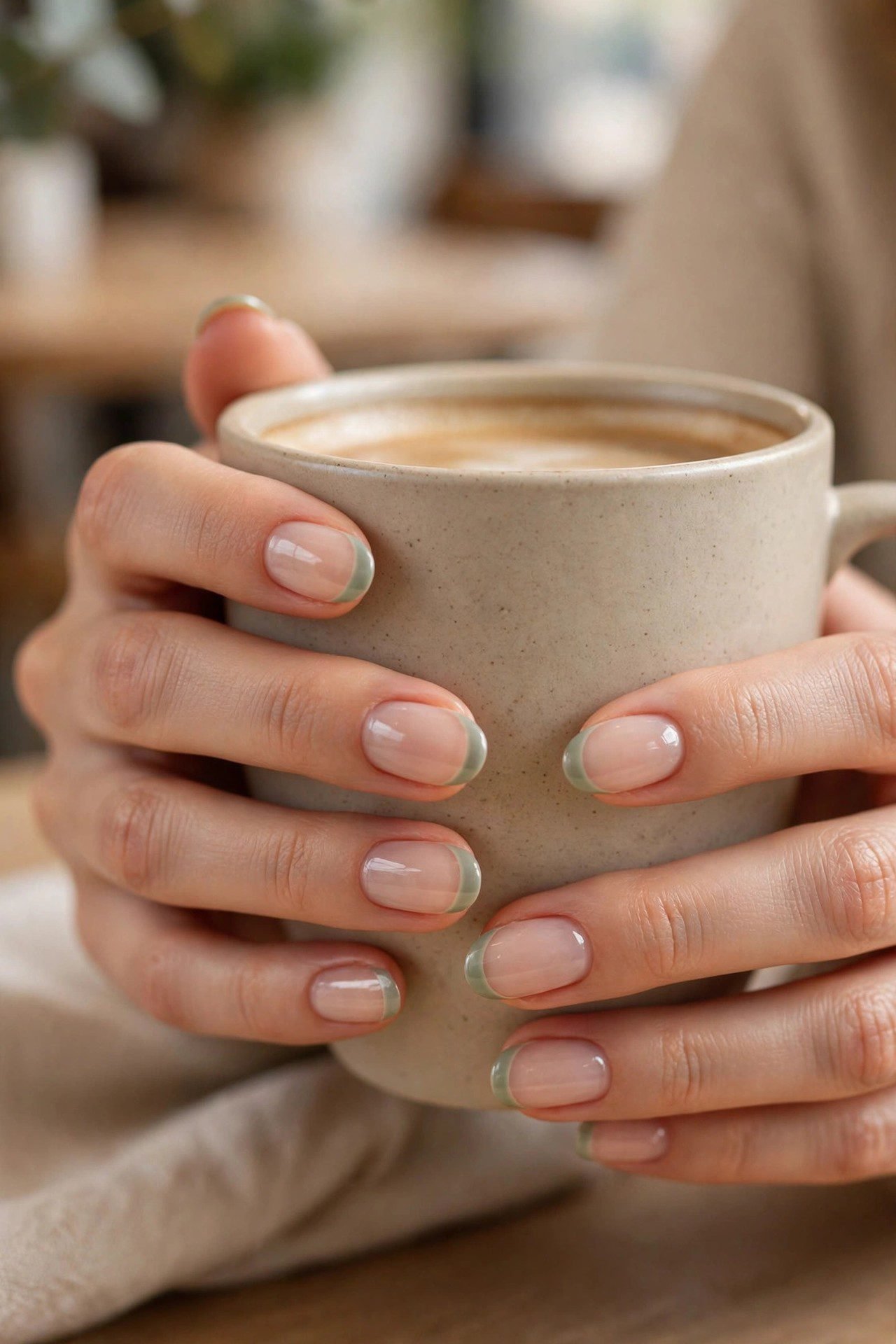
A sheer nude base with a sage hairline tip, the French manicure’s botanical update. The sage tip flatters every skin tone where stark white can fight, and it turns the classic into something quietly contemporary. Green note: sage over a bare nail keeps it modern — more tip variations in our French tip nail ideas guide.
22. The Tonal Green Set
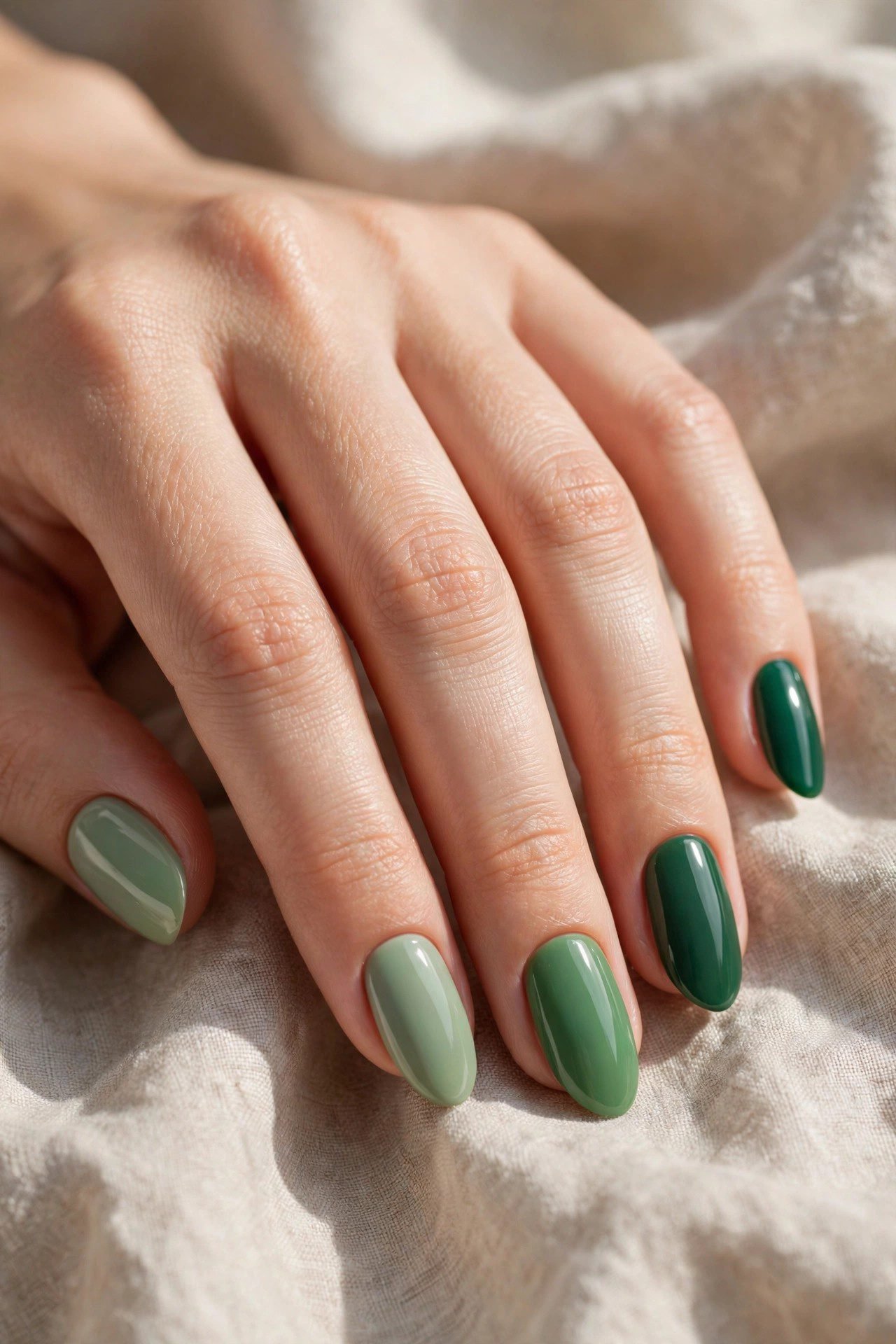
Five greens, one per nail, walking the spectrum from sage on thumb to emerald on pinky. It’s an ombré for the whole hand, and it’s the most-photographed design in every green salon set. Green note: pick the five shades in order from this article’s families — the gradient only works if the undertone stays consistent. More tonal ideas in our nail art archive.
Green Nails by Finish

The same green changes personality with its finish, so choose deliberately. Crème gloss is the spectrum’s default — it deepens every shade and reads polished everywhere, which is why most of the list above assumes it. Matte belongs to the earth family: olive, khaki, and moss turn editorial the moment shine leaves. Jelly is the pastels’ best friend — mint, pistachio, and emerald all gain a stained-glass lightness. Chrome and velvet are the jewel tier, reserved for emerald and its relations, and they reward short-to-medium lengths. And glaze softens everything it touches — it’s how jewel greens become bridal. One rule spans all finishes: greens show streaking more than most families, so thin coats and patient drying are non-negotiable.
Styling Green: Metals, Textures, Occasions

Green pairs by undertone, and the rule is simple. Gold jewellery flatters the yellow-based family — olive, avocado, moss, and every sage in between. Silver belongs to the blue-based greens — mint, eucalyptus, bottle, pine — where it sharpens the coolness beautifully. Textures follow the same logic: sage and cream knitwear, olive and tan leather, emerald and velvet or silk.
For occasions, green has quietly solved every dress code: sage for work, olive for weekends, forest for dinner, emerald for everything with an RSVP. The full-spectrum proof lives on our Pinterest, where each family is pinned with outfit pairings — and if you want the shade tests in motion, we post weekly manicure try-ons on Facebook.
Keeping Green Manicures Fresh

Deep greens are generous wearers — chips hide inside the depth — but they have one demand: a proper base coat. Highly pigmented shades, greens included, can leave a temporary tint on the nail plate if applied raw, and the fix is always prevention rather than cure: one even base layer, full removal rather than picking, and the damage-free method from our how to remove gel polish guide when it’s time to change.
Pastels run the opposite way — mint and pistachio show wear at the tips fastest of anything in the spectrum — so a thin top-coat refresh midweek keeps them glassy. And the universal green rule is the universal nail rule: daily cuticle oil. The full habit stack lives in our nail care routine guide, and it matters double here, because green’s complexity is exactly what makes a dry cuticle line stand out against it.
Green Nails FAQ
What is the most popular green nail colour? Classic sage, and it isn’t close — it became the decade’s breakout shade by behaving like a neutral. Olive follows for everyday wearers, forest for autumn, and emerald owns occasions. If you’re buying one, buy sage; if you’re buying two, add emerald and you’ve covered both ends of the spectrum.
What green nail polish suits pale skin? Blue-based and muted greens flatter pale skin best: sage, eucalyptus, and mint cream read harmonious, while deeper greens like forest create a striking contrast that photographs beautifully. The ones to be careful with are yellow-based pastels — pistachio can emphasise pinkness on very cool-toned skin.
What green suits olive and deeper skin tones? Olive skin is green’s luckiest customer — every family works, and warm shades like avocado, moss, and olive itself look custom-mixed. Deeper skin tones glow in caramel-warm greens and look spectacular in emerald and jelly emerald, where the saturation reads luminous rather than dark.
Are green nails still in style? More than ever — green moved from trend to staple the same way brown did, and the 2026 finishes (chrome, velvet, glaze) keep the family at the front of salon menus. Sage in particular has crossed into permanent neutral territory, which means the question isn’t whether green is in style, but which green is yours.
How do I make green nails look elegant instead of loud? Three levers: choose greyed shades (sage, eucalyptus, moss) over pure ones, keep nails short to medium with a tidy silhouette, and let the finish stay quiet — gloss or soft matte, minimal art. Green’s reputation for loudness comes from neon formulas and long stiletto pairings; the muted families on tidy nails are the quietest luxury on the menu.

The Final Word
Green nails are no longer a dare — they’re a spectrum with a shade for every hand, every season, and every level of nerve. Start at sage if you’re cautious, start at emerald if you’re not, and let the undertone rule keep every choice harmonious. Twenty-two shades live above, and at least four of them belong in your rotation.
Save the palette to your Pinterest board, follow the weekly shade tests on Facebook, and when you’re ready to style whichever green you chose, the full library of nail designs for 2026 takes it into every season on the calendar.