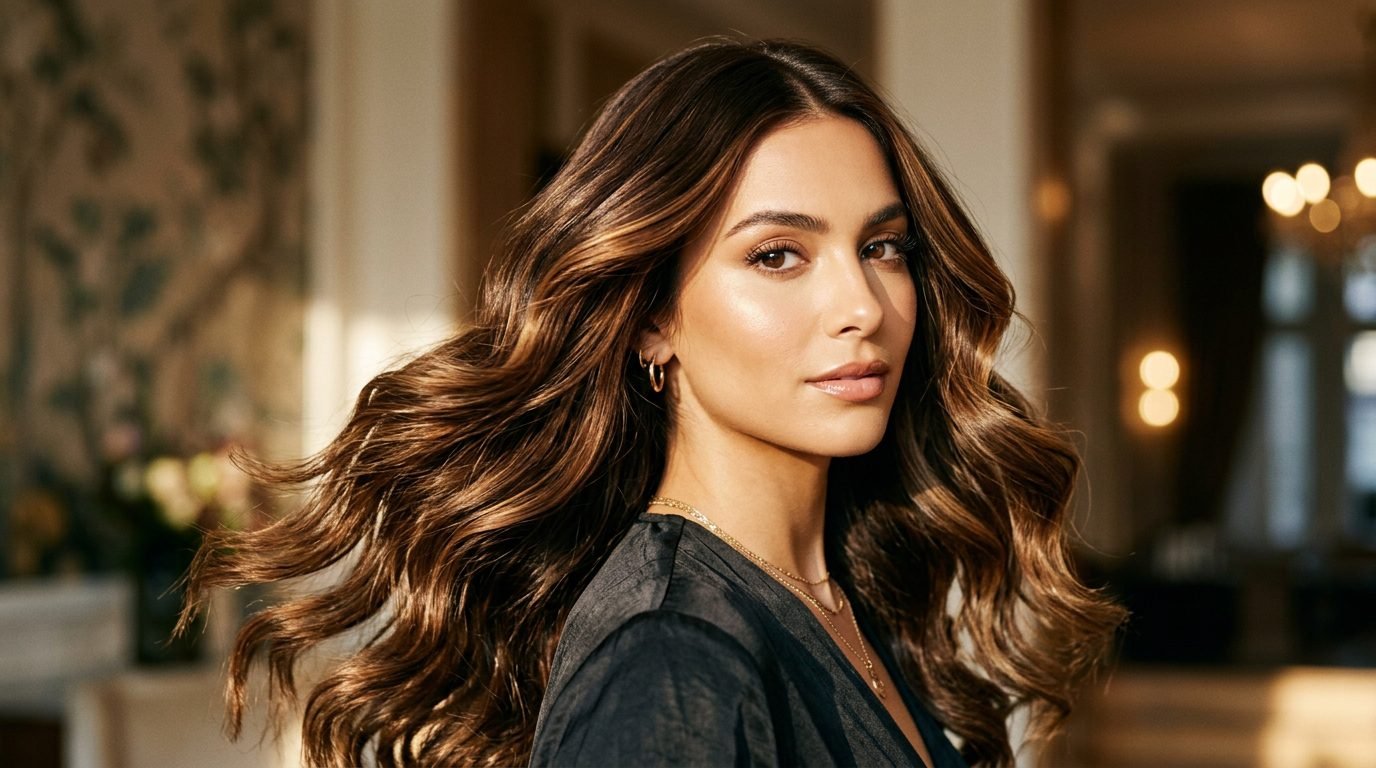


Black hair color looks like the simplest choice in the book — and it is actually the most misunderstood.
Everyone thinks black is black — pick the darkest bottle, apply, done. Then three weeks later the “black” reads muddy brown in sunlight, or worse — the flat, shiny black that reads wig instead of hair. The deepest shade in hair color is also the shade with the most depth levels, and the difference between them is the difference between hair that reads expensive and hair that reads boxed.
Here is what the black bottle never explains: black hair color has undertones, just like every other shade. Blue-black, natural black, soft black — each reads differently in different lights, flatters different skin tones, and demands different maintenance. The deepest color in hair has the most hidden dimension.
So this guide decodes black hair color completely — the four black families by undertone, the shade that matches your skin, the shine system that makes black read expensive instead of flat, and the grow-out reality that decides whether black is a color or a commitment.
The deepest shade has the most depth. Let’s decode it.
Follow our Pinterest boards for daily hair color inspiration, and join us on Facebook so you never miss a shade guide.
The Black Undertone Families (Black Is Not One Color)

Black hair color runs on four undertone families — and the undertone decides everything.
Blue-black — black with cool blue undertones. Reads sharpest, most modern, and most editorial. The black that photographs with a blue sheen.
Natural black — the neutral black with no strong undertone. The black that reads black in every light without reading blue or warm.
Soft black — black softened with brown undertones. The black that reads gentle, warm, and slightly more approachable than the true blacks.
Red-black — black with red undertones. The black that flickers burgundy in sunlight — the hidden warmth under the deepest shade.
The undertone you choose decides how the black reads in every light, beside every outfit, and in every photo. The black family is deeper than it looks — and the four families below prove it.
1. Blue-Black — The Editorial Depth

The coolest black — blue undertones that read electric in direct light, blue sheen in every photo. The black that fashion editorials wear.
Who it suits: cool and fair skin tones — the blue undertone sharpens cool skin beautifully.
The light test: indoors it reads black; in sunlight the blue sheen reveals itself. The black that has a second color hiding in its depth.
Maintenance: the lowest of the colored families — blue-black holds its undertone for months, and the grow-out on dark natural bases is invisible.
The verdict: the editorial black — the shade for the cool-toned, the fashion-forward, and the photos that read magazine-spread.
2. Natural Black — The Neutral Standard

The black without undertones — pure, neutral, and the black that matches most natural Black and dark brunette bases exactly.
Who it suits: every skin tone — the neutral black is the universal standard, and the shade that reads most “born with it” on naturally dark hair.
The light test: reads black in every light — no blue sheen, no red flicker, no warm glow. The purest black in the family.
Maintenance: the lowest — natural black on natural black bases grows out invisibly, and the touch-up schedule is the lightest in colored hair.
The verdict: the honest black — the shade that reads exactly what it is, with zero surprises in any light.
The natural-hair note: for naturally Black hair, this shade is less “dye” and more “enhancement” — the gloss and shine upgrade over the natural base, without changing the color family at all.
3. Soft Black — The Approachable Depth

Black softened with brown — the black that reads slightly gentler, slightly warmer, slightly more lived-in than the true blacks.
Who it suits: warm and medium skin tones — the brown undertone softens the black for warm complexions.
The light test: reads black in shade, dark brown in sunlight — the black with a warmth that shows where the light lands.
Maintenance: low — soft black fades toward dark brown, and the fade reads intentional rather than damaged.
The verdict: the approachable black — the shade for the first-time black-dyers and the offices that read jet-black as too sharp.
4. Red-Black — The Hidden Flame

Black with red undertones — the black that flickers burgundy in sunlight. The hidden warmth under the deepest shade.
Who it suits: deep and warm skin tones — the red undertone loves richer complexions.
The light test: reads black indoors, flickers burgundy-red in direct sunlight — the black with the hidden fire.
Maintenance: medium — the red undertones fade first, needing the color-depositing conditioner to keep the hidden flame alive.
The verdict: the mysterious black — the shade that reveals its secret only in sunlight, and the one that reads different in every photo’s lighting.
The Black Hair Shine System (The Difference Between Rich and Flat)

Black hair’s entire expensive-read lives in its shine — the system that makes black read rich instead of flat.
The shine science: dark hair reflects light most dramatically — but only when the surface is smooth and sealed. Flat black reads like a wig; glossy black reads like silk. The difference is the shine system, and the shine system is the entire styling routine for black hair.
The shine routine:

The gloss every eight weeks. The salon gloss or the at-home clear gloss — the shine treatment that makes black read wet and rich. The gloss is the black hair’s most important appointment.
The heat protectant before every tool. Hot tools dull black hair’s shine on contact — the protectant spray is what keeps the mirror finish intact.
The silk pillowcase nightly. The friction-free surface that keeps black hair smooth while you sleep — the cotton pillowcase is where the shine dies.

The cold-water rinse. Hot water opens the cuticle and dulls the shine — the cold rinse seals it back. Every wash, cold finish.
The complete shine system lives in our hair care routine 2026 guide — the black hair’s shine is its entire personality, and the routine protects it.
The Black Hair Grow-Out Truth (The Easiest and Hardest)

Black hair color’s grow-out is a paradox — the easiest fade and the hardest decision.
The easy part: black on dark natural bases grows out invisibly — the regrowth line that torments blondes simply doesn’t exist here. Touch-ups every three to four months, and the calendar is the lightest in colored hair.
The hard part: black is the hardest color to remove. Going lighter later requires the lifting process — the chemical removal that costs more than every black touch-up combined. Black is easy to put on and hard to take off — the commitment that the first bottle doesn’t mention.
The exit strategies: the gradual plan — lightening in professional sessions over months, or the dark-brown bridge shade that softens the black before any lift begins. The exit is possible; it just needs planning from day one.
The first-timer advice: if black is your first dark shade, decide before applying whether this is a season or a lifestyle — the answer changes the maintenance plan and the exit budget. The informed decision is the one that doesn’t regret.
Black Hair Color FAQ
What is the difference between blue-black and natural black hair color?
The undertone — blue-black carries blue undertones that read sheen in sunlight and sharpness in photos, while natural black carries no strong undertone and reads pure black in every light. Blue-black flatters cool skin; natural black suits every tone universally.
How do I keep black hair color from fading?
Black fades toward brown when the cuticle opens — cold-water washes, sulfate-free shampoo, heat protectant before every tool, and the gloss every eight weeks. Black fades slowest of all colors, and the four habits make the fade nearly invisible.
Does black hair color damage your hair?
Black is a deposit-only color on most bases — it lifts nothing and damages nothing when applied over dark natural hair. The damage conversation starts only when going from blonde to black, or when the black eventually needs lifting out. The deposit process is the gentlest in hair color.
What skin tone suits black hair color?
Every skin tone wears black — the undertone decides the read. Blue-black sharpens cool and fair skin, soft black warms medium tones, red-black flatters deep and warm skin, and natural black suits every tone universally. The undertone is the match, not the black itself.
How do I go back to brown after dyeing my hair black?
The gradual route — a dark brown deposit softens the black over weeks, followed by professional lifting sessions if going significantly lighter. Never strip black at home — the removal is the chemical process that needs the salon from day one of the planning.
More questions? Ask us on Facebook and we will help you choose the undertone that matches your skin and your commitment level.

The Deepest Shade, Fully Decoded
Four undertone families, the shine system that makes black read expensive, and the grow-out truth that makes it the easiest and hardest commitment — black hair color is fully decoded.
Choose your undertone tonight — blue for the editorial, natural for the universal, soft for the approachable, red-black for the hidden flame. Book the gloss with the color. And when the sunlight reveals your black’s hidden depth, the simplest shade in hair will have proven it was the most complex all along.
Save this guide to our Pinterest boards so it is on your phone at the salon, and pair the black education with the shine science from our hair care routine 2026 guide and the color family in our hair color ideas collection — the deepest shade, fully understood.
New shade guides every week. Stay deep, stay glossy!